Gold Coast journalists did not want it. When Britain’s Daily Mirror group set up a newspaper company in Accra in 1950, local journalists led by Dr F.V. Nanka-Bruce opposed it, fearing a foreign-owned paper would undercut the independence struggle. The first issue of the Daily Graphic appeared on 2 October 1950 anyway. Seventy-five years later, it is the most widely recognised newspaper in Ghana.
Cecil King’s company
The company was registered as the West African Graphic Company Limited. Its first head was Cecil King, of the family that controlled the Daily Mirror in London. The Mirror group wanted to bring its popular, picture-led style of journalism to West Africa, where it also set up newspapers in Nigeria.
A Ghanaian editor
Chiefs and local leaders pressed the company to employ Ghanaians in its leadership. Martin Therson-Cofie became the first editor of the Daily Graphic, an early sign that the paper would have to answer to Ghanaian readers as well as British owners.
The Mirror on Sundays
In 1953, the company added a weekly paper, the Sunday Mirror, now called The Mirror. It became known for lighter news, human interest stories and entertainment, and generations of Ghanaians read it on weekends.
Independence and the state
After independence, Nkrumah’s government took a close interest in the press. The state acquired the company from its private owners by an Act of Parliament in the early 1960s. From then on, the Daily Graphic was a state-owned newspaper, and its relationship with each government of the day became part of its story.
Changes of name
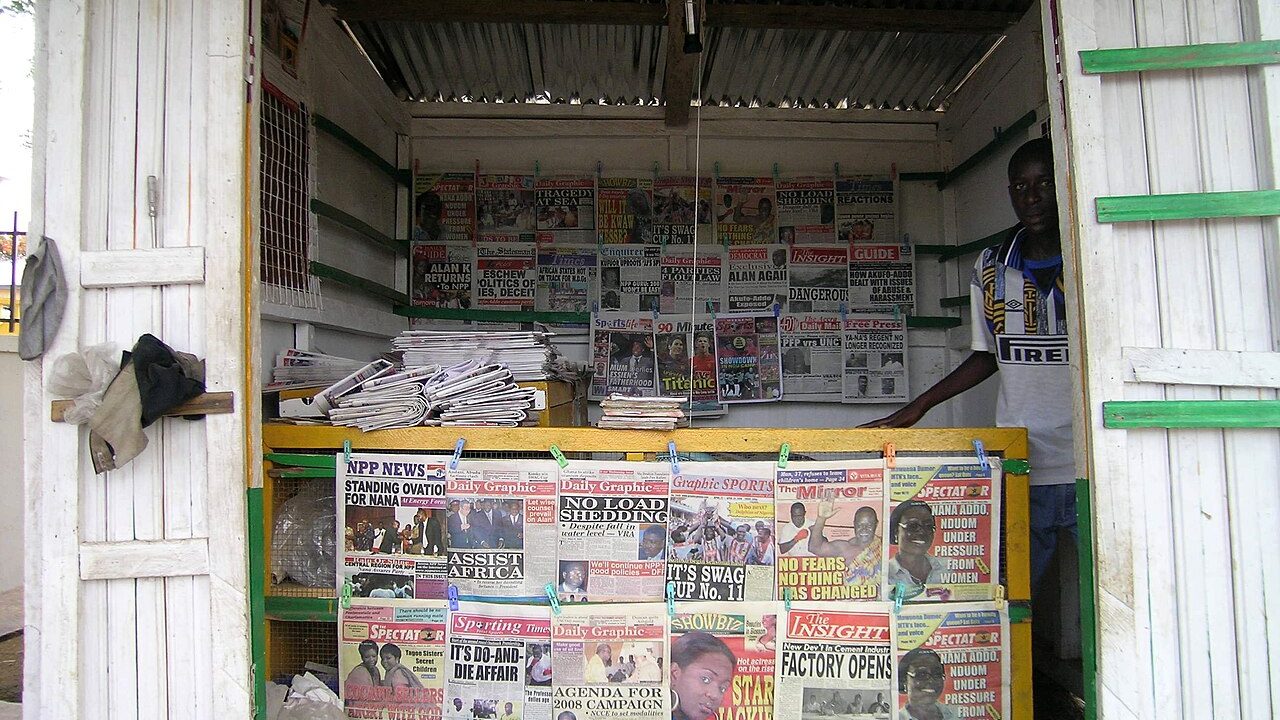
In 1971 the company became a statutory corporation, known as the Graphic Corporation. Since 1999 it has operated as Graphic Communications Group Limited, which publishes the Daily Graphic, The Mirror, Graphic Sports, Graphic Showbiz, Junior Graphic and other titles, along with the Graphic Online website.
Under military rule
Under military governments, state newspapers faced pressure to support the regime. Editors were replaced, and some journalists were detained. The paper’s history reflects the changing levels of press freedom in Ghana, from the tight controls of the 1970s and 1980s to the more open environment after the 1992 Constitution.
The paper of record
The Daily Graphic is often treated as Ghana’s paper of record. Government announcements, public notices, obituaries and job advertisements appear in its pages, and many families still buy it for the funeral announcements alone.
Going digital
Like newspapers everywhere, Graphic has had to adapt to falling print sales and the rise of online news. Graphic Online, social media pages and digital editions now reach readers who may never buy a printed copy.
A paper that Gold Coast journalists feared would serve foreign interests became one of the institutions most associated with Ghanaian public life. In October 2025, Graphic marked 75 years since its first issue reached the streets of Accra.