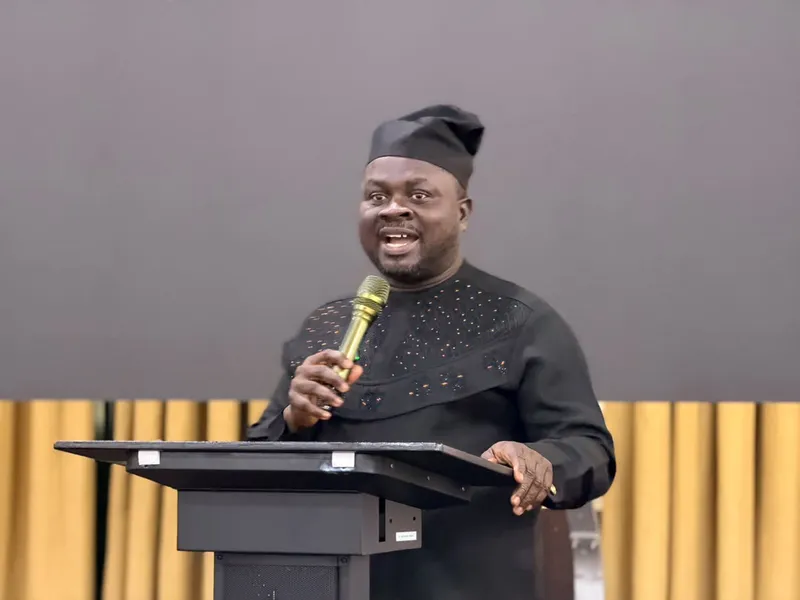
Albert Kwabena Dwumfour, president of the Ghana Journalists Association (GJA), told journalists at the Ghana Media Soirée 2026 that journalism requires sacrifice and dedication, not just a paycheck.
Speaking at the event hosted by Ghana National Gas Company Limited (Ghana Gas), Dwumfour urged media practitioners to see their work as a calling. “This is why journalism is a calling, not merely a profession. It comes with sacrifices,” he said.
Dwumfour attended despite being indisposed, citing his long relationship with the association and Ghana Gas as motivation to participate. The soirée aimed to deepen journalists’ understanding of Ghana Gas’s operations, particularly in gas, energy, health, safety, and environmental sustainability.
The GJA president challenged journalists to go beyond routine reporting, acquire specialised knowledge, and produce work that makes a meaningful impact on society. He said professional awards should celebrate those who excel beyond ordinary assignments and contribute to national development.
He commended Ghana Gas for investing in journalists’ professional development, calling capacity-building initiatives essential amid a digital and information-driven media landscape. “Continuous professional development is consistent with the objectives of the GJA and the broader constitutional framework governing the media in Ghana,” he said.
Dwumfour identified specialisation as a major gap in Ghanaian journalism. Many practitioners cover a wide range of topics without the in-depth knowledge needed for accurate reporting. “Sometimes you find journalists in court, and you can tell this person lacks the ethics and doesn’t even understand the court because he got the reporting wrong. If you don’t take care, you may even end up with contempt,” he warned.
He praised Ghana Gas’s efforts to equip journalists with specialised knowledge in gas and energy reporting, which involves technical, environmental, health, and safety issues that require precise interpretation.
Dwumfour encouraged journalists who participated in the training to apply what they learned and share it with colleagues who could not attend. He advocated a “train-the-trainer” approach to spread specialised knowledge within newsrooms and improve collective professional output.
“Let the training we’ve had be seen in our work. Let it show in our reportage. Let it show in the discharge of our duty in serving the good people of this country,” he said.
He reminded journalists their professional role includes holding public institutions and policymakers accountable, regardless of whether those institutions support their development. Dwumfour stressed that media relationships with corporate organisations must not compromise journalistic independence or ethics.
The GJA president urged participants to use their enhanced knowledge to promote transparency, accountability, and responsible public discourse.
Dwumfour announced plans for exchange programmes and partnerships with energy institutions to provide scholarships for journalists interested in specialising in energy reporting. He described these as professional development scholarships aimed at strengthening capacity in the energy sector.
He also revealed existing scholarship opportunities with universities, including the University of Wisconsin, and said the association was pursuing additional partnerships.
Eligible GJA members seeking undergraduate or master’s degrees in journalism and communication can obtain application forms and information through the association’s General Secretary.
The scholarship programmes aim to help journalists upgrade academic qualifications and professional competencies while benefiting from GJA membership.
Dwumfour’s remarks at the Ghana Media Soirée 2026 underline ongoing efforts to professionalise journalism in Ghana amid growing challenges such as misinformation, technological change, and the complexity of specialised reporting.
According to 3News.