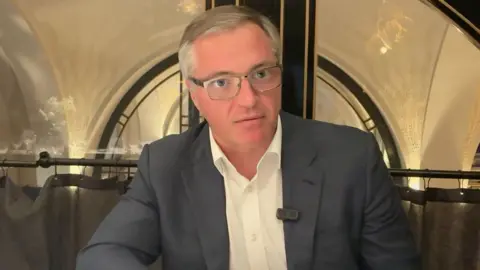
At one point in September, Ukraine’s steel production dropped to zero for the first time in nearly 150 years. Yuriy Ryzhenkov, chief executive of Metinvest, described the moment as a stark indicator of how the war with Russia has battered one of the country’s largest industries. Now he urges the European Union to exempt Ukraine from new import tariffs imposed on steel products.
The EU recently introduced restrictions on steel imports to protect its domestic producers from cheap foreign steel, mainly from China and Turkey. The bloc capped steel imports at 18.3 million tonnes per year, a 47% reduction from 2024 levels. While there are country-specific quotas, Ukraine’s steel exports are caught up in the same policy, despite a free trade agreement between the EU and Ukraine.
“Ukraine has been bundled together into those measures without any consideration for the situation Ukraine is in,” Ryzhenkov told the BBC. He called the tariffs “unfair” and said the EU’s restrictions fail to account for the ongoing war and its impact on the industry. “Access to the European market is crucial for survival,” he added. “The restrictive measures that have been put in place by the authorities in the European Union, they don’t help.”
Metinvest, Ukraine’s steel and mining giant, has suffered heavily since Russia’s full-scale invasion in 2022. Metallurgy and mining accounted for roughly 10% of Ukraine’s national income and a third of its exports before the war. The EU remains the top customer, but recent restrictions threaten to cut Ukraine’s steel exports to the EU by 50 to 60%.
The EU acknowledged Ukraine’s situation while announcing the steel policy. A spokesperson said the bloc “took into account the difficult situation” of Ukraine, noting that the country’s steel quota guarantees exports, albeit at a lower level than in previous years. “Despite the war effort, Ukraine remains an important exporter of steel to the EU,” the spokesperson said, adding that the EU has “offered compensations” to Ukraine and other major suppliers.
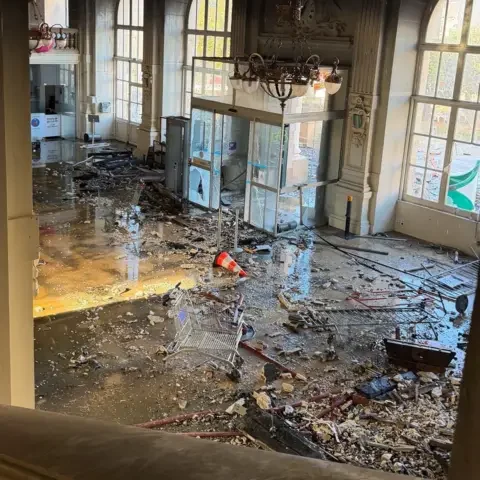
The war has intensified the challenges for Ukraine’s steel sector. All of the country’s steel mills have been bombed at some point since the conflict began. Ryzhenkov said the strikes have “intensified significantly recently.” The attack on infrastructure led to the September halt in steel production, a historic low.
Almost 800 Metinvest workers have been killed since the onset of war. Ryzhenkov described efforts to improve safety at the mills, including better covered areas for workers during air raids. “The only thing we can do is to design procedures to keep people safe and just obey those procedures and try to minimise the risks,” he said. “Unfortunately, you cannot cover a whole steel mill to avoid it being damaged.”
Ukraine’s logistical options are limited, making the EU market even more critical. “We are in a dire situation when we don’t have logistics to access any other market apart from the EU and cutting our available market by 60%, that doesn’t help for the industry to survive,” Ryzhenkov said. He expects the coming winter to be “one of the hardest in our history.”
The European steel quota system, designed to protect member states’ producers, places Ukraine in the same category as other exporters, despite the war. This approach has drawn criticism from Ukrainian industry leaders who argue for a carve-out, exempting them from the broad restrictions applied to cheap steel imports.
Ryzhenkov’s call comes as Ukraine’s steel industry grapples with the dual pressures of war and economic protectionism in its main export market. The EU’s balancing act between supporting its steel sector and accommodating a key Ukrainian supplier reflects the complex trade-offs facing Europe amid ongoing conflict.
According to Joy Online.