On 1 July 2021, bulldozers backed by armed police moved into the Agbogbloshie scrapyard in central Accra. Within days, a site that had supported about 10,000 scrap dealers was flattened.
The demolition was part of “Let’s Make Accra Work”, the clean-up drive led by the then Greater Accra Regional Minister, Henry Quartey. The official target had been the onion market. The operation spread to the scrapyard and surrounding areas, and many workers were caught unprepared.
The world’s most photographed dump
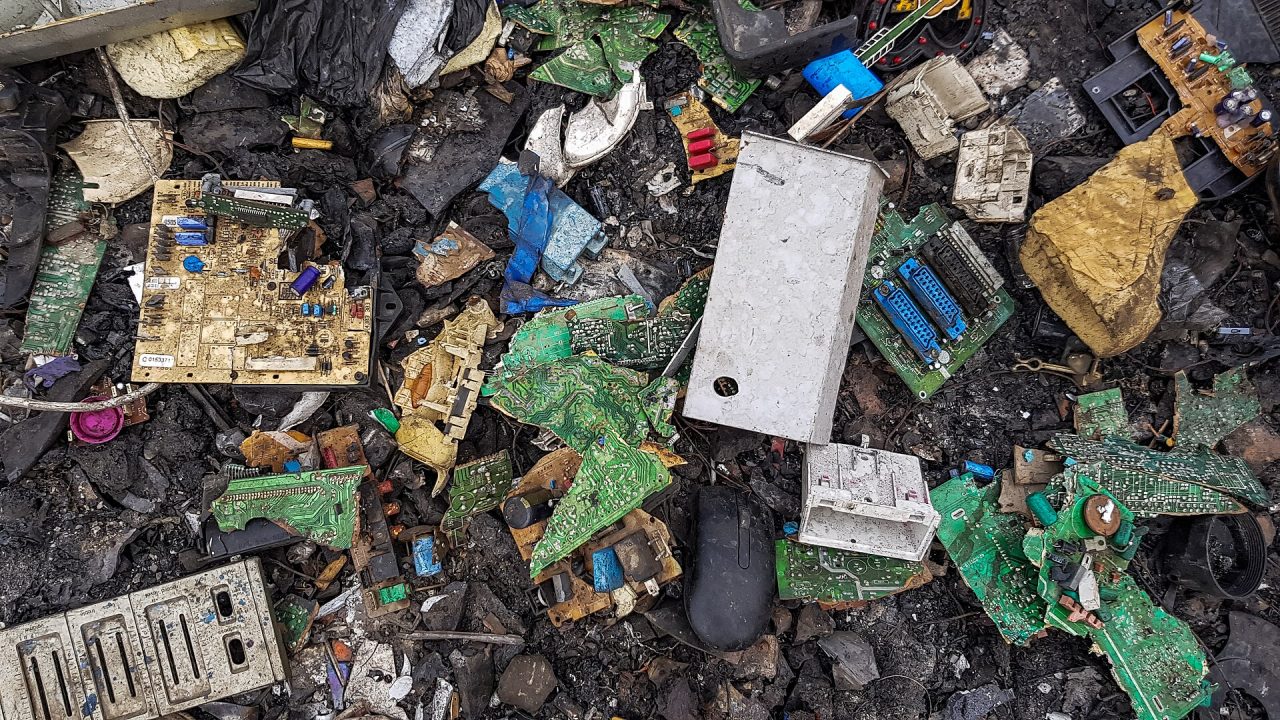
Agbogbloshie, beside the Odaw River and the Korle Lagoon, became internationally famous in the 2000s and 2010s as an e-waste site. Photographers and documentary makers filmed young men burning cables to recover copper, with black smoke over piles of old computers and televisions. It was often described as the world’s biggest e-waste dump.
Researchers have since challenged that label. Studies found that much of the scrap was locally used equipment, that the site was a working recycling economy, and that “world’s biggest dump” was more headline than fact. The burning and pollution were real, though, and residents and workers breathed the smoke.
A community around the yard
The scrapyard sat next to Old Fadama, one of Accra’s largest informal settlements, home to many migrants from northern Ghana. Scrap dealers, traders, food sellers and families all depended on the area. Sections of Old Fadama were demolished about five weeks after the scrapyard.
The government said the clearance was needed to deal with pollution, crime, flooding around the Odaw and illegal occupation of state land. Critics said thousands of people lost their livelihoods overnight, with little warning and no resettlement plan.
After the bulldozers
Part of the cleared land was allocated for a health facility under the government’s Agenda 111 hospital programme. Scrap dealers scattered to other sites around Accra, including areas further out of the city, where recycling and cable burning continued in smaller operations.
The land has remained a subject of dispute, with reports of encroachment and fresh government statements about taking action on the site as recently as 2025.
What the clearance did not solve
Ghana still produces and imports large amounts of electronic waste, and informal recycling still supports many workers. The demolition removed one site. It did not remove the trade, the demand for copper, or the smoke, which moved elsewhere.
The Korle Lagoon connection
Agbogbloshie sat on the banks of the Korle Lagoon, into which the Odaw River drains before reaching the sea. The lagoon has been one of the most polluted water bodies in the country for decades, carrying waste from across the city. Governments have announced lagoon restoration projects repeatedly, and clearing structures from the banks has been part of every plan. Flooding around the Odaw, which affects low-lying areas every rainy season, was one of the reasons officials gave for the 2021 demolition.
For years, the name Agbogbloshie appeared in international reports as a symbol of global e-waste. On the ground in Accra, it was also a place where thousands of people went to work every morning, until 1 July 2021.