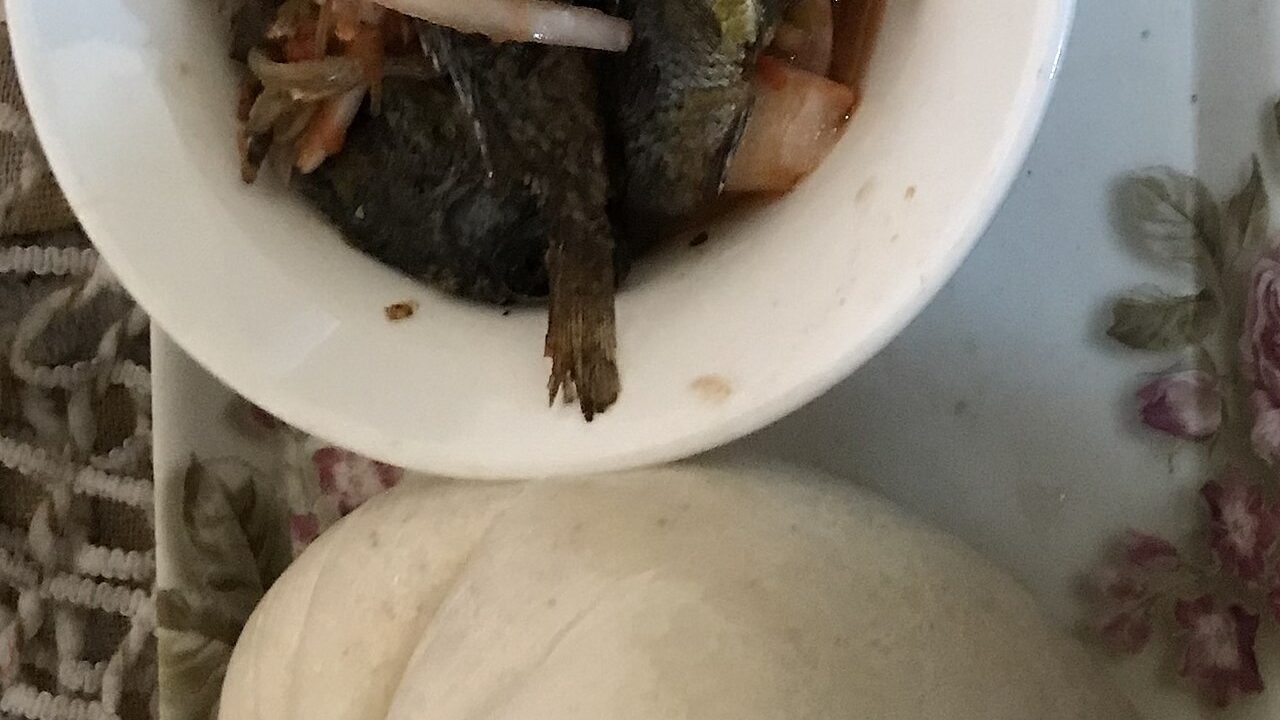
For many Ewe families, Sunday lunch means akple. The smooth, slightly sour dough, made from corn and cassava flour, is shaped into balls and served with fetri detsi, a slippery, savoury okro soup thick with fish, crab or meat. The dish comes from the Volta Region, but you can find it today in homes and chop bars across Accra, where many Ewe families have settled.
Akple and fetri detsi
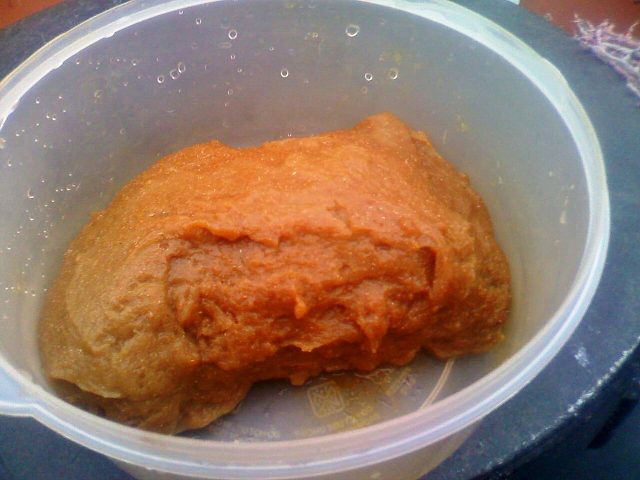
Akple is made by cooking fermented corn dough with cassava dough or flour, stirring until it forms a smooth mass. It is similar to banku, but often lighter and smoother. Fetri detsi is okro soup. “Fetri” means okro and “detsi” means soup in Ewe. The okro is chopped and cooked with tomatoes, peppers, onions and palm oil.
The soup is usually filled with smoked or fresh fish, crabs, shrimp or meat. Coastal Ewe communities favour seafood.
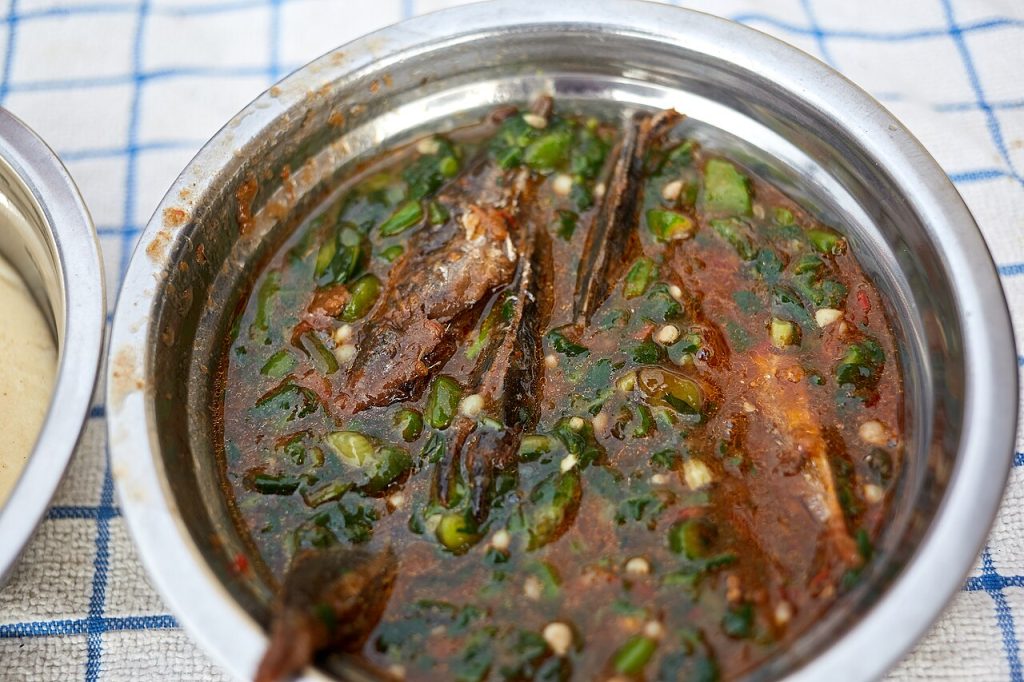
Okro gives the soup its slippery texture, which helps the akple go down. Fans say this texture is the best part.
How to eat it and where
Akple is eaten with the fingers, pinching off pieces and dipping them in the soup. Akple is also eaten with pepper sauce and fried fish, or with other soups. Chop bars in areas with large Ewe communities serve akple daily. Akple and fetri detsi are served at Ewe festivals, weddings and funerals. The okro and fish make the dish nutritious, while the dough provides energy.
The dough must be stirred hard to avoid lumps, and the soup must not be overcooked, or the okro loses its texture. Ewe akple is related to Ga banku and other corn-based staples across West Africa.
A taste of home, crab and shito
For Ewe people living abroad, akple is one of the dishes most often cooked to remember home. Many Ewe cooks insist that fetri detsi is not complete without crab, which adds a sweet, rich flavour. Cracking the shells at the table is part of the fun of the meal. Some people add a little shito or fresh pepper for extra heat.
Akple and fetri detsi carry the taste of the Volta into Accra’s chop bars. For Ewe families, it is the Sunday meal that tells them they are home.