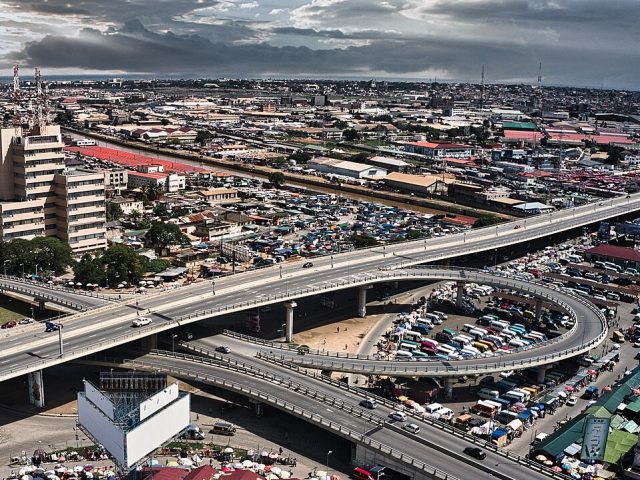
On 4 November 1961, five days before Queen Elizabeth II was due in Accra, two bombs exploded in the capital. One targeted the bronze statue of President Kwame Nkrumah outside Parliament House. In London, politicians demanded that the tour be called off. Prime Minister Harold Macmillan sent his Commonwealth Secretary, Duncan Sandys, to Ghana to judge the danger, and Sandys rode the planned route with Nkrumah. The visit went ahead, and the Queen arrived in a city that had just finished building its grandest monument to the end of British rule.
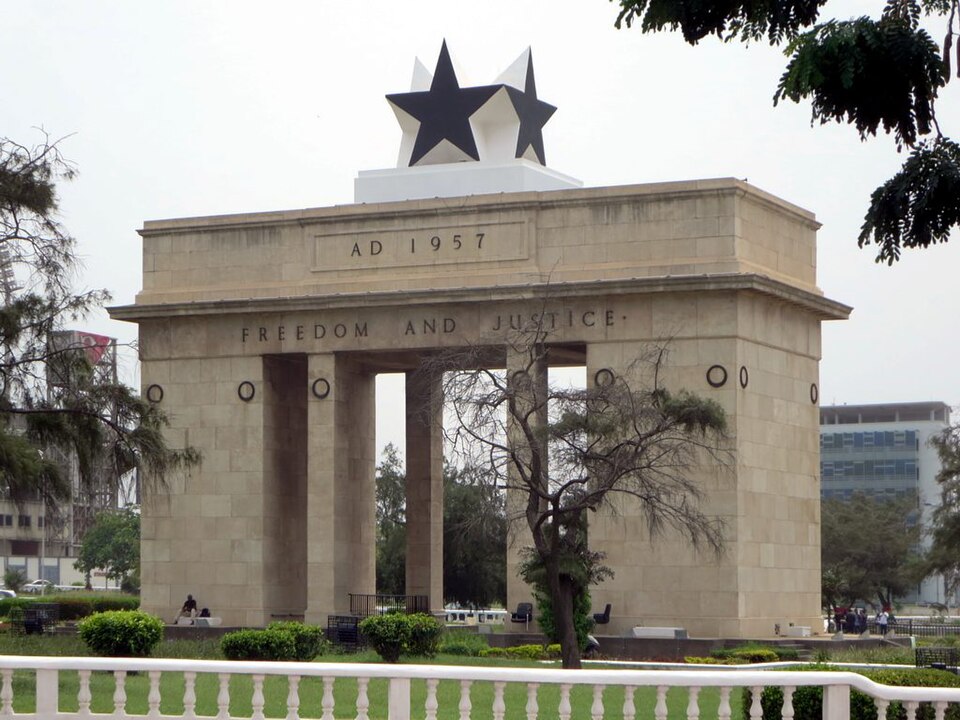
That monument, the Black Star Gate, still stands at Black Star Square. Generations of Ghanaians know it from Independence Day parades, but the moment of its completion is one of the odder scenes in the country’s history.
A gate for a new republic
Nkrumah commissioned the square and its monuments after independence on 6 March 1957 as part of a wider effort to give the new state its own public symbols. Ghana had a flag, an anthem and a new name. It needed a place where the nation could gather and be seen doing so. The site on the Atlantic front in Osu became Independence Square, and the complex was completed in 1961.
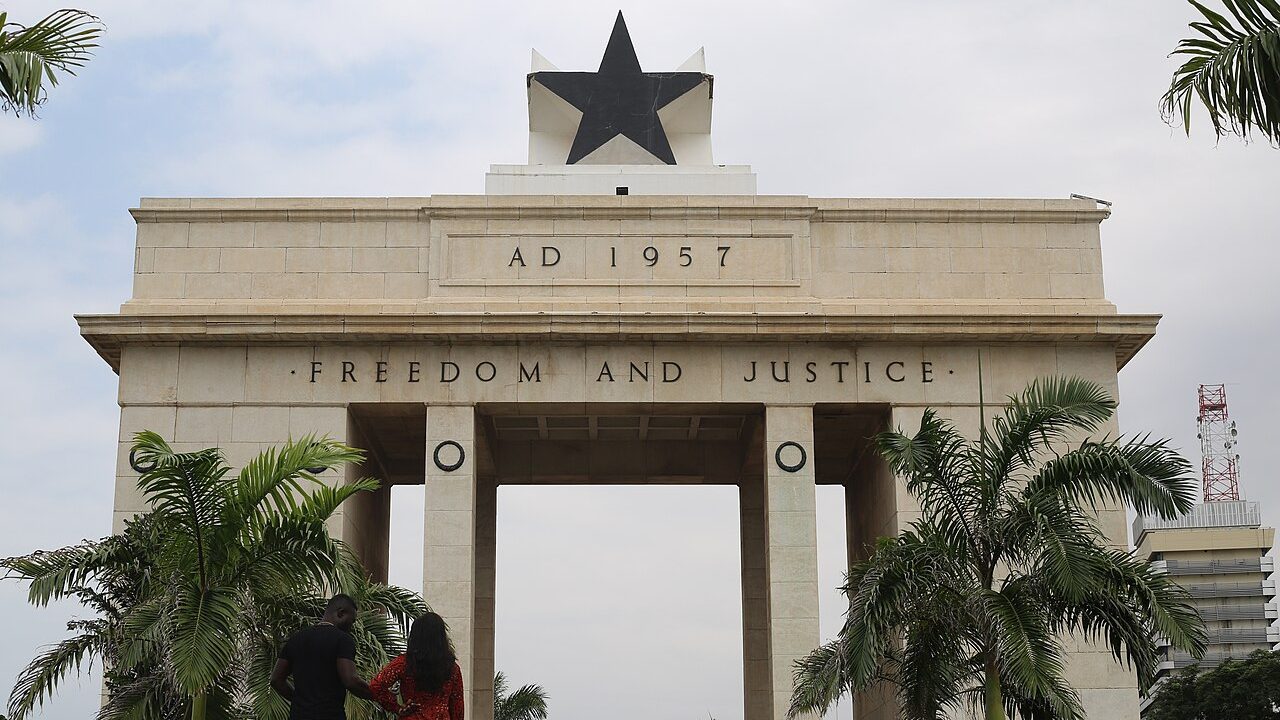
The gate is a concrete arch about 12 metres high, topped by a five-pointed black star, the emblem at the centre of the national flag. The star itself was borrowed from the Black Star Line, the shipping company of the Pan-Africanist Marcus Garvey, and the choice told the world that Ghana saw its independence as belonging to the whole Black world. Beneath the star runs the phrase “Freedom and Justice”, with the date AD 1957. The wider square is credited to the architect Theo Lawson, and one record names the Ghanaian architect Theodore Sersah as designer of the gate. The stands hold 30,000 people.
The layout was planned for ceremony. The arch lines up with the Memorial of the Unknown Soldier, so that anyone standing on the parade ground sees the two monuments along one axis, with the open ocean behind.
The Queen and the President on the dance floor
By late 1961 Ghana had been a republic for more than a year, and Nkrumah’s government had grown more authoritarian, with political opponents being detained. British critics argued that a royal visit would look like an endorsement. Macmillan had a larger worry. If the tour collapsed, he feared Nkrumah might draw closer to the Soviet Union, at the height of the Cold War.
Winston Churchill wrote to Macmillan on 19 October to object, warning about “a regime which has imprisoned hundreds of Opposition members without trial”. The Queen had already called off a planned 1959 visit when she was pregnant with Prince Andrew, and Nkrumah had visited Moscow only weeks earlier.
The Queen insisted on going. “I am not a film star,” she is reported to have told Macmillan, making clear that as head of the Commonwealth she was expected to face such risks. She and Prince Philip stayed from 9 to 20 November. During the trip she danced with Nkrumah at a state dinner, and the photograph travelled around the world: a British monarch partnering the African leader who had ended her government’s rule in the Gold Coast. At the state dinner Nkrumah declared that “the wind of change blowing through Africa has become a hurricane”. Macmillan then put the trip to practical use with President John F. Kennedy. “I have risked my queen. You must risk your money,” he told him, and American financing for the Volta Dam, the centrepiece of Nkrumah’s economic plans, followed.
What the square became
The gate outlasted the man who ordered it. Nkrumah was overthrown in February 1966, and successive military and civilian governments have used the same parade ground to present themselves to the public. President John Kufuor led the Golden Jubilee there on 6 March 2007, and state funerals have been held for Presidents John Atta Mills and Jerry Rawlings. On 24 March 1998, more than 500,000 people gathered to welcome Bill Clinton on the first visit to Ghana by a US president. Schoolchildren and security services still march past its stands every 6 March.
Outside national occasions, the square serves more everyday purposes. It hosts concerts, religious gatherings and public events, and its wide empty surface is one of the few large open spaces near central Accra. Visitors should note that photography around the monuments can be restricted. The gate has now stood for 65 years, through coups, republics and changes of party, and “Freedom and Justice” is still cut across the top for each new government to march beneath.