
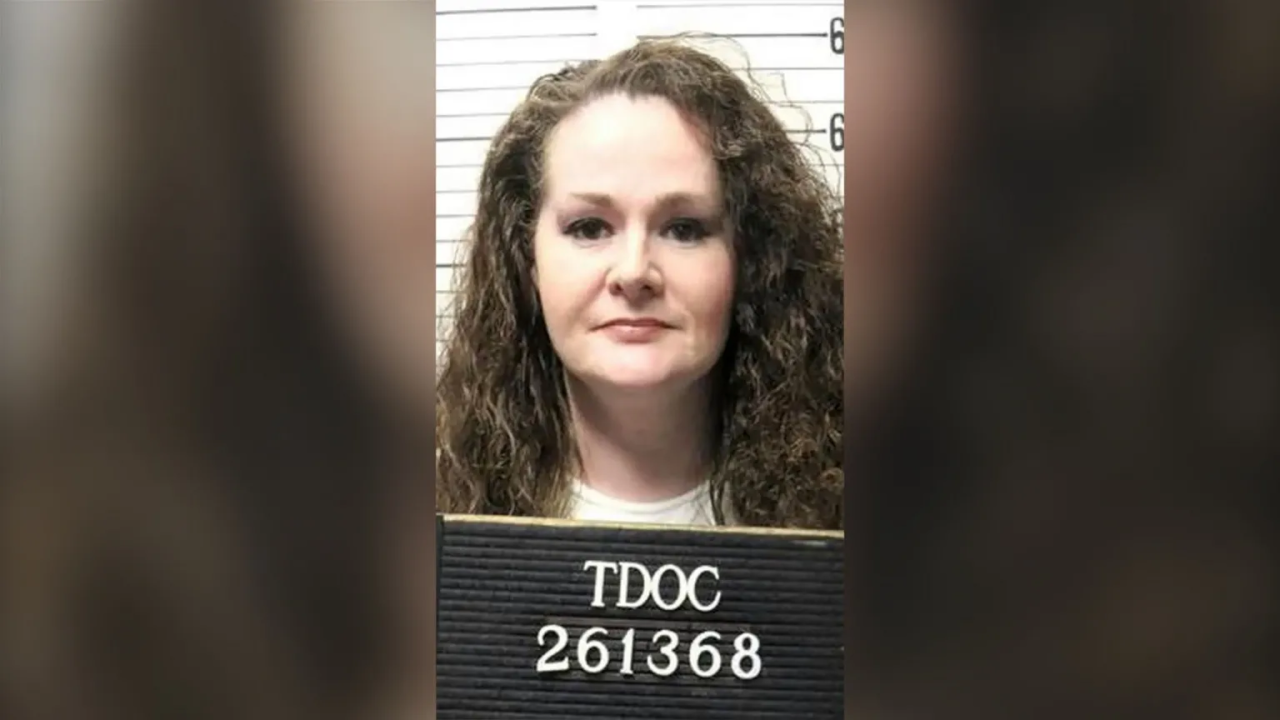
Christa Pike survived two lethal injections on Wednesday, remaining alive after the Tennessee death row inmate was administered two doses of pentobarbital. She was rushed to hospital in critical condition, prompting Governor Bill Lee to halt all executions in the state for 2026 and order an independent review of the botched procedure.
Pike, 50, was sentenced to death in 1996 for the 1995 murder of 19-year-old Colleen Slemmer. She was 18 at the time and, along with her then-boyfriend Tadaryl Shipp, was convicted of beating, torturing, and killing Slemmer. The execution attempt was allowed to proceed only after a last-minute legal battle, which the US Supreme Court declined to block.
The execution team struggled for nearly an hour to establish an intravenous line. Randy Spivey, one of Pike’s lawyers, told reporters that at least seven needles were used in her left arm alone. He described one needle that appeared bent after being pulled out during an unsuccessful attempt. Despite being injected with two lethal doses of pentobarbital, Pike was still breathing several minutes later. Observers were confined to a darkened room behind a closed curtain and were not informed about what happened next.
“No-one knew what was going on behind that curtain,” Spivey said. “I had no idea when and if medical professionals began to assist.”
Pike’s legal team has called on Governor Lee to commute her sentence, a request previously denied. Another attorney for Pike, Stephen Ferrell, said they are considering further legal options but want to ensure Pike recovers and can participate in decisions about her case.
The Tennessee Department of Correction defended its actions in a statement, saying it “followed every step of the State’s lawful, established execution protocol approved by the attorney general’s office.” The department added that the pentobarbital chemical “has consistently been effective” and the protocol does not allow for additional procedures beyond those carried out.
The Tennessee attorney general’s office agreed with the decision to investigate the execution. “We need to know what happened,” the office said.
Governor Lee said the review “will be thorough” and “it’s going to take time.” He acknowledged that “there are a lot of questions” that the state’s people deserve answers to but did not specify who would conduct the independent review.
The execution pause affects the scheduled 3 December execution of Gary Sutton, convicted of murder.
The incident drew strong reactions from Tennessee politicians. Republican Senator Marsha Blackburn, who is campaigning for governor, called the situation “tragic.” She urged a return to the electric chair, describing it as the simple solution to the “process failed.”
Democrat Jerri Green, Blackburn’s opponent, criticised the call for the electric chair. “As governor, I would put a moratorium on all future executions,” Green wrote on X.
The botched execution follows a similar failure in May 2026 when officials attempted to execute Tony Carruthers. Staff were unable to find a vein to administer lethal drugs, leading to a one-year reprieve for Carruthers.
Colleen Slemmer’s mother, May Martinez, travelled to Tennessee to witness Pike’s execution and told NBC News after the failed attempt that “it was a mess.”
Pike’s survival and the state’s response have raised questions about execution protocols and the administration of capital punishment in Tennessee. The investigation into what went wrong will be closely watched as legal and political pressures mount.
According to Joy Online.