US President Donald Trump has suspended several sanctions on Russia for 60 days, aiming to keep Moscow engaged in peace talks amid ongoing tensions over Ukraine. The move came late on Friday, two days before the sanctions were due to take effect.
Trump announced the decision on his Truth Social platform, saying he did not want to "do anything that will drive, foolishly, Russia away from the bargaining table." He added, "I am in the process of negotiating Peace in the war between Russia and Ukraine."
The sanctions in question were passed by the US Congress and signed into law by Trump in September. They were designed to increase economic pressure on Russia over its invasion of Ukraine, which began in February 2022. However, Trump’s suspension has provoked criticism and deepened a rift between Washington and Kyiv.
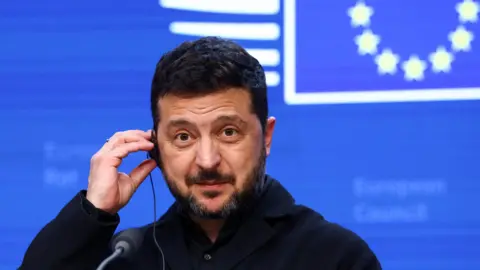
Ukrainian President Volodymyr Zelensky, speaking to NBC News on Sunday, called siding with Russian President Vladimir Putin “a historic mistake.” Zelensky has repeatedly pushed for tougher sanctions on Russia to cut off funding for its war effort.
Relations between the US and Ukraine have been strained recently after the Trump administration agreed to import Russian diesel, a controversial deal intended to ease rising energy prices in the US. Zelensky condemned the move as effectively investing in Russia’s war, saying the US was undermining Ukraine.
Russian envoy Kirill Dmitriev described Trump’s suspension of sanctions as “an important and truly historic moment.” Dmitriev said the sanctions would have inflicted “serious damage” on the US and global markets.
US Secretary of State Marco Rubio described the suspension as a 60-day pause to analyse the impact of sanctions on both the US and global economies.
Trump also accused Zelensky on Truth Social of not wanting to end the war. “He could have made a better deal two years ago than he can now,” Trump wrote.
Zelensky has maintained that Putin does not want peace, despite Ukraine’s calls for an end to the conflict. The president attended a European Union summit in Brussels on Friday, where he contrasted himself with Trump, saying it was “nice to be among real leaders” after the US president said Zelensky was “more difficult to deal with” than Putin.
The deal to import Russian diesel has drawn criticism from Ukraine and its European partners. They argue it weakens the sanctions regime designed to pressure Russia to cease military operations in Ukraine. Despite sanctions, Russia continues to export oil, much of it to China and India at discounted prices. The Centre for Research on Energy and Clean Air estimates China takes about half of Russia’s crude exports, with India accounting for 37%.
The situation has raised concerns that Trump may be siding with Russia. These fears increased after disruptions to Starlink, a US-provided satellite system used by Ukraine for communication and defence. Zelensky said US officials attributed speed restrictions to technical issues, but Ukraine’s own tests on EU soil found the system operating at higher speeds.
Trump denied both deliberately slowing down Starlink and accusations from Zelensky that the US had stopped sharing defence intelligence with Ukraine.
The suspension of sanctions, strained US-Ukraine relations, and ongoing Russian exports illustrate the complexity of the conflict’s international dimensions as peace talks remain fragile.
According to Joy Online.