
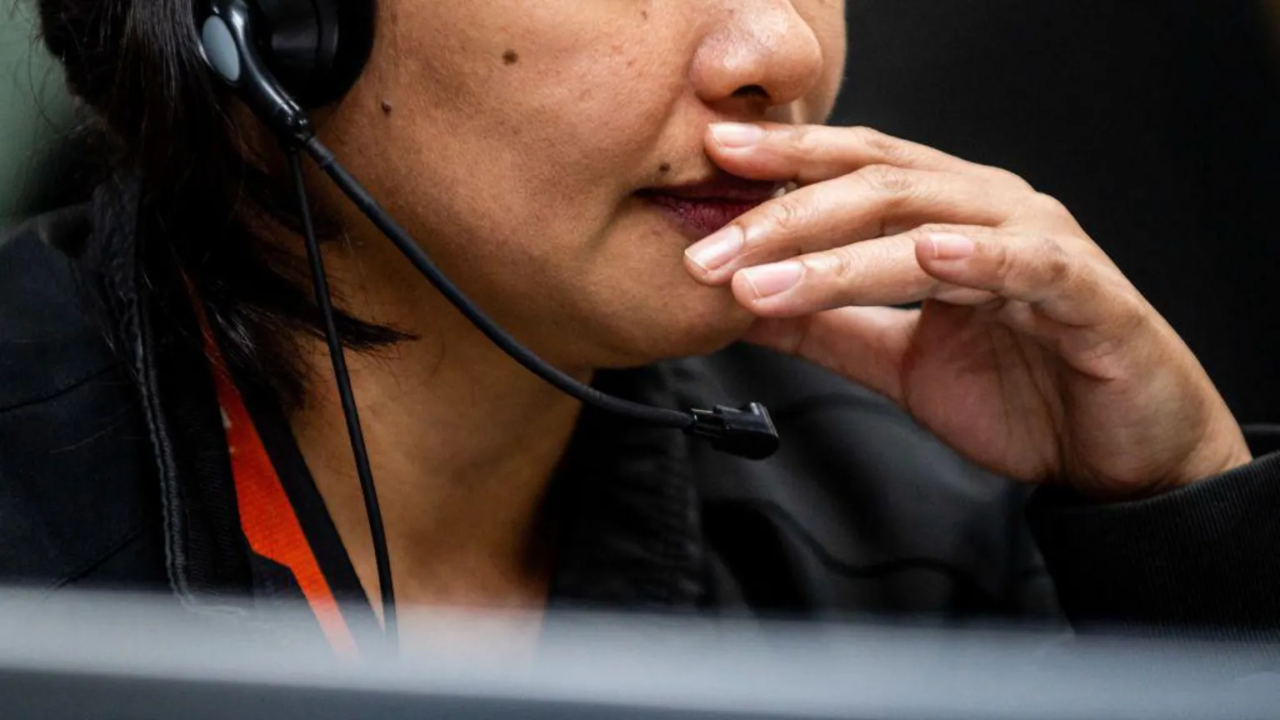
For 15 years, single mother Lisa made a living from content writing. She was one of the millions of Filipinos who had joined the country's booming outsourcing industry, working for multinational companies that had set up large operations in the capital, Manila.
The AI Transition Takes Hold
Lisa was made redundant eight months into her latest role, just one month before the position was due to become permanent. She was not alone – several former outsourcing employees, who asked to remain anonymous, shared similar experiences with the BBC. They had all been involved in training AI systems on their company's writing style, only to be replaced by the machines.
"I feel like I dug my own grave," Lisa said, reflecting on the situation. "We were the ones who trained the artificial intelligence that replaced us." The International Labour Organization estimates that 12.7 million Filipinos, more than one in four workers, are employed in occupations exposed to generative AI, the highest share in South East Asia.
The Outsourcing Industry's Vulnerability to AI
The Philippines' outsourcing industry, which employs roughly 1.9 million people and generates $40bn in revenues every year, is disproportionately vulnerable to the impact of AI. Companies are under pressure to implement AI to reduce costs and increase productivity, experts say. Teleperformance, the world's largest call centre operator and one of the Philippines' biggest private employers, has said AI offers an opportunity to augment rather than replace its workforce.
Teleperformance expects AI to handle routine interactions while human agents move into more complex roles. Accenture has similarly said that generative AI will reshape almost every job rather than eliminate positions. The firm has promised to invest billions of dollars in AI capabilities and workforce training. Concentrix, the biggest outsourcing firm in the Philippines, says its AI systems should remain under human oversight and has committed to training employees in the new technology.
The Pressure to Automate
Mary, another former content writer, says her employer encouraged the use of AI as a productivity tool. Instead of making her job easier, she says it created additional responsibilities. "We had to edit more, fact-check more because the data AI produced was inaccurate," she says. "Technically it was more work for us." Like Lisa, she was later made redundant.
The pressure to adopt AI is coming from foreign clients who expect suppliers to integrate the technology into the services they deliver. Philippine outsourcing companies compete directly with rivals in India and elsewhere for contracts from multinational corporations. Increasingly, those clients expect suppliers not only to provide cheaper labour, but also to integrate AI into the services they deliver.
The Way Forward
The Philippines' outsourcing industry is facing a significant challenge as AI begins to automate jobs. While some companies are planning to retrain employees, the impact of AI is expected to be felt deeply. The International Labour Organization expects many roles to change rather than disappear, but the types of service jobs that people do in the Philippines leaves it particularly at risk. The country's outsourcing industry needs to prepare for the transition, and reskilling is essential.
As the industry adapts to the changing landscape, the question remains: what happens when AI begins to automate the jobs that helped lift millions of people into the middle classes? The answer will have far-reaching implications for the Philippines and other emerging economies.
Source: Joy Online