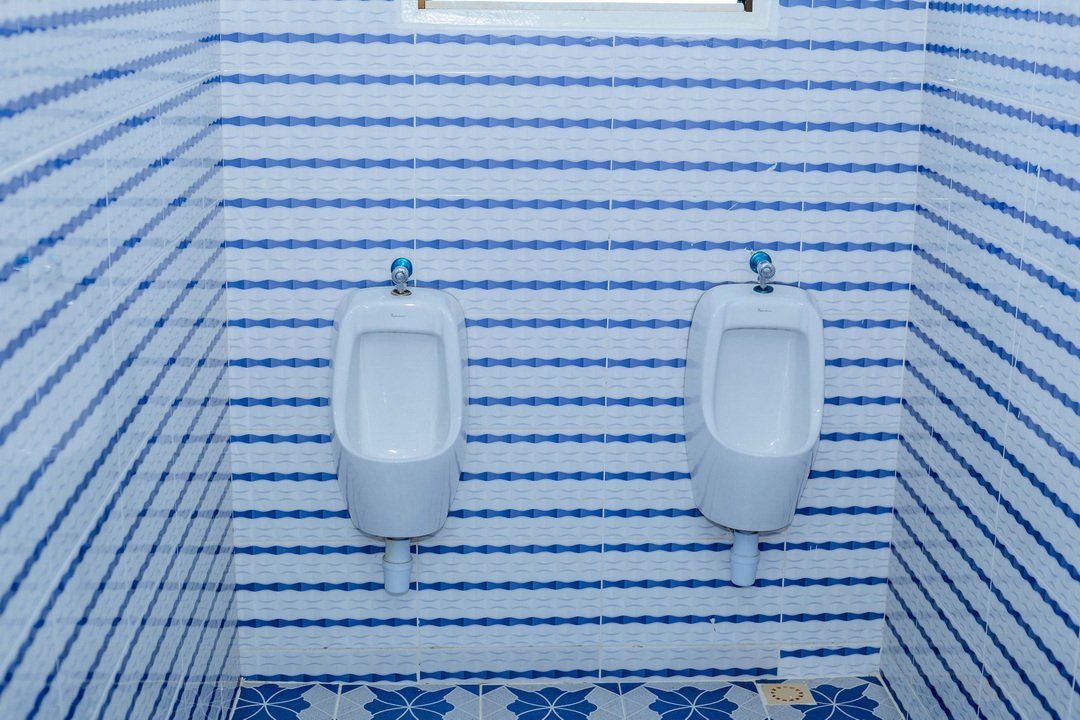
Walking into a health facility and having access to a clean, usable toilet may seem like one of the most basic expectations in Ghana. However, a recent assessment by the World Health Organization (WHO) and the United Nations Children's Fund (UNICEF) has revealed that only 16% of health care facilities in Ghana met the basic sanitation standard in 2025.
Shocking State of Ghana's Hospitals: Sanitation Crisis Deepens
Ghana trails the global average in sanitation levels, with 83% of health facilities failing to meet the basic sanitation standard. The WHO/UNICEF report, Progress on Water, Sanitation, Hygiene, Environmental Cleaning and Waste Management in Health Care Facilities 2015–2025, highlights the country's dismal performance. According to the report, roughly five out of every six health facilities did not meet all the requirements needed to be classified as having basic sanitation.
To meet the WHO/UNICEF standard, a health facility must have improved and usable sanitation facilities, including a toilet dedicated to staff, sex-separated facilities with provision for menstrual hygiene, and a toilet accessible to people with limited mobility. The Ghana data show that while 16% met this full standard, 74% had only limited sanitation services, and 10% had no sanitation service.
Sanitation is Ghana's Weakest Link
Ghana's sanitation situation is particularly striking when compared with the rest of the world. Globally, 40% of health facilities met the basic sanitation standard in 2025, compared with Ghana's 16%. The estimate for sub-Saharan Africa was 23%. This places Ghana 24 percentage points below the global level and seven percentage points below the sub-Saharan African estimate.
Sanitation is also Ghana's weakest-performing area among the four WASH services for which the report provides national estimates. The country recorded 65% coverage for basic water services, 54% for basic hygiene, and 27% for basic healthcare waste management, compared with just 16% for sanitation.
Water Availability is Not Enough
The picture is better when it comes to water, although Ghana still trails the global level. About 65% of Ghana's health facilities had basic water services in 2025, meaning water from an improved source was available on the premises. Another 35% had limited water services. Globally, basic water coverage stood at 85%. That leaves Ghana about 20 percentage points behind the global level.
Water availability in a health facility underpins many of the sanitation, hygiene, and cleaning practices required to maintain a safe environment for delivering health care. Hand hygiene presents another challenge. The report found that 54% of Ghana's health facilities met the basic hygiene standard, which requires functional hand-hygiene facilities at points of care as well as appropriate handwashing facilities at toilets.
Medical Waste Management is a Concern
Only 27% of Ghanaian health facilities met the basic healthcare waste-management standard in 2025. To qualify as basic under the WHO/UNICEF standard, waste must be properly segregated, while sharps and infectious waste must be safely treated and disposed of. The Ghana figures show that 54% of facilities had limited waste management services, and another 19% had no service.
The global picture is markedly different. 71% of health facilities worldwide met the basic waste-management standard, although the sub-Saharan African estimate was much lower at 24%. Ghana is therefore close to the regional level but far behind the global benchmark.
What's Next for Ghana's Healthcare?
Behind the percentages is a basic question: can healthcare be considered fully safe and dignified when the facilities providing it lack essential water, sanitation, hygiene, and waste-management services? The WHO/UNICEF findings show that Ghana's challenge is not uniform. Water performs relatively better. More than half of facilities meet the basic hygiene standard. But sanitation remains particularly weak, and only about one in four facilities meets the standard for safely managing healthcare waste.
Closing that gap is therefore not simply about improving Ghana's position in an international table. It is about the conditions under which patients receive care, health workers perform their duties, women manage menstruation, persons with limited mobility use health facilities, and potentially infectious waste is handled. Those are ultimately questions of patient safety, infection prevention, and the quality of care provided in Ghana's hospitals.
Source: Joy Online