In October 2026, the Ghana Audit Service will roll out an online tracker to monitor the progress of audit recommendations and recoveries. The system will reveal which recommendations have been carried out, which remain outstanding, and the reasons for delays. It will also track amounts identified for recovery, pursued, and collected, alongside any administrative or disciplinary actions taken.
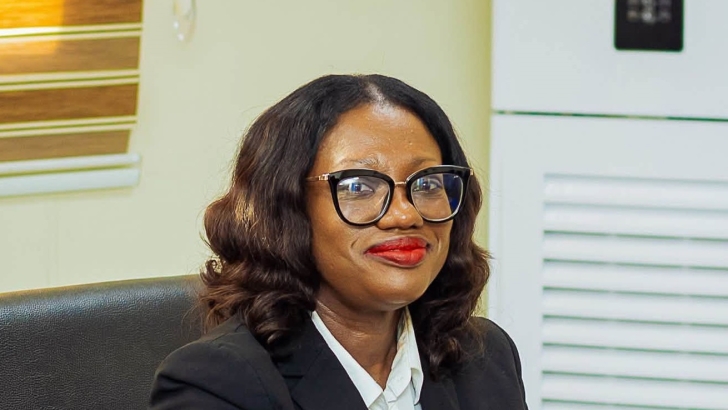
The Auditor-General, Dr Pamela Graham, announced this at the launch of the 2026 financial year audit in Accra on September 29. She described the tracker as a tool to pinpoint weaknesses in public institutions that leave public funds vulnerable. “An audit report is the beginning of action, not the end,” she said.
The announcement comes amid concerns raised by Abena Osei-Asare, Chairperson of Parliament’s Public Accounts Committee (PAC), about unpaid surcharges. According to Osei-Asare, GH¢280.5 million in surcharges resulting from audit reports remains unpaid. Since 2022, about GH¢57.2 million has been collected through the Auditor-General’s recovery accounts, as of February 2026.
Osei-Asare also revealed that the 2025 audit reports on ministries, departments, and agencies exposed financial irregularities amounting to roughly GH¢5.2 billion, with GH¢4.8 billion linked to tax irregularities alone. “Finding the problem is not enough. Reporting is also not enough. Even debating on it in Parliament is not enough. There must be a follow-through,” she said.
Dr Graham detailed the Audit Service’s efforts to recover funds, stating that GH¢17.6 billion has been recovered so far, and the Service has saved the country approximately GH¢11.7 billion by preventing wrongful payments. The Service plans to conduct interim audits at selected institutions to catch problems early and reduce prior-year adjustments. It will also expand the use of data analytics and forensic tools, including artificial intelligence, where appropriate.
She said the Service would move from analysing limited samples to examining entire data populations whenever the data permits. A correspondence management system, also developed in-house, will handle submissions from audited entities.
Dr Graham outlined five focus areas for the 2026 audit cycle: continuous engagement, timeliness, technology, people, and impact. She reminded entities to submit their reports to Parliament within six months, as required by Article 187(5) of the 1992 Constitution. She praised those who submitted their financial statements on time and urged others to catch up.
On disallowance and surcharge, Dr Graham said she will use her constitutional powers where expenditure was found to be unlawful. Individuals facing surcharges receive a notice of intention and have 14 days to respond. If the response is unsatisfactory, a disallowance and surcharge certificate is issued, with copies sent to the institution involved and the Attorney-General. The surcharged person then has 60 days to appeal.
“Every cedi lost through weak controls, unlawful expenditure, inefficiency or failure to act is a cedi withheld from education, healthcare, infrastructure, social protection,” she said.
At the launch, Professor Francis Dodoo, Presidential Advisor on the National Anti-Corruption Programme, urged the Audit Service to set surcharge rates above what misappropriated funds could earn on the market. Using a hypothetical example, he said that if GH¢10 million were misappropriated and discovered two years later when Treasury bill rates were 28%, recovering only the principal would leave the offender with GH¢5.6 million in interest gains.
“Isn’t that an investment or a lottery that anybody would be willing to try?” he asked.
Prof. Dodoo repeated figures he presented in Kumasi in April, stating Ghana lost GH¢100 billion through financial irregularities over six years. Annual losses rose from GH¢8.8 billion in 2023 to GH¢18.4 billion in 2024. About a quarter of the 2024 losses were cash irregularities, and GH¢8.1 billion in expenditure claims were rejected by the Auditor-General as fictitious debt. He requested the Audit Service provide corresponding figures for 2025.
He also addressed reports that some audits from the COVID-19 period might not have been reported. He said he understood the issue arose through journalist Manasseh Azure’s work. “It stands the potential of undermining public confidence big time,” he said. He called on the Audit Service to investigate and explain what happened, why, and recommend what should be done about the accounts and persons involved.
Prof. Dodoo warned against leniency towards offenders. “Whose friend have you been?” he asked, arguing that shielding wrongdoers harms the public.
According to Joy Online.