
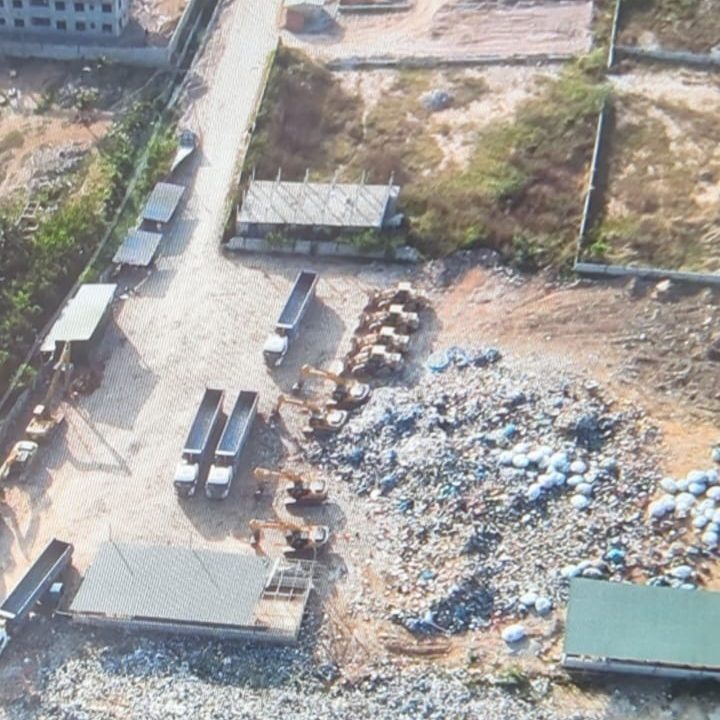
At Mallam Junction, the Ghana Armed Forces’ 48 Engineer Regiment has been clearing years of waste and silt from the Lafa water retention basin since August. Their work aims to restore the basin’s capacity to hold stormwater, a key factor in the frequent flooding that disrupts traffic and daily life in the area.
The government’s renewed intervention follows earlier meetings coordinated from Jubilee House and led by Chief of Staff Julius Debrah. These discussions brought together government agencies, the Weija-Gbawe Municipal Assembly, and private-sector actors to address landfill issues, blocked drainage, and environmental degradation around Mallam Junction.
The Post-Flood Mitigation Task Force, overseeing the operation, said the objective is to restore waterways and reduce flooding’s impact on communities. The task force has also targeted illegal structures in the area with plans to build protective embankments.
Residents and business owners expressed cautious optimism. Flooding has long affected traffic flow and commerce in and around Mallam Junction. The renewed presence of government personnel and equipment signals a break from past efforts that ramped up only after heavy rains caused flooding.
Locals have repeatedly raised concerns about waste dumping and blocked drainage channels. The Weija-Gbawe Municipal Assembly, responsible for local sanitation enforcement and drainage maintenance, has acknowledged these challenges.
CAITECH, a business operating in the area, has offered support by providing funding, equipment, and logistics for dredging and other remediation. This marks a rare example of private-sector cooperation in flood mitigation efforts.
Officials from the Ghana Hydrological Authority explained that years of dumping, siltation, and encroachment have reduced the Lafa basin’s ability to channel stormwater effectively. The government’s current strategy targets these root causes through dredging, waste removal, and enforcement against encroachment.
Residents say the priority is not merely clearing floodwater after rains but addressing the conditions that cause flooding. They call for sustained government presence to prevent illegal dumping and maintain drainage channels.
The renewed focus emphasizes collaboration among central government, the Weija-Gbawe Municipal Assembly, and businesses. Coordination will reportedly be critical in stopping activities that obstruct stormwater flow.
For commuters using the Mallam corridor, improved drainage and waste management could ease traffic disruptions. Businesses also stand to benefit, as flooding along major commercial routes has damaged property and hindered customer access.
The ongoing operation at Mallam is part of a wider government effort to restore waterways in flood-prone parts of Greater Accra.
Many residents now want the work to continue beyond immediate cleanup. They hope the combined efforts of government agencies, the task force, the municipal assembly, and private stakeholders will produce lasting improvements.
The current activity shifts attention toward sustaining these efforts over time, rather than returning to reactive responses after the next downpour.
According to Joy Online.