

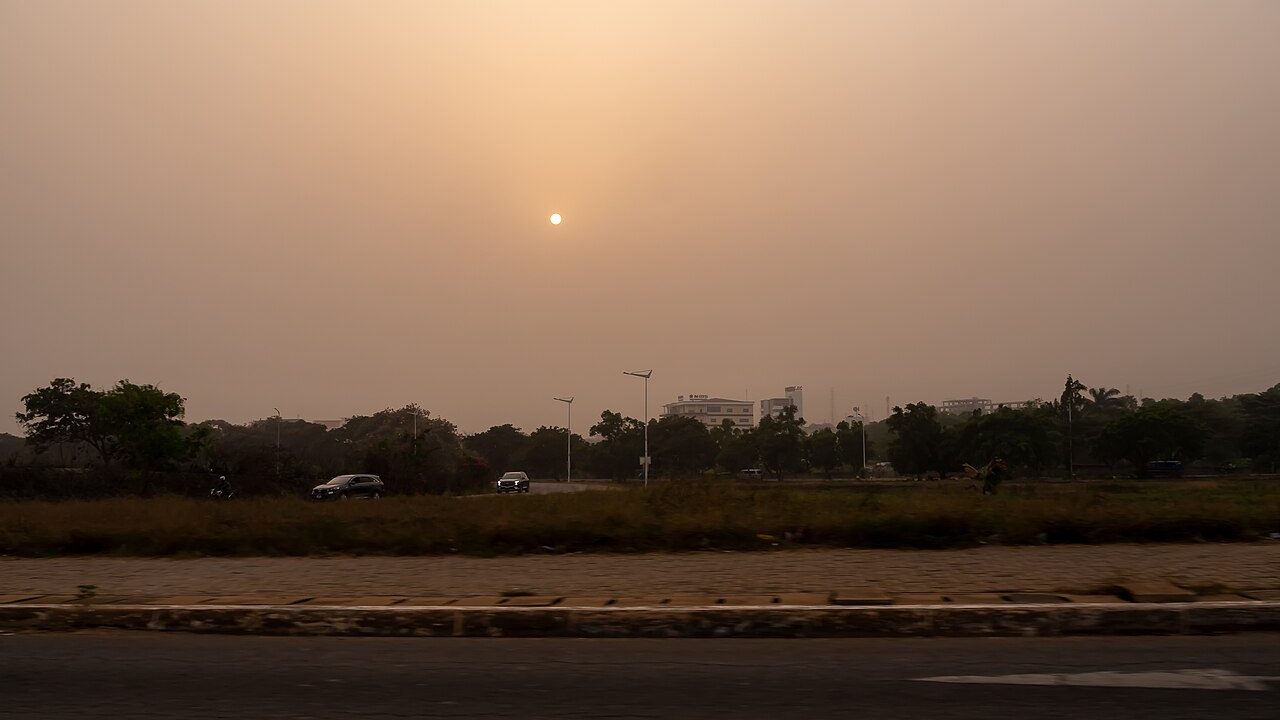
One morning in December, Accra wakes up to a pale sky. The sun looks like a white coin, the buildings across the road are blurred, and there is dust on every car. The harmattan has arrived.
The harmattan is a dry, dusty trade wind that blows from the north-east, from the Sahara Desert across West Africa, usually between late November and March. It is strongest in the north of Ghana, but in most years it reaches the coast, including Accra, especially in December and January.
What it does to health
The wind carries fine dust particles thousands of kilometres. In Accra, the result is haze that reduces visibility, a fine layer of dust on surfaces and a drop in humidity. Mornings can be noticeably cooler, and people who usually complain about the heat reach for sweaters. The dry, dusty air can irritate the eyes, nose and throat. People with asthma, allergies and other respiratory conditions may suffer more. Dry skin, cracked lips and nosebleeds are common. Doctors advise drinking plenty of water, using moisturiser and lip balm, and wearing a mask on very dusty days.
In the north of Ghana, the harmattan season also coincides with a higher risk of meningitis outbreaks.
Flights, fires and homes
Heavy harmattan haze can reduce visibility enough to disrupt flights, particularly at airports in the north such as Tamale. Kotoka International Airport in Accra is occasionally affected. Travellers in December and January should check flight status. The dry air and dry vegetation increase the risk of bush fires and domestic fires. Fire service officials warn residents to be careful with open flames, cooking and burning rubbish.
Dust gets everywhere: furniture, clothes, electronics and car engines. Many people close windows during the worst days, cover electronics and change car air filters more often.
Christmas and changing patterns
The harmattan coincides with Christmas, New Year and the December influx of visitors from abroad. For many Ghanaians, the dusty haze and cool mornings are part of the feeling of the season. Some years, the harmattan is weak in Accra; in others, it is intense. Scientists study how climate change may be affecting its strength and timing.
Accra spends most of the year complaining about heat and humidity. For a few weeks, the Sahara sends cold mornings and dust instead, and people complain about that too.
.jpg)