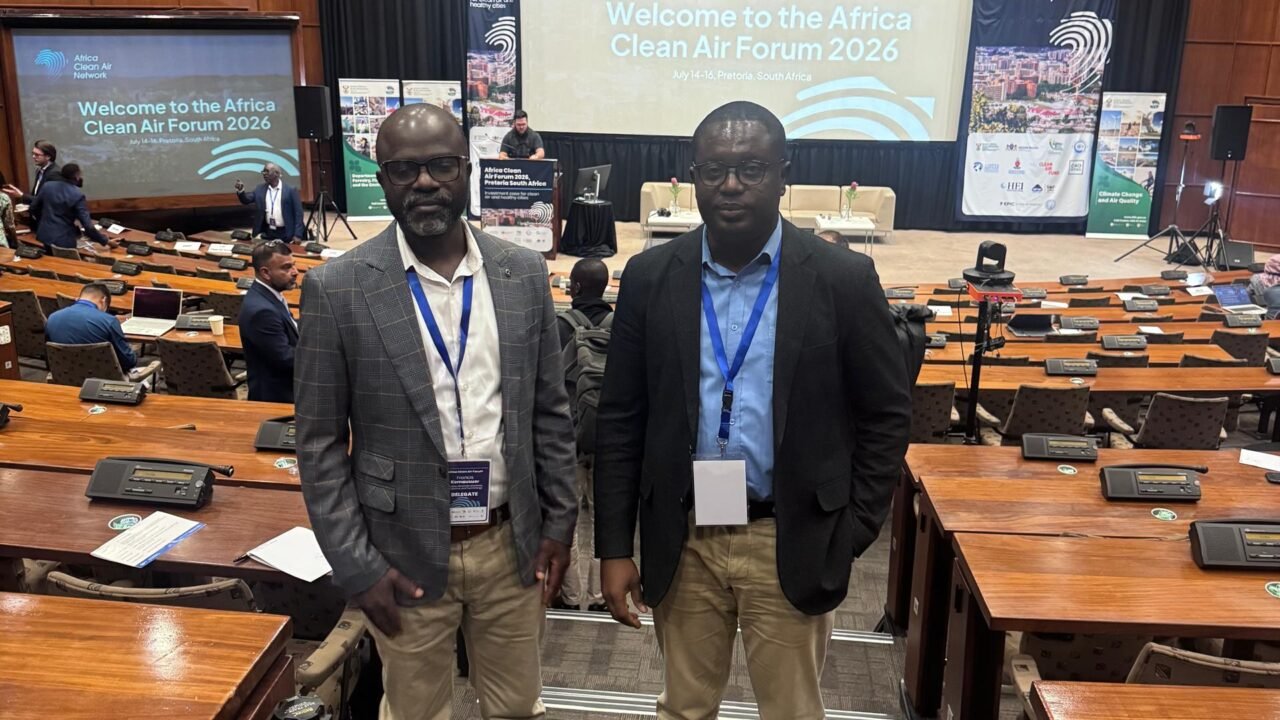
The Kwame Nkrumah University of Science and Technology (KNUST) has launched the West Africa Centre for Clean Air (WACCA), a regional clean-air institution aimed at strengthening air-quality management policies across the continent. The Centre, hosted by KNUST, was represented at the 2026 Africa Clean Air Forum in Pretoria, South Africa, by its Coordinator and Co-Principal Investigator, Dr Yen Adams Sokama-Neuyam.
Regional Ambition Takes Centre Stage
The West Africa Centre for Clean Air (WACCA) is being established as part of a CCAC-supported project aimed at strengthening Ghana's air-quality management policies and building national and regional capacity for effective air-quality management. The initiative involves KNUST, the University of Energy and Natural Resources, and Beijing University of Chemical Technology. WACCA's ambition is regional, with Dr Sokama-Neuyam saying it will "spearhead air quality research policy and integration, regional integration and regional regulation and implementation."
Dr Sokama-Neuyam, a Senior Lecturer in Petroleum Engineering at KNUST and Scientific Director of the university's Net-Zero Carbon Emission Lab, believes Ghana already has a strong foundation of researchers and institutions working on air quality. He points to researchers at KNUST and other Ghanaian universities, as well as the Environmental Protection Authority and the Ministry of Environment, Science, Technology and Innovation, as evidence that Ghana has an established base from which to build.
Funding Woes: A Difficult Financial Backdrop
The Centre's emergence comes against a difficult financial backdrop. The Clean Air Fund's State of Global Air Quality Funding 2025 found that international development funding for outdoor air-quality action fell 20% from US$4.7 billion in 2022 to US$3.7 billion in 2023. Between 2019 and 2023, air-quality projects accounted for just 1% of international development funding. The situation in sub-Saharan Africa was even more stark, with outdoor air-quality funding falling by 91% in 2023, from US$129 million to US$12 million.
Dr Sokama-Neuyam says Ghana's research environment has seen some improvement in access to air-quality funding. "In Ghana, and especially within the research space, access to funding has improved in recent times, especially within air quality." However, he believes securing funding for research and implementation will become increasingly difficult. "Funding in every sector has never been easy. And I think it's only going to get harder over a period of time, because the funding landscape has become a bit difficult, because many of the institutions that used to invest in research have started cutting back on their investment."
A Learning Opportunity and a Chance to Build Relationships
The Africa Clean Air Forum itself was designed to examine not only scientific and policy responses to air pollution but also funding pathways and opportunities for private-sector investment. For WACCA, the forum offered both a learning opportunity and a chance to begin building the relationships needed to survive beyond its initial project funding. Dr Sokama-Neuyam described the Centre's participation as its first at the forum. "This is the first time we have participated in this forum. The Africa Air Quality Forum is a very big one. We've learned a lot for the past three days."
The Centre's focus on sustainability is particularly relevant given the funding trends highlighted at the Pretoria forum. Dr Sokama-Neuyam says the team has been engaging institutions and funding agencies to build a sustainable future for WACCA. "We've also been working with several institutions, funding agencies to be able to give sustainability to the centre at the end of the funding cycle." That focus on sustainability is crucial as African countries confront growing urbanisation, transport emissions, household pollution, waste burning, and other sources of polluted air.
Source: Joy Online