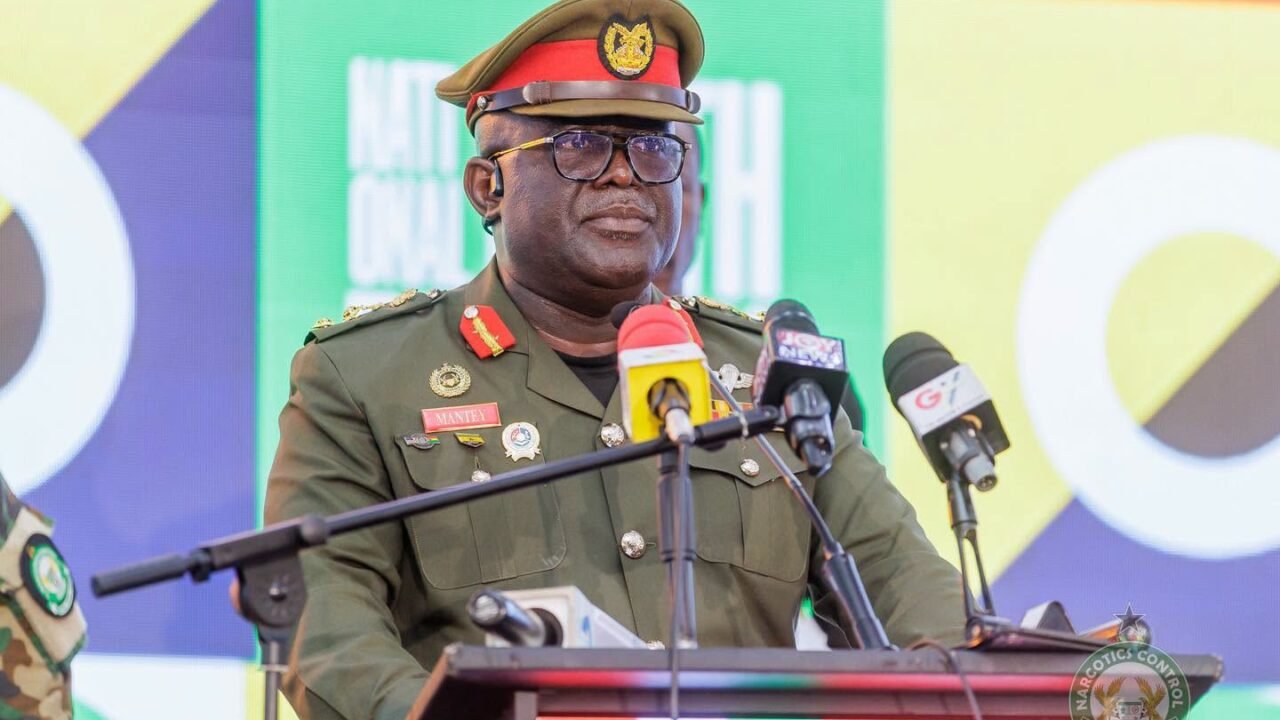
The Director-General of the Narcotics Control Commission (NACOC), Major General Maxwell Obuba Mantey, has warned Ghana's youth against misconceptions about cannabis at the National Youth Conference held at the Great Hall of the Kwame Nkrumah University of Science and Technology (KNUST) on August 12, 2026.
Cannabis Myths Debunked: NACOC Issues Warning to Ghana's Youth
Misconceptions About Cannabis Persist Among Young People
Major Gen. Mantey said that the belief that cannabis is safe because it comes from a plant is one of the persistent misconceptions among young people. He stressed that the natural origin of a substance should not be taken as proof that it is harmless.
The Director-General identified this misconception as a major challenge in the fight against drug abuse, particularly among young people. He emphasized that the effects of drug use could extend beyond immediate intoxication, potentially affecting education, relationships, productivity, and future opportunities.
The Risks of Cannabis Use
Major Gen. Mantey said that cannabis use can affect the brain and impair cognitive functions, including memory, judgment, and decision-making. He challenged claims that cannabis can make users smarter or improve their intellectual abilities, stating that such misconceptions could encourage young people to experiment with the substance.
He urged young people to critically assess claims about drugs and rely on credible scientific information before making decisions about substance use. The Director-General also encouraged young people to become ambassadors of drug-free lifestyles by sharing accurate information with their peers and communities.
The Need for Collective Effort
Major Gen. Mantey emphasized that the fight against drug abuse cannot be left to law enforcement agencies alone. He called for stronger involvement from parents, teachers, schools, religious organizations, civil society groups, and young people.
The Director-General said that NACOC would continue to intensify public education and prevention programmes as part of efforts to reduce drug abuse, particularly among young people. He reaffirmed the Commission's commitment to working with stakeholders to build a generation that is better informed about the risks associated with drug abuse and empowered to make healthy and responsible choices.
A Call to Action
Major Gen. Mantey urged young people experiencing substance-use challenges to seek help and guidance rather than allowing peer pressure and misinformation to influence their decisions. He emphasized that accurate information is key to making responsible choices and that young people have a critical role to play in promoting drug-free lifestyles.
As Ghana's youth continue to face the challenges of drug abuse, it is essential that they have access to accurate information and support. The National Youth Conference provided a platform for young people to engage with NACOC on drug-related issues and challenge misconceptions surrounding narcotic substances.
Source: Joy Online