
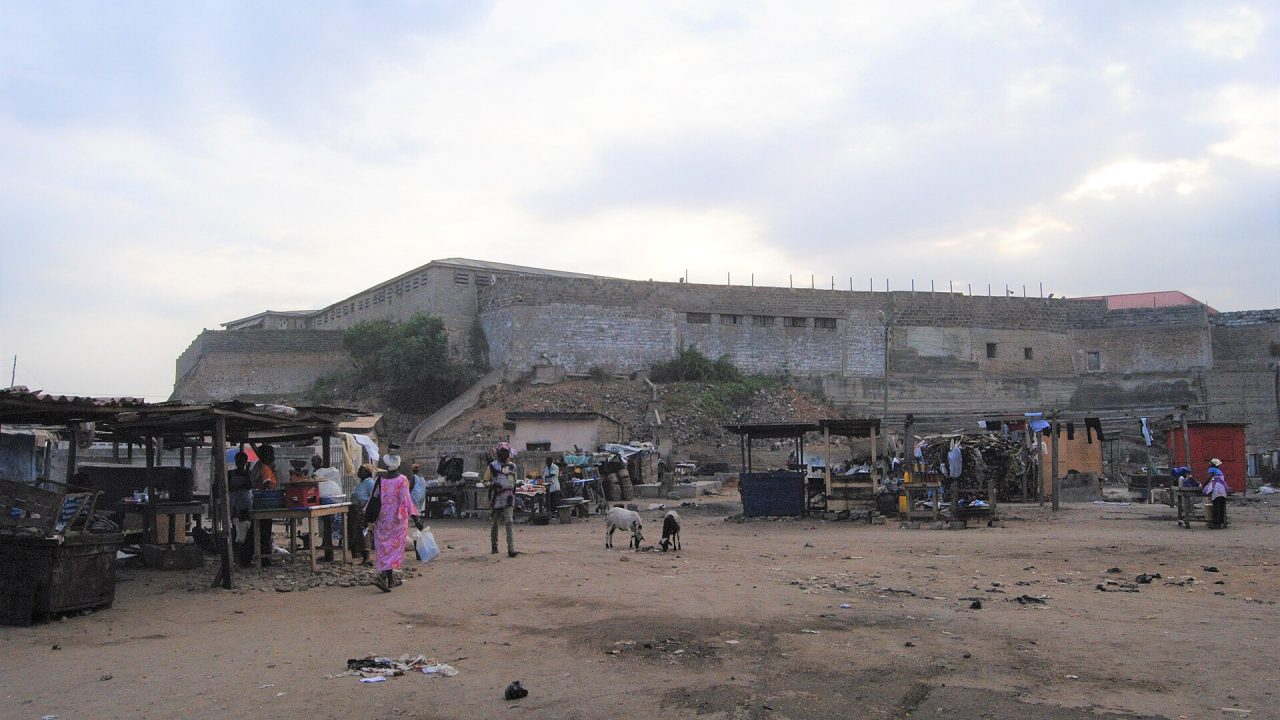
In February 1951, the man who won Accra Central in the Gold Coast’s first general election under the new constitution was sitting in a prison cell in James Fort.
Kwame Nkrumah had been jailed a year earlier for his role in Positive Action, a campaign of strikes and non-cooperation against colonial rule. His Convention People’s Party won the election by a landslide. The colonial governor, Sir Charles Arden-Clarke, released him on 12 February 1951 and asked him to lead the government.
Positive Action
Nkrumah had broken away from the United Gold Coast Convention in 1949 and formed the CPP, demanding “Self-Government Now”. In January 1950 he launched Positive Action: strikes, boycotts and protests intended to force the British to grant self-rule. The colonial authorities declared a state of emergency. Nkrumah and other CPP leaders were arrested and convicted of sedition and inciting illegal strikes, and he was sentenced to prison.
James Fort
James Fort, built by the British in Jamestown in the seventeenth century as a trading post, had long been used as a prison. Nkrumah was held there. From his cell, according to accounts of the period, he communicated with the party through smuggled notes, some written on toilet paper, keeping the campaign going.
The 1951 election
The Coussey constitution, drawn up after the 1948 riots, allowed elections to a Legislative Assembly with an African majority. The CPP campaigned hard while its leader was in jail, and Nkrumah stood for Accra Central. The party won a large majority of the elected seats, and Nkrumah won his own seat overwhelmingly.
From prisoner to Leader of Government Business
Arden-Clarke faced a choice: keep in prison the man the voters had chosen, or release him. He released him. Crowds gathered outside James Fort to welcome Nkrumah, and he became Leader of Government Business, a position that became Prime Minister in 1952. Six years later he declared independence.
The fort after Nkrumah
James Fort remained a prison for decades after independence, closing only in 2008. Today it is part of Jamestown’s historic district, near the lighthouse and the fishing harbour, and visitors can tour the building where Nkrumah was held.
Ghanaians remember the story as proof that the colonial state could not jail the independence movement into silence. “PG”, for “Prison Graduate”, became a badge of honour worn by CPP members who had been jailed for the cause.
Why it matters
The release of an elected leader from prison to form a government was one of the key moments in the end of British rule in Africa. It showed that the colonial power, faced with a clear electoral verdict, would bend.
Nkrumah entered James Fort as a convicted agitator. He left it as the leader of the colony’s first African-led government, with a crowd singing outside the gate.