Older Ghanaians still remember the morning in 1974 when every driver in the country had to unlearn a lifetime of habit. Overnight, cars that had kept to the left moved to the right. The change was called Operation Keep Right, and it remains one of the most unusual days in Ghana’s road history.
A British inheritance
Like other British colonies, the Gold Coast drove on the left. Vehicles were built with the steering wheel on the right, and road signs, junctions and bus stops were designed for left-hand traffic. Ghana kept the system after independence in 1957.
Surrounded by the right
Ghana’s neighbours, Côte d’Ivoire, Burkina Faso and Togo, were former French territories that drove on the right. Cross-border trade and travel meant drivers constantly switched sides at the borders, which was confusing and dangerous.
The decision
Under the National Redemption Council government led by Colonel Ignatius Kutu Acheampong, Ghana decided to change to right-hand traffic. The move was presented as practical, bringing Ghana in line with most of West Africa, and as part of a wider push for national discipline.
4 August 1974
The switch took place on 4 August 1974. Authorities ran public education campaigns in the weeks before, with radio announcements, posters and demonstrations explaining the new rules.
Changing the roads
Road signs had to be moved or replaced, bus stops relocated and junctions redesigned. Traffic police were deployed widely to guide drivers in the first days.
Changing the vehicles
Many vehicles in Ghana still had right-hand steering. Over time, right-hand-drive vehicles were phased out, and imports shifted to left-hand-drive models suited to the new system.
The first days
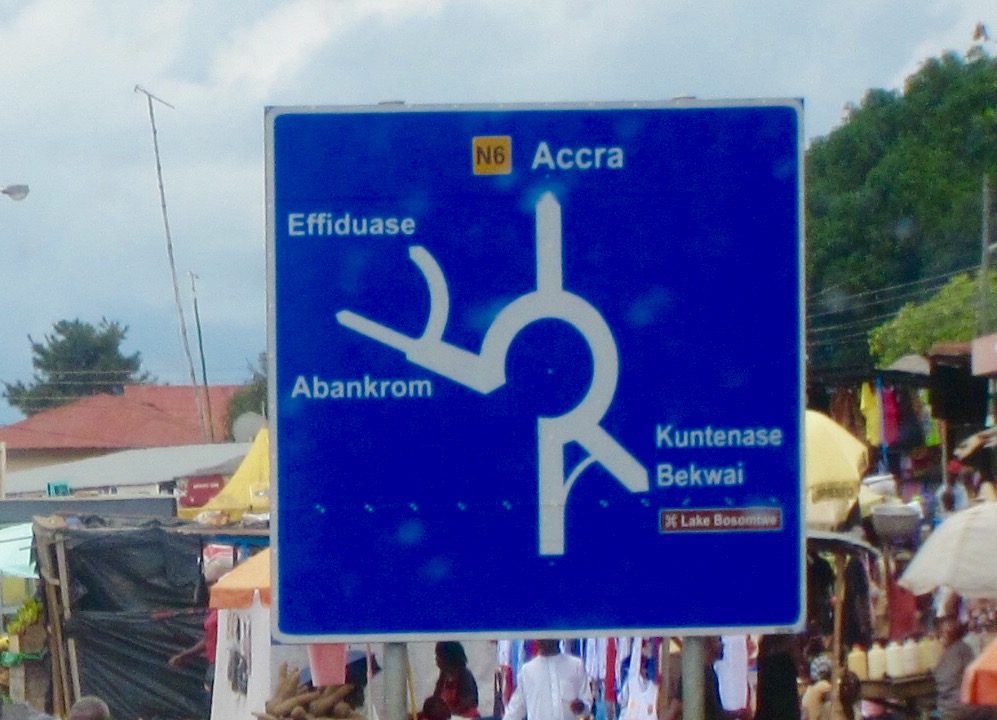
Drivers had to think carefully at every turn and roundabout. Pedestrians had to learn to look the other way before crossing. Accounts from the time describe slow, careful traffic as people adjusted.
Why it worked
The change was helped by relatively low traffic volumes compared with today, strong government control of the media, and a large police presence. A similar switch in modern Accra traffic would be far harder.
Other countries
Ghana was not alone. Several countries around the world have changed sides of the road, including Sweden in 1967 and Nigeria in 1972, usually to match their neighbours.
A lasting legacy
Today, few young Ghanaians know that their parents once drove on the left. Yet the decision shaped the roads they use every day, the cars they buy and the way traffic flows across the country’s borders.
Habits can change
Operation Keep Right is sometimes cited as proof that a whole country can change a deep habit when the reasons are clear and the preparation is serious. It is a lesson that road safety campaigners in Ghana still find useful.