
The Bank of Ghana has kept its benchmark policy rate at 14 percent, a move backed by economist Professor Peter Quartey as rising fuel prices and higher utility charges continue to pressure local businesses and households.
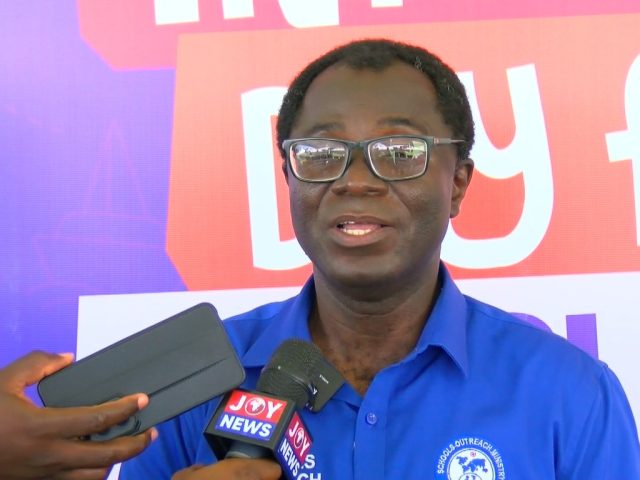
Speaking on Joy News’ PM Express Business Edition on Thursday, Prof Quartey said the decision to hold the rate steady was appropriate given the growing list of economic threats facing the country.
Global crude oil prices have been rising steadily on international commodity markets, creating continuous upward pressure on domestic inflation.
Prof Quartey noted that international oil price trends remain volatile, making short-term economic planning difficult for policymakers and private businesses alike.
"Well, it’s certainly a good move because if you look at the threats to our macro economy, you realise global oil prices have been going up and are likely to go up," Prof Quartey said on the television broadcast.
He stressed that uncertainty about international oil supplies makes it hard to predict how far fuel prices could rise in the coming months.
"We’re not sure what the near end is going to look like," he added.
Rising crude oil costs on global markets feed directly into local pump prices across Ghana, increasing transport tariffs and everyday goods distribution fees.
Inside the domestic economy, consumers and commercial operators are dealing with several compounding cost pressures at the same time.
Utility service providers have raised tariffs, increasing monthly operational expenses for factories, small businesses, and residential homes.
At the same time, consumers at fuel stations across the country have faced repeated increases in retail pump prices for petrol and diesel.
Prof Quartey pointed to these domestic factors as major contributors to sustained inflationary pressure across the economy.
"So, and inflationary threats are there, and you’ve seen utility increases, we’ve seen increases in fuel prices at the pump, etc.," he said.
Under these combined conditions, Prof Quartey described the decision by the Bank of Ghana to keep the central policy rate unchanged as the right strategy.
"So it is just laudable, or it’s just ideal that you maintain the rate," he said.
The Bank of Ghana uses its policy rate as the baseline cost of money in the financial system, influencing the interest rates commercial banks charge on business and personal loans.
When the central bank raises this benchmark, commercial banks raise their lending rates, which makes corporate borrowing and working capital more expensive.
Prof Quartey noted that strictly judging by international economic developments, central bank governors could have justified raising the rate further to curb inflation.
However, he warned that making credit more expensive right now would inflict severe financial pain on domestic companies already struggling with higher bills.
"It’s quite a difficult one. If you really want to look at what is happening globally, you may want to hike the rate, but that would not be ideal for businesses, would not be ideal for the cost of doing business," Prof Quartey said.
Ghanaian enterprises rely on commercial bank credit to import raw materials, pay staff, and maintain supply chains.
Higher borrowing costs added to expensive utility tariffs and elevated fuel bills would push up production costs even further, forcing some businesses to cut back operations.
Prof Quartey explained that central bank officials are choosing to observe market trends before taking any further monetary action.
"And therefore, the bank is taking the approach of basically to watch the space a little bit and see how it comes out, and then we’ll take a decision," he said.
This strategy gives the Bank of Ghana time to evaluate new economic data as it becomes available over the coming weeks and months.
It allows monetary authorities to measure the full impact of recent utility tariff adjustments and global oil price shifts before making changes to interest rates.
Prof Quartey reaffirmed his endorsement of the central bank's current position, describing the hold as a balanced decision under difficult economic circumstances.
"But I think it’s certainly in the right direction," he said.
The Bank of Ghana will monitor local price developments, fiscal trends, and international trade conditions before its next monetary policy committee meeting.
According to Joy Online.