
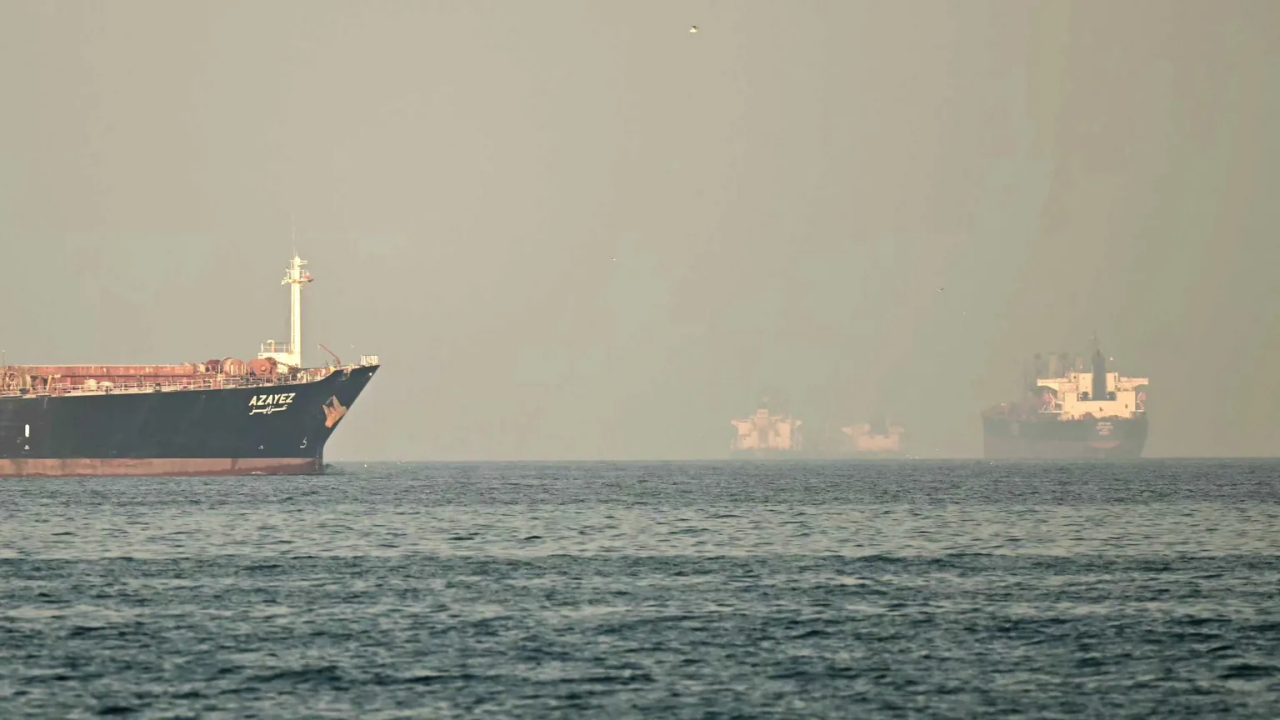
Seven vessels passed through the Strait of Hormuz on Tuesday, the fewest since July 23, as attacks on tankers surged to their highest level since the US-Israeli war with Iran began in late February. Data from analytics firm Kpler showed this sharp drop in traffic, reflecting heightened risks in one of the world’s busiest oil chokepoints.
Kpler analysts Emmanuel Belostrino and Yui Torikata wrote on October 6 that crude oil crossing the strait fell 27% from a wartime high the previous week to at least 10.1 million barrels per day. This figure is back to the September average but remains only 74% of the pre-war volume.
Most of the decline was linked to fewer ship-to-ship transfers in the Gulf of Oman, where cargoes typically shift between tankers. Meanwhile, exports from the Gulf of Oman coast and the Red Sea rose to 6.7 million barrels per day, more than double pre-war levels, compensating for the dip in Hormuz flows. Overall, Middle East crude exports remained on par with pre-war totals.
The number of vessels crossing the strait edged up slightly to 10 on Wednesday but remained well below the daily count of more than 20 recorded on Sunday and Monday. More ships entered the strait than exited over the past two days, according to Kpler’s data, which excludes vessels with their Automatic Identification System transponders turned off to avoid detection.
Data from LSEG showed eight vessels crossing the strait on Tuesday, evenly split between entries and exits, down from 14 the previous day. Among them were five oil tankers and the liquefied natural gas tanker Al Mafyar. The Al Mafyar loaded at Ras Laffan in Qatar and was scheduled to head to Port Qasim in Pakistan.
Attacks on tankers transiting the Strait of Hormuz hit their highest weekly level last week since the Iran war began on February 28, maritime security sources tracking incidents said. The spike in attacks coincided with Gulf producers increasing their export volumes.
On Wednesday, the United Kingdom Maritime Trade Operations agency reported that projectiles struck a tanker 51 nautical miles north of Qatar’s Madinat ash Shamal, with casualties reported. Details on the extent of damage and the number or identity of casualties remain unconfirmed.
Before the war started, about 125 large commercial vessels passed through the strait daily. These included tankers, gas carriers, bulkers, and container vessels. Their cargoes accounted for roughly a fifth of global crude oil and liquefied natural gas supplies.
The drop in vessel transits and the rise in attacks come amid escalating tensions in the region, complicating efforts to maintain steady energy exports through the narrow waterway.
According to Joy Online.