
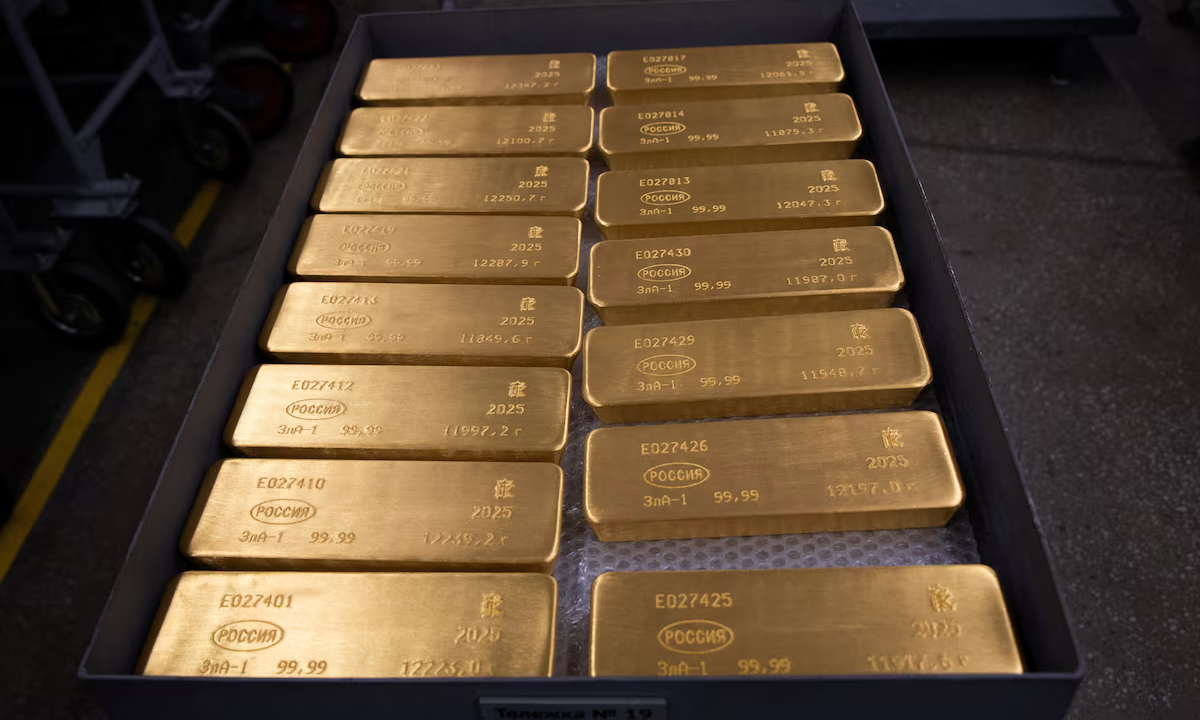
Gold prices climbed on Thursday as the dollar retreated from an 18-month high, allowing bullion to recover from its lowest level since early August. By 0140 GMT, spot gold rose 0.5% to $4,132.66 per ounce. The previous day, gold had dipped as a stronger dollar and rising US Treasury yields weighed on the market.
December gold futures in the US added 0.4%, closing at $4,157.60. The softer dollar made gold cheaper for buyers using other currencies, boosting demand. Chris Weston, head of research at Pepperstone, described the near-term outlook as challenging. He said the market remains a seller’s environment until gold breaks above $4,275.
Weston added that if investors begin to see rising long-term yields as a signal of sovereign credit and fiscal risk rather than stronger economic growth, gold could decouple from bond yields and regain appeal as a hedge against currency debasement.
The Federal Reserve’s recent minutes revealed internal divisions over interest rate policy. Some policymakers favored hikes to counteract energy price shocks, while a more hawkish faction viewed increases as necessary to prevent demand-driven inflation. Traders now assign only an 18% chance of a rate hike this month but price in an 80% likelihood of one in December, according to CME’s FedWatch tool.
Higher interest rates typically reduce gold’s appeal since the metal does not yield interest. Still, concerns about the broader economy persist. International Monetary Fund Managing Director Kristalina Georgieva warned governments about risks from high energy prices, record public debt, and the rapid growth of AI investments. She urged protective fiscal and monetary policies to shield economies from these threats.
Other precious metals also moved higher. Spot silver gained 0.4% to $60.36 an ounce. Platinum rose 1.8%, reaching $1,660.05, and palladium climbed 1.6% to $1,142.00.
Gold’s rebound comes amid uncertainty over the US Federal Reserve’s next steps and ongoing global economic pressures. The metal’s price action will likely depend on how markets interpret future signals about inflation, fiscal stability, and monetary policy.
According to Joy Online.