
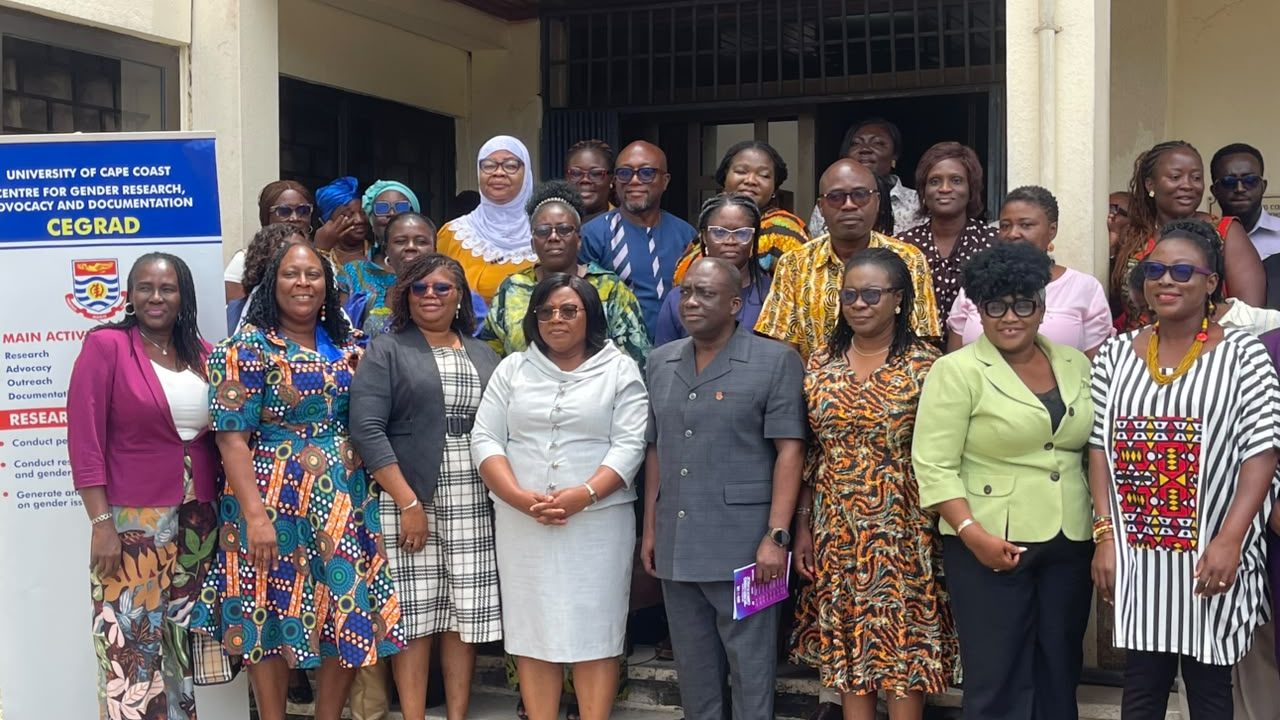
The University of Cape Coast (UCC)-backed "Women Leading Change in Africa" programme has launched a comprehensive online capacity-building platform to equip 1,000 women educators and institutional leaders with digital and Artificial Intelligence (AI) competencies by the end of 2027. The initiative, launched in collaboration with UNESCO and the International Centre for Higher Education Innovation, aims to bridge the digital competency gap among female educators and institutional leaders across Ghana.
Empowering Women in Education
The "Women Leading Change in Africa" programme is a landmark initiative aimed at systematically bridging digital and AI competency gaps among female educators and institutional leaders across Ghana. The programme, launched at the Institute of Education of the University of Cape Coast, is a collaboration between the Institute for Educational Planning and Administration (IEPA) and the Centre for Gender Research, Advocacy and Documentation (CEGRAD).
The programme's Director-General, Prof. Michael Boakye-Yiadom, noted that the initiative will help equip female educators and institutional leaders with the digital and AI competencies needed to overcome structural barriers and advance their careers. "The ambition of African women in academia is not in question, but the structural barriers they face remain formidable," he stated.
Targeting 1,000 Women Professionals
The programme is targeting 1,000 female higher education professionals by the end of 2027, as part of efforts to strengthen digital and leadership capacity within the sector. According to Prof. Eunice Fay Amissah, the Director of CEGRAD, the initiative will provide women in education with free, comprehensive, and micro-credentialed training through the IIOE platform, complemented by intensive in-person capacity-building sessions.
Prof. Amissah emphasized that the initiative is both timely and necessary, as technology presents significant opportunities to expand access to education, improve teaching and research, strengthen administration, and drive innovation. "If women are absent from the spaces where digital tools are designed, adopted, governed, and evaluated, existing inequalities may simply be reproduced in new and more sophisticated forms," she stated.
Private Sector and Government Support
The programme is also calling on the private sector to create safe and accessible opportunities for women and girls, while urging governments to champion policies that promote and support women's advancement. According to Prof. Amissah, "At CEGRAD, we believe that gender equality is not an optional addition to development."
The Acting Pro Vice Chancellor of the University of Cape Coast, Prof. Christine Adu-Yeboah, reaffirmed the university's support for the initiative, stating that it will strengthen collaboration among universities and equip women in education with the skills needed to navigate the rapidly evolving digital and AI landscape.
Future Plans
The programme is set to extend its reach beyond the 26 colleges of education to equip more women across the education sector. According to the Project Coordinator and Deputy Director in charge of Administration at the IEPA, Ama Serwaa Nerquaye Tetteh, the initiative will work with all 26 colleges of education and even go beyond to equip more women across the education sector.
The initiative is also set to receive support from UNESCO-ICHEI and UNESCO IITE, which will aid in its implementation and expansion to women across the country. The Director of UNESCO, Prof. Jin Li, pointed out that "it is now Ghana's turn to write its own chapter," with hope that the programme "will reach women across the country, and through them, the next generation of students they teach and mentor."
Source: Joy Online