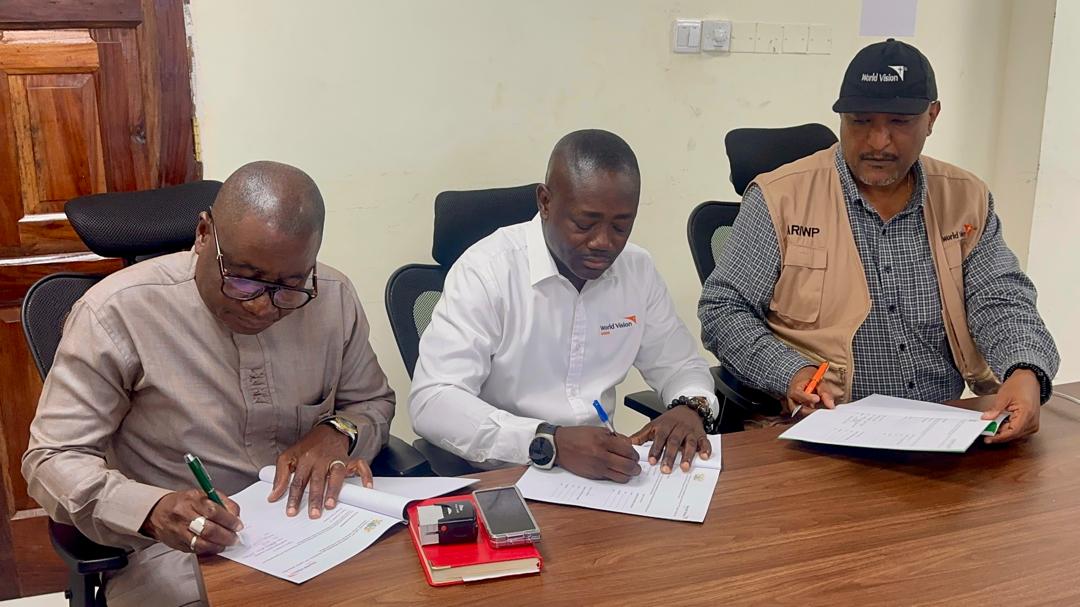
World Vision Ghana has joined forces with the Asunafo North Municipal and Asutifi North District Assemblies to push water, sanitation, and hygiene (WASH) services deeper into rural communities. The two sides signed a Memorandum of Understanding (MoU) in Goaso on Thursday, September 24, 2026, setting out a plan to pool resources and expertise to extend safely managed water and sanitation facilities.
The agreement spells out a shared effort. The district assemblies will handle community entry, mobilisation, and local leadership involvement. They will also contribute resources from within their districts, help maintain infrastructure, take part in training, and enforce local laws that support sanitation and hygiene.
World Vision Ghana will bring technical know-how, training, and financial and material support. They will oversee project monitoring, reporting, and evaluation, while ensuring safeguarding, gender inclusion, and social accountability measures are embedded in the work.
The partnership aims to reach at least 90 percent access to WASH services by the end of the project’s lifecycle. Joshua Baidoo, Acting National Director of World Vision Ghana, said the deal was the surest way to guarantee every community in the two districts access to safely managed water.
“We want to make sure that no community is left behind,” Baidoo said at the signing.
Robel Wamisho, World Vision’s Associate Director for WASH, called on all stakeholders to use the MoU as a platform for stronger collaboration. “Working together remains vital to improving WASH services and ensuring lasting sustainability for residents,” he said.
The initiative focuses on more than infrastructure. It promotes behaviour change through Community-Led Total Sanitation (CLTS) strategies, aiming to improve hygiene practices alongside expanding services.
The project also targets long-term sustainability by building the capacity of district institutions and community structures. Cephas Wedam, Manager for Universal Service Coverage for WASH at World Vision Ghana, detailed sustainability mechanisms in the agreement. These include a Professional Management Model to standardise facility oversight, a Water Facility Insurance mechanism, and a Repayable Financing Fund to scale up investment in WASH infrastructure.
Community-focused programmes like the Nurturing Care Group framework and the Sesame WASH Up hygiene programme will be part of the rollout, supporting ongoing engagement with residents.
Representing the two district assemblies, Coordinating Directors Benjamin Owusu Afriyie of Asunafo North Municipal and Abdul-Aziz Gafaru of Asutifi North pledged full support. They promised to ensure the project meets its goal of universal WASH coverage in their communities.
The MoU lays out a clear division of labour and responsibility. It emphasises the role of local leadership and resources alongside World Vision’s expertise and funding. This joint approach aims to address the challenge of access to clean water and sanitation in rural Ghana with more certainty and structure than previous efforts.
The formal signing in Goaso signals a firm step toward improving health and hygiene standards for thousands of people in these districts. The parties involved have set a target and put systems in place to keep progress moving beyond the initial project phase. How effectively this partnership delivers on those promises will be closely watched by communities and development actors alike.
According to Joy Online.