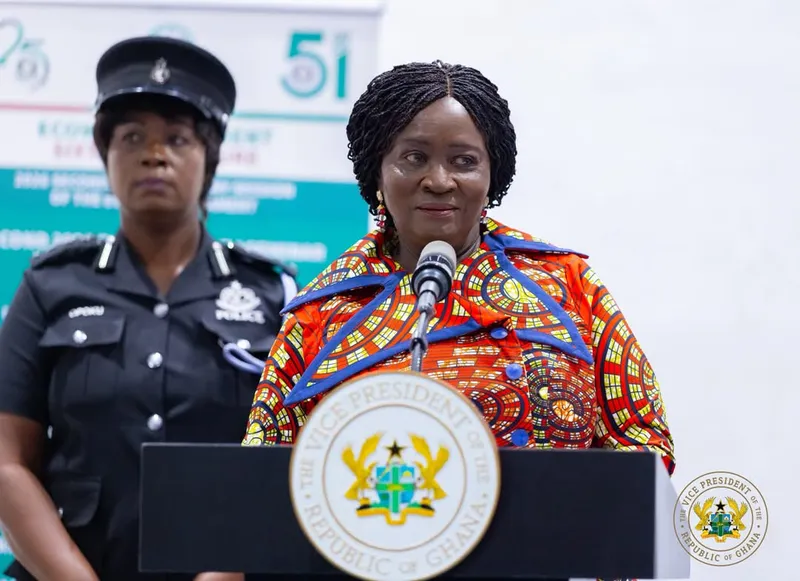
Vice President Professor Naana Jane Opoku-Agyemang opened the Global Micronutrient Forum in Accra on September 28 with a call for urgent global action and investment to tackle malnutrition and micronutrient deficiencies. She said the problem stretches beyond health and requires cooperation across education, agriculture, and social protection sectors.
Malnutrition remains a persistent global challenge, with effects that can last from childhood into adulthood, impacting the health and development of future generations, the Vice President said. Ghana has made progress but still struggles with anaemia among women and adolescent girls, low dietary diversity, and breastfeeding issues.
“Nutrition depends on many factors, including household incomes, food availability, school meals, information available to parents, and access to health services,” Prof. Opoku-Agyemang said. She urged integrated efforts involving the government, private sector, development partners, and other countries.
The Vice President pointed to Ghana’s school feeding programme, which now reaches more than 4.5 million children. She said the government is working to improve nutritional standards, train caterers, and monitor the programme more closely.
She also mentioned primary healthcare initiatives as a chance to boost preventive nutrition services, especially for maternal and child health.
Prof. Opoku-Agyemang stressed that domestic funding and international support must complement each other. She noted that countries with high malnutrition often face fiscal constraints, climate shocks, and pressure on their health systems.
“The challenge requires greater financial resources, scientific expertise, innovation, and international cooperation to support long-term nutrition systems rather than short-term interventions,” she said.
Ghana is hosting the Global Micronutrient Forum this year, bringing together stakeholders from around the world to discuss solutions. The Vice President formally declared the forum open, signalling Ghana’s readiness to lead the conversation.
Malnutrition and micronutrient deficiencies remain a challenge in much of sub-Saharan Africa, where limited resources and climate impacts strain food systems and health services. Ghana’s experience with expanding school feeding and primary healthcare efforts offers a model for integrated approaches, but the Vice President’s remarks underline the scale of work still needed.
By focusing on long-term investment and collaboration, the forum aims to move beyond quick fixes. Ghana’s hosting of the event highlights the country’s role in shaping global dialogue and pushing for sustained action against malnutrition.
According to 3News.