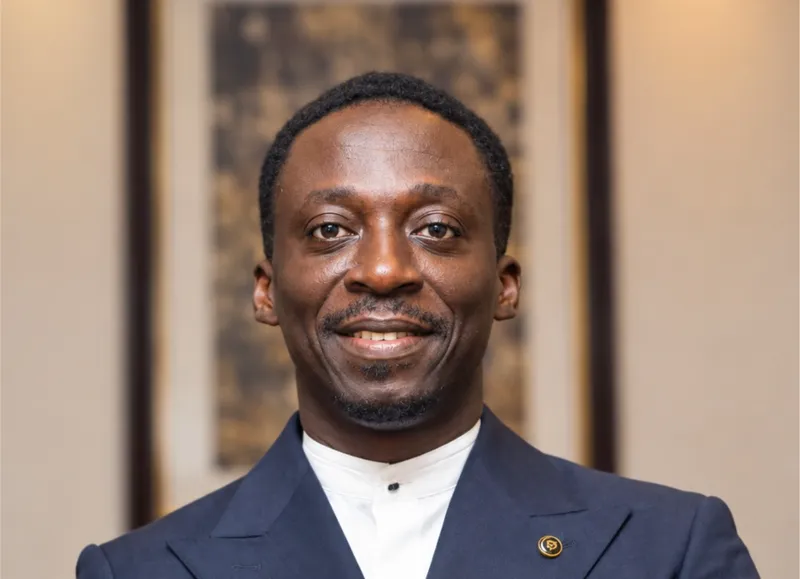
A legal expert has rejected the claim by Manhyia South MP Nana Agyei Baffour Awuah that an Economic and Organised Crime Office (EOCO) official’s failure to show an identification card justified his refusal to cooperate with her. Austin Kwabena Brako-Powers, a legal practitioner and policy analyst, said an officer’s ID is separate from their legal authority to act, especially when nothing suggests the officer lacks statutory power.
In an article published on Saturday, September 26, 2026, titled “the legality of the attempted EOCO arrest of Baffour Awuah: A critical legal analysis,” Mr Brako-Powers pointed to video footage showing the MP acknowledged the woman was from EOCO. “The absence of an ID card could not justify physical non-compliance with the officer,” he wrote.
Under Section 18 of the EOCO Act, 2010 (Act 804), authorised EOCO officers have powers and immunities similar to those of police officers under the law. Mr Brako-Powers argued that this authority remains intact even if the officer does not immediately display an ID card.
The situation escalated when the MP was seen obstructing the officer, which Mr Brako-Powers said could amount to an offence under Section 21 of Act 804. This section states that wilfully obstructing an authorised EOCO officer in the performance of their duties is illegal.
He also cited Section 10 of the Criminal and Other Offences (Procedure) Act, 1960 (Act 30), which allows police officers to arrest without a warrant anyone who obstructs them while carrying out their duties. The legal expert said the question is not only whether a warrant was presented but if the conditions for a warrantless arrest existed.
Mr Brako-Powers noted EOCO’s public statement that the MP had been invited twice in February 2026 to their office but did not respond to the invitations. The MP’s awareness of EOCO’s interest makes the reasons for the arrest clear, he said.
The article raised the issue of whether the MP should have been informed of his rights before the arrest. Mr Brako-Powers referred to Article 14(2) of the 1992 Constitution, which requires that a person who is arrested, detained, or restricted must be told immediately, in a language they understand, the reasons for the arrest and their right to a lawyer of their choice.
He questioned whether, in cases where the individual already knows why law enforcement wants to speak to them and has asked for legal counsel, the situation should be treated as if no explanation was given. He stressed that the constitutional requirement differs from the broader public understanding of “Miranda rights” and that the key question is whether Article 14(2) was followed at the point of arrest.
The MP’s claim that his parliamentary status protected him from arrest was also addressed. Mr Brako-Powers explained that membership of Parliament does not provide blanket immunity from arrest or investigation. Article 117 of the 1992 Constitution protects MPs only against civil or criminal process when they are travelling to, attending, or returning from parliamentary proceedings.
EOCO has said it recognises parliamentary privileges but that these do not place any member beyond the reach of the law. The controversy over the attempted arrest of the Manhyia South MP raises questions about the limits of legal authority, individual rights, and parliamentary immunity in Ghana’s law enforcement framework.
According to 3News.