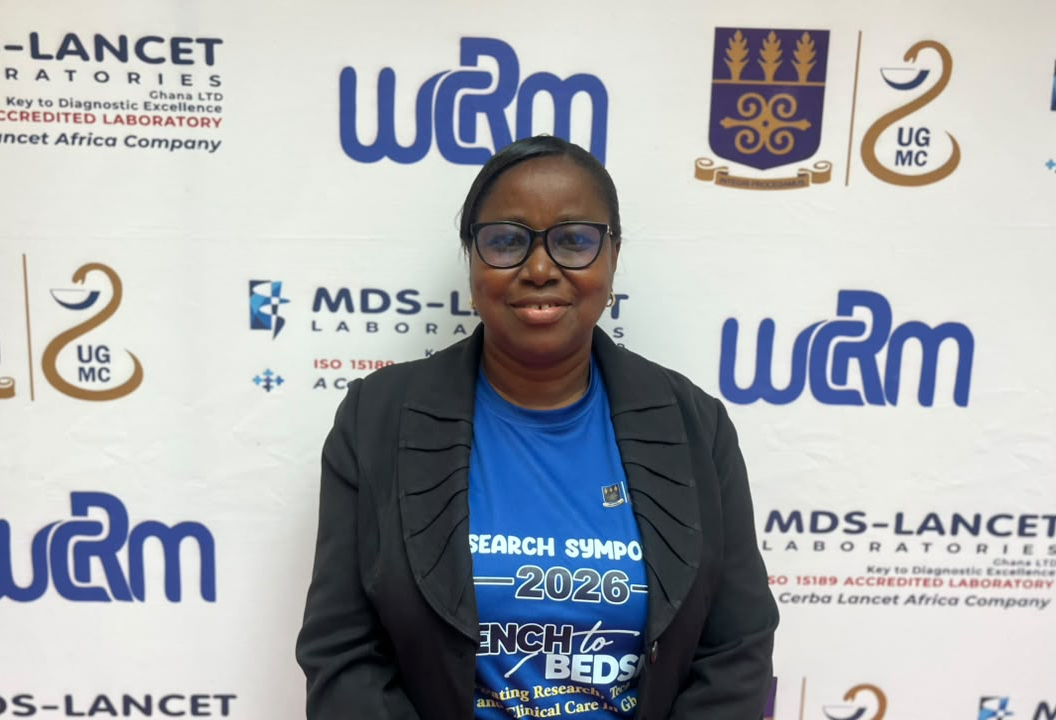
Associate Professor Evelyn Yayra Bonnie of the Noguchi Memorial Institute for Medical Research has urged the Ghanaian government to boost funding for research and human capacity development. She said this is essential for turning scientific discoveries into healthcare solutions that directly benefit patients.
Prof Bonnie spoke on September 29 during the University of Ghana Medical Centre (UGMC) Research Symposium. The event carried the theme “From Bench to Bedside: Integrating Research, Technology, and Clinical Care in Ghana.” It was organised by the Medical Scientific Research Centre through the Research Training and Development Unit and the Office of External Engagement. The symposium aimed to present the research activities at UGMC and strengthen the link between science and clinical practice.
What sets UGMC apart, Prof Bonnie said, is its research centre’s location inside a hospital. This allows researchers immediate access to patients and clinical challenges. “You see something in the hospital, on the ward, you are able to take it to the lab to investigate, and the solutions you have, you bring them back to the patients to help improve healthcare,” she said.
She explained that many research institutions are separate from hospitals and must travel to interact with patients. UGMC researchers can directly observe health problems in clinical settings, study them in their labs, and develop practical treatments. This close connection between research and care was the essence of the symposium’s theme.
Prof Bonnie noted that UGMC’s research is still developing, and the symposium provides a chance for researchers to share their work with the public. She also encouraged the centre to aim beyond academic findings. Research outcomes should lead to interventions and products that benefit other hospitals and health facilities in Ghana.
“It’s not restricted to UGMC. I mean, it’s starting here, so yes, they will be the first beneficiaries, but it definitely would be,” she said. She added that before such products can be used widely, they must receive approval from the Food and Drugs Authority and other regulatory bodies.
Funding remains a major concern. Prof Bonnie said research and training require significant investment. Without it, the country risks losing skilled professionals who seek better opportunities abroad. “If we don’t have the money and the people have the skills and they are looking for it elsewhere, when they go out, most of them don’t come back,” she said.
She called on the government to intentionally allocate funds for training and human capacity building to keep researchers in Ghana. “But if we are able to put the money here and train them here, then we are sure that we will have them here to solve the problems that we have in the country,” she added.
Prof Bonnie also advised researchers to remain curious and use existing studies to find gaps and new questions. “Out of what people are doing, you also see a question or a gap. Or maybe this person should have done this other thing. That becomes your research idea,” she said.
She urged the research community to focus on producing evidence that can provide practical solutions to Ghana’s healthcare challenges. “Research is supposed to provide solutions for healthcare,” she said.
The symposium reflects UGMC’s effort to build a research culture closely tied to clinical work. But without sustained funding and trained personnel, the potential for these scientific advances to improve healthcare across Ghana may remain limited.
According to Joy Online.