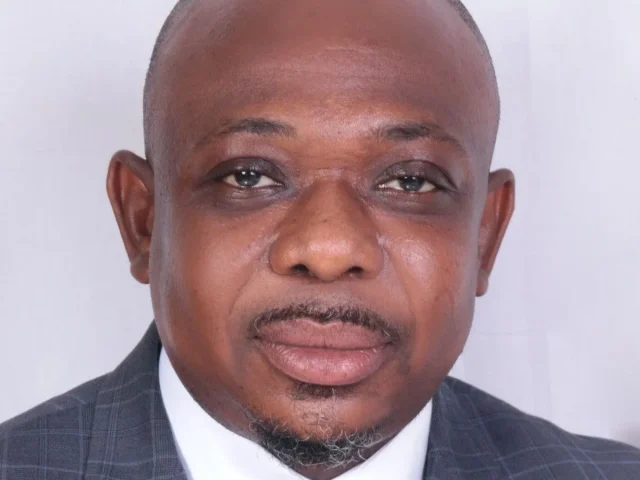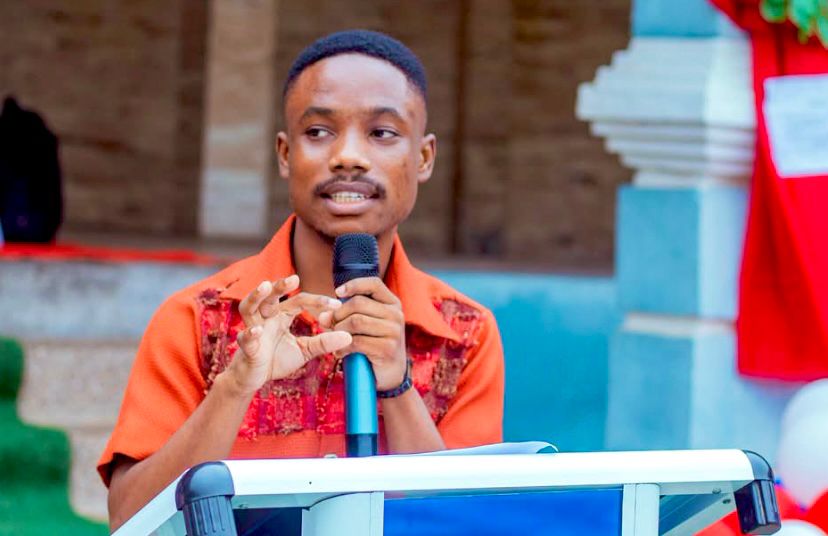
The founder of the Focus on Sickle Cell Foundation (FoSCel), Amos Andoh, has called on Ghana to change how it educates young people about sickle cell disease, stressing the need to tackle stigma and misinformation alongside medical care.
Speaking to the press on September 29 at the Kwame Nkrumah Memorial Park, Mr Andoh said the country’s response to sickle cell disease can no longer be limited to hospitals and families directly affected. He argued that the issue should be treated as a national health and education concern, with schools playing a central role in teaching children and young people about the condition before adulthood.
“We do not want to create awareness alone. But we want to turn awareness into knowledge. Then knowledge into decisions, and decisions into a healthier community,” he said.
Mr Andoh said the foundation’s advocacy focuses on starting education early, rather than waiting until young people are already forming relationships or considering marriage. He noted that discussions about genotype compatibility often begin too late, when emotions and relationships are already established.
“For many years now, serious conversation about sickle cell disease and genotype compatibility begins when young adults are already old enough to enter into relationships and marriages,” he said. “By then, it may be difficult to introduce knowledge that should have been already provided to our young adults because love and affection, we believe, is very strong.”
He emphasised that the goal is not to dictate personal decisions but to ensure young people have enough information to make informed choices about their health and future families.
“We cannot wait until consequences that have already occurred before we begin the education,” he said.
A major concern for Mr Andoh is the stigma and stereotyping faced by people living with sickle cell disease. He said misinformation contributes to social isolation and discrimination, including false beliefs about their abilities.
“Sickle cell disease is not contagious,” he said. “People cannot acquire the condition through playing with, associating with or otherwise interacting with someone who has it.”
He urged the public to stop treating people with sickle cell disease as incapable of contributing meaningfully to society. He pointed to how stereotyping can affect employment, with some employers doubting the ability of people with the condition to perform their duties.
“We should not eliminate, we should not exclude them when it comes to employment,” Mr Andoh said. He called on public and private institutions to provide opportunities for people living with sickle cell disease.
He added that living with sickle cell disease should not be seen as a barrier to pursuing a career, holding public office, or contributing to national development. “Sickle cell disease is not a death sentence. You can do everything possible as a sickle cell warrior. You can also even be any other visionary that you want to be,” he said.
“You can be a president, a minister, you can be an MP, you can be a government worker, a private worker. You can be a musician. So don’t let sickle cell disease isolate you,” he added.
Mr Andoh said FoSCel wants sickle cell education to be part of Ghana’s formal school system so that young people get accurate, age-appropriate information while still in school. This would help challenge stereotypes before they become entrenched.
The foundation has developed an educational comic model designed to make information about sickle cell disease accessible to children and young people. Mr Andoh said this followed an awareness programme conducted with the Ghana Education Service in the Efutu District last year.
The experience showed that complex health information can be presented through storytelling and visuals in ways young learners understand. The comic model targets learners at basic, junior high, and senior high school levels.
“A well-designed story can make difficult health information very simple, relatable and memorable for our young learners,” Mr Andoh said.
The material covers what sickle cell disease is, the meaning of genotype, genotype compatibility, and ways to live healthily with the condition.
Mr Andoh’s remarks come as calls grow for more comprehensive education on sickle cell disease in Ghana, where the condition affects a significant number of people. His foundation’s approach seeks to move beyond conventional awareness campaigns, aiming for knowledge that leads to informed decisions and healthier communities.
According to Joy Online.