In the early 1950s, African traders and farmers in the Gold Coast found it hard to borrow money. The big banks were foreign-owned and often preferred expatriate clients. A new bank was created to change that.
The Bank of the Gold Coast opened on 20 May 1953 with 27 employees. Today it is GCB Bank, one of Ghana’s largest banks.
A bank for Africans
The bank’s early focus was on Ghanaian traders, farmers and business people who could not get loans from the expatriate banks. It was part of the move towards economic self-rule in the years before independence.
Independence
When Ghana became independent in 1957, the Bank of Ghana was created as the central bank. The Bank of the Gold Coast was renamed Ghana Commercial Bank and concentrated on commercial banking.
A national institution
Ghana Commercial Bank opened branches across the country, including in rural areas where other banks did not operate. For many Ghanaians, it was the first bank they ever used.
Rural reach
For decades, a Ghana Commercial Bank branch was a landmark in district capitals and market towns. Farmers received cocoa payments there, teachers collected salaries and traders deposited the day’s takings.
Partial sale
The bank was fully state-owned until 1996. Under economic reforms, the government sold part of its stake, and the bank listed on the Ghana Stock Exchange. Today, private and institutional investors own most of its shares, while the government retains a stake.
GCB
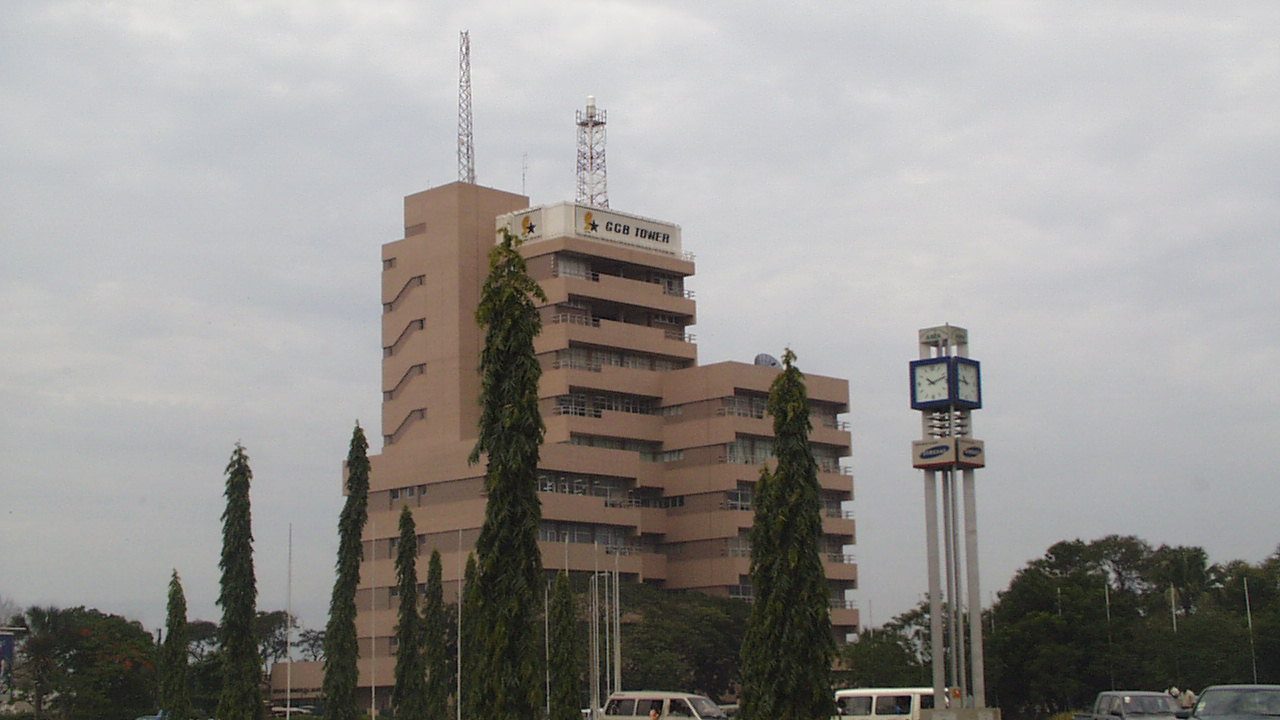
In 2014, Ghana Commercial Bank rebranded as GCB Bank, with a new logo and image aimed at younger customers.
The banking clean-up
In 2017, when the Bank of Ghana revoked the licences of UT Bank and Capital Bank, GCB took over their deposits and some of their assets. The move made GCB even larger.
Digital banking
Like other banks, GCB has invested in mobile banking, cards and digital services to compete with mobile money and newer banks. Its customers can now do much of their banking without visiting a branch.
Challenges
Like other banks, GCB has faced the effects of Ghana’s economic crises, including the domestic debt exchange of 2022 and 2023, which hit banks holding government bonds.
Seventy years on
GCB marked its 70th anniversary in 2023. A bank created to lend to Gold Coast traders now serves millions of customers, many of them the grandchildren of its first clients.