In December 2019, Ghanaians began receiving new banknotes from their banks: GH¢100 and GH¢200 notes, the largest denominations the country had issued since the cedi was redenominated in 2007.
The Bank of Ghana announced the new notes, and a new GH¢2 coin, on 29 November 2019.
Why bigger notes
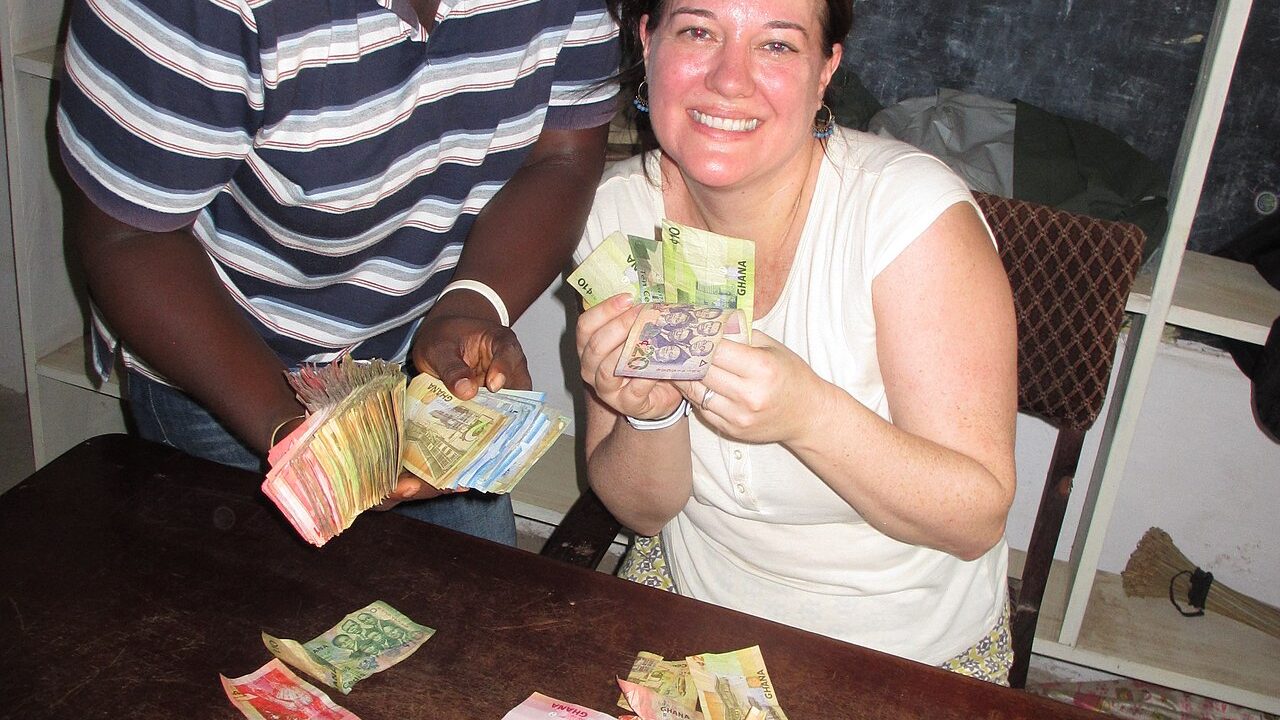
Governor Ernest Addison explained that the value of the cedi had fallen against the US dollar over the previous twelve years because of inflation and depreciation. People were carrying large bundles of cash for business and everyday transactions. Larger notes would reduce the bulk.
The design
Both notes carry portraits of the Big Six, the leaders of the United Gold Coast Convention detained after the 1948 riots: Kwame Nkrumah, J.B. Danquah, Edward Akufo-Addo, Ako Adjei, Obetsebi-Lamptey and William Ofori Atta.
The GH¢200 note shows the national sword on the front and the Gye Nyame symbol and Jubilee House on the back. The GH¢100 note shows the mace of Parliament on the front and Parliament House on the back.
The GH¢2 coin
The new ten-sided GH¢2 coin carries the coat of arms on one side and Jubilee House on the other. The Bank of Ghana later announced plans to phase out the GH¢1 and GH¢2 notes in favour of coins.
Into circulation
The new notes went into circulation from Monday, 2 December 2019, when commercial banks began collecting them from the Bank of Ghana.
Security features
The notes include security features such as watermarks, security threads and special printing, designed to make counterfeiting difficult. The Bank of Ghana ran public education campaigns so people could check genuine notes.
Using the new notes
Traders and taxi drivers sometimes struggled to give change for the larger notes in the early weeks, and some small shops refused them. Over time, the notes became normal in everyday trade.
Public reaction
Some Ghanaians welcomed the convenience. Others worried that bigger notes were a sign of the cedi’s weakness and could encourage inflation. The central bank said the new notes would not increase the money supply.
The cedi since
The cedi fell sharply in 2022 during Ghana’s economic crisis, and prices rose. The GH¢200 note, a large note in 2019, became a much more ordinary one.
Faces on the money
The Big Six were jailed together by the colonial government in 1948. Seventy years later, they appear together on Ghana’s largest banknote, passed from hand to hand in every market in the country.