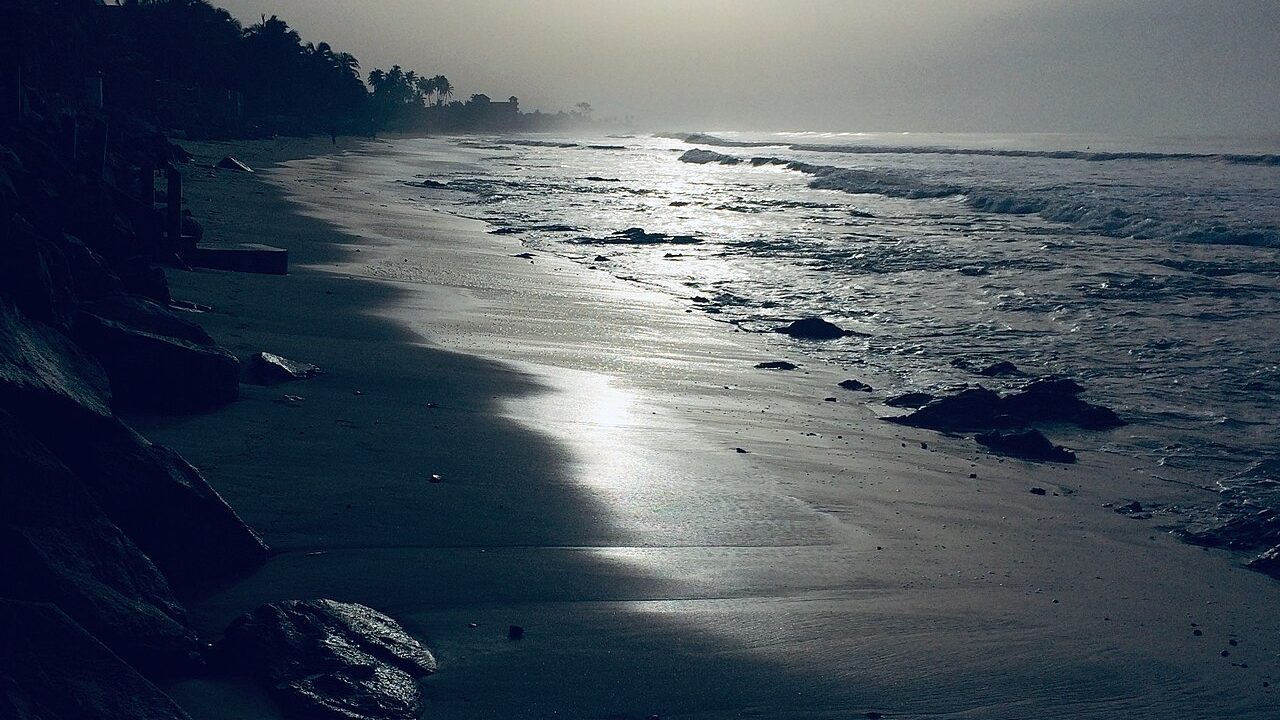
On public holidays, Accra’s beaches fill with families, friends and music. The water looks inviting. But every year, news reports tell of young people who went for a swim and did not come back. Many of those drownings are linked to rip currents, a danger that is easy to miss.
The Atlantic coast
Ghana faces the Gulf of Guinea, part of the Atlantic Ocean. Waves can be strong, the seabed can drop suddenly and currents change with tides and weather.
What a rip current is
A rip current is a narrow, fast channel of water flowing away from the shore. It forms when water brought in by waves returns to the sea through a gap. A rip can carry even strong swimmers away from the beach in seconds.
How to spot one
Look for a gap in the breaking waves, a strip of darker or calmer-looking water, foam or debris moving out to sea, or churned sandy water. The calm-looking area can be the most dangerous.
If you are caught
Do not panic and do not swim straight back against the current; you will tire quickly. Float or tread water, raise your hand and shout for help. Swim parallel to the shore until you are out of the current, then swim back at an angle.
Helping someone else
Do not rush into the water to rescue someone unless you are trained. Many rescuers drown. Call for lifeguards, throw something that floats, such as a cooler or tyre, and keep the person in sight.
Swim where it is safer
Swim at beaches with lifeguards, and between flags if they are provided. Ask locals, fishermen or beach staff about dangerous spots.
Children
Watch children at all times, even in shallow water. Waves can knock them over quickly. Assign one adult to watch the water without distractions.
Alcohol
Alcohol affects judgement and swimming ability. Avoid swimming after drinking.
Learn to swim
Many Ghanaians never learn to swim. Swimming lessons, available at some pools in Accra, could save lives, especially for children in coastal communities.
Holidays and crowds
Drownings often increase during public holidays, when beaches are crowded and supervision is thin. Plan beach outings with safety in mind.
Enjoy the shore
The beach is one of Accra’s great pleasures. Most visits end with happy memories. A little knowledge about rip currents ensures they do, and that nobody’s day at the sea ends in tragedy.