Before there was a concrete complex, there were lanterns. Kaneshie’s name is usually traced to the Ga phrase “kane shi”, meaning “under the lamp”, because traders there once sold at night by lamplight. Today the market is one of the largest in Accra, and the lanterns have been replaced by fluorescent tubes, generators and the glow of mobile phone screens.
A night market on the western road
Kaneshie sits on the road west out of central Accra, towards Mallam, Kasoa and the Central Region. That position made it a natural meeting point for traders bringing goods from the coast and the interior. Early accounts describe a modest marketplace serving the surrounding community. It grew as Accra spread west in the middle of the twentieth century and new neighbourhoods filled the land between the old town and the Densu River.
The concrete complex
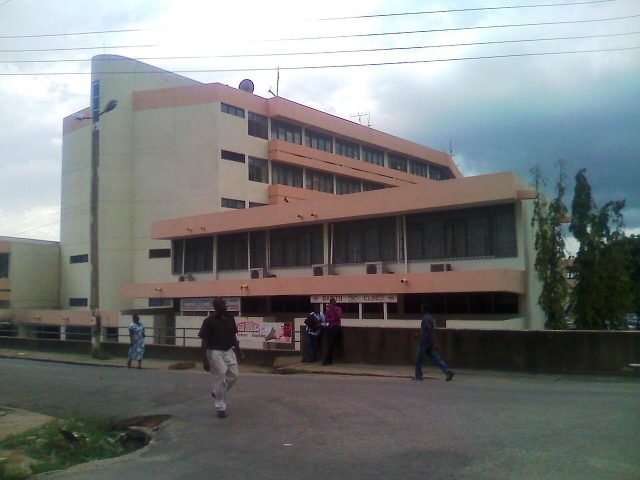
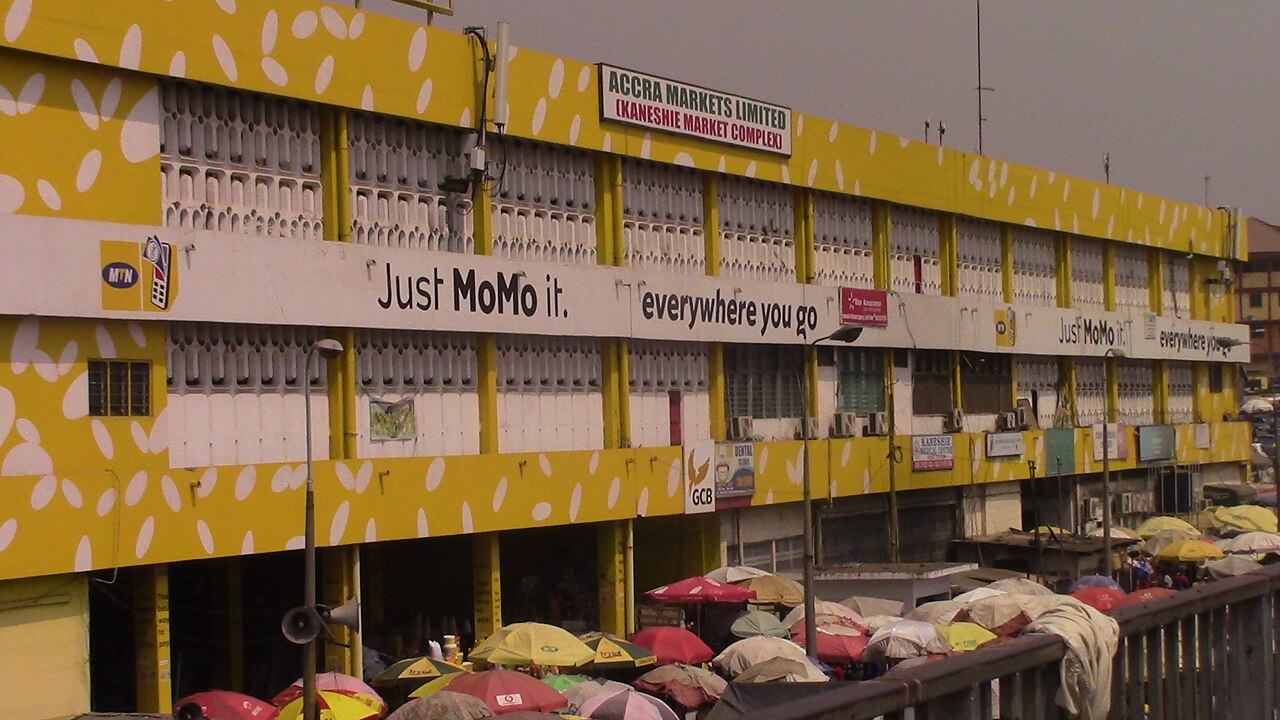
The multi-storey Kaneshie Market complex was built in the 1970s, during the military government of General I.K. Acheampong. It was commissioned in 1979, the year Flight Lieutenant Jerry Rawlings first took power. The building was designed to bring order to street trading by giving sellers stalls, stores and shared space under one roof.
The complex has needed repairs and expansion since. Like many public markets in Ghana, it has struggled with overcrowding, drainage and fire risk as the number of traders outgrew the space.
Who trades there
Graphic has reported that the market houses more than 100,000 traders and workers, a number that includes porters, food sellers and the many hawkers who work the surrounding streets. Foodstuffs dominate: fish, tomatoes, onions, yam, plantain and grains. The upper floors and nearby stores hold clothing, household goods, cosmetics and provisions.
Market queens, the leaders of each commodity group, still carry real authority. They settle disputes, negotiate with the assembly and often set the tone for prices in their line of trade.
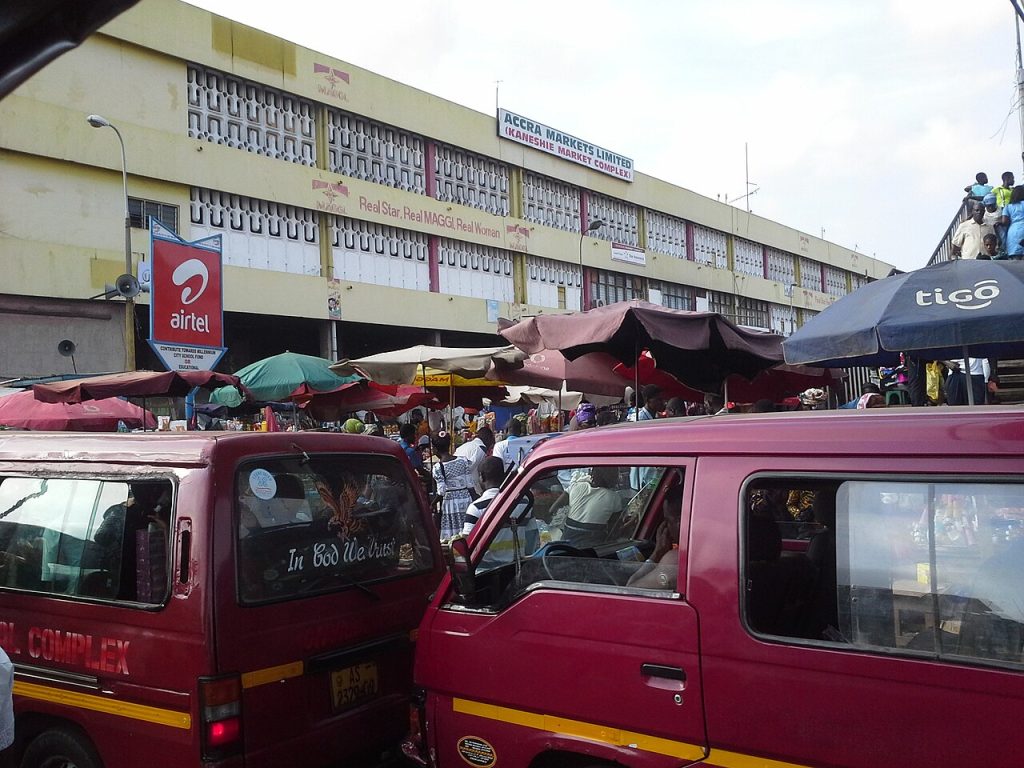
The lorry station next door
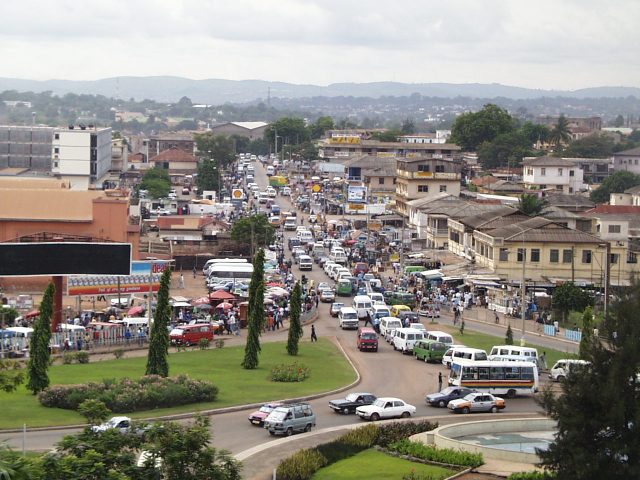
Kaneshie’s busy lorry station gives the market much of its traffic. Trotros and buses heading to the western suburbs and beyond load and unload close to the stalls, so a passenger can buy dinner ingredients on the way home without a separate trip. That convenience is also the source of the area’s notorious congestion at rush hour.
A market that plans
The Kaneshie Market complex is managed as a business entity, and its management has spoken publicly about building a new edifice to accommodate traders who have spilled onto the pavements. Plans like this have a long history in Accra, and traders tend to wait to see the cranes before they believe them.
Shopping at Kaneshie
Go early. The best produce arrives in the morning, and the heat inside the building builds through the afternoon. Bring small notes or use mobile money, which most traders now accept. Bargaining is expected, though less so for goods with fixed prices such as packaged provisions.
The market’s name still describes what it does. When the evening traffic jams Kaneshie First Light and the lights come on over the stalls, people are still buying and selling under the lamp.