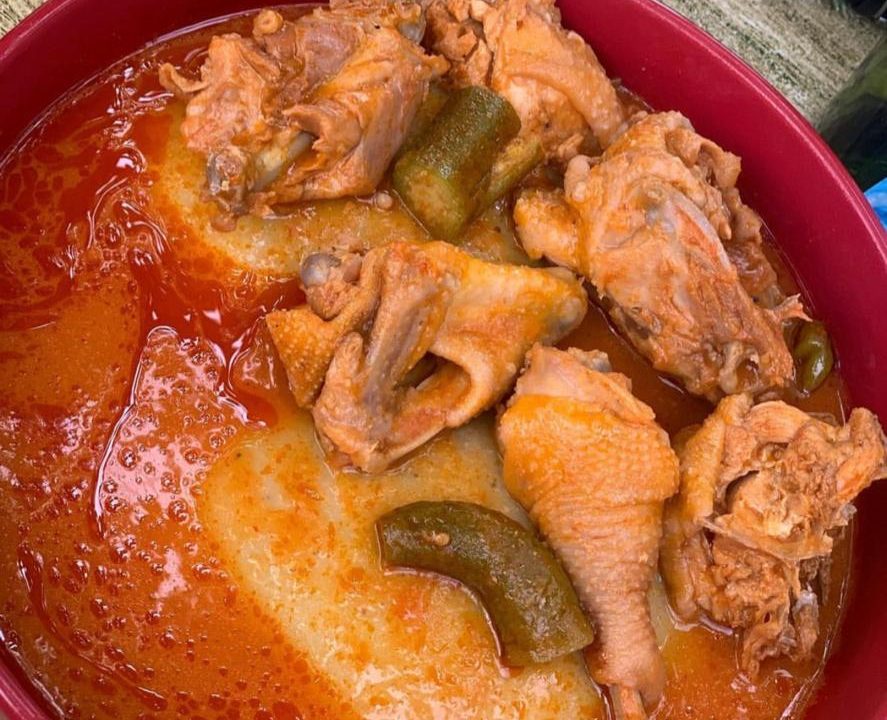
The thud of the pestle is one of the most familiar sounds in a Ghanaian compound on a Sunday afternoon. One person pounds while another turns the dough in the mortar, dipping their hand in water between strokes. The result is fufu, smooth and stretchy, ready to be served in a bowl of steaming light soup. For many Ghanaians, it is the definition of a proper meal.
What fufu is and pounding it
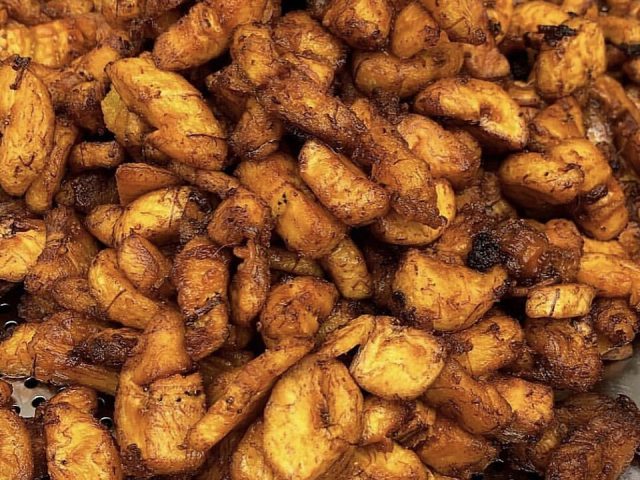
Ghanaian fufu is made by boiling cassava and unripe plantain, then pounding them together in a large wooden mortar with a long pestle. Some versions use cocoyam or yam. The pounding continues until the mixture becomes a smooth, elastic ball. Pounding fufu is hard work and requires coordination. The person turning the dough must move their hand in and out quickly between strikes. It is often a shared family task.
Machines and the soups
Electric fufu machines and instant fufu powders have made preparation easier, especially in cities and abroad. Purists say machine fufu does not taste the same.
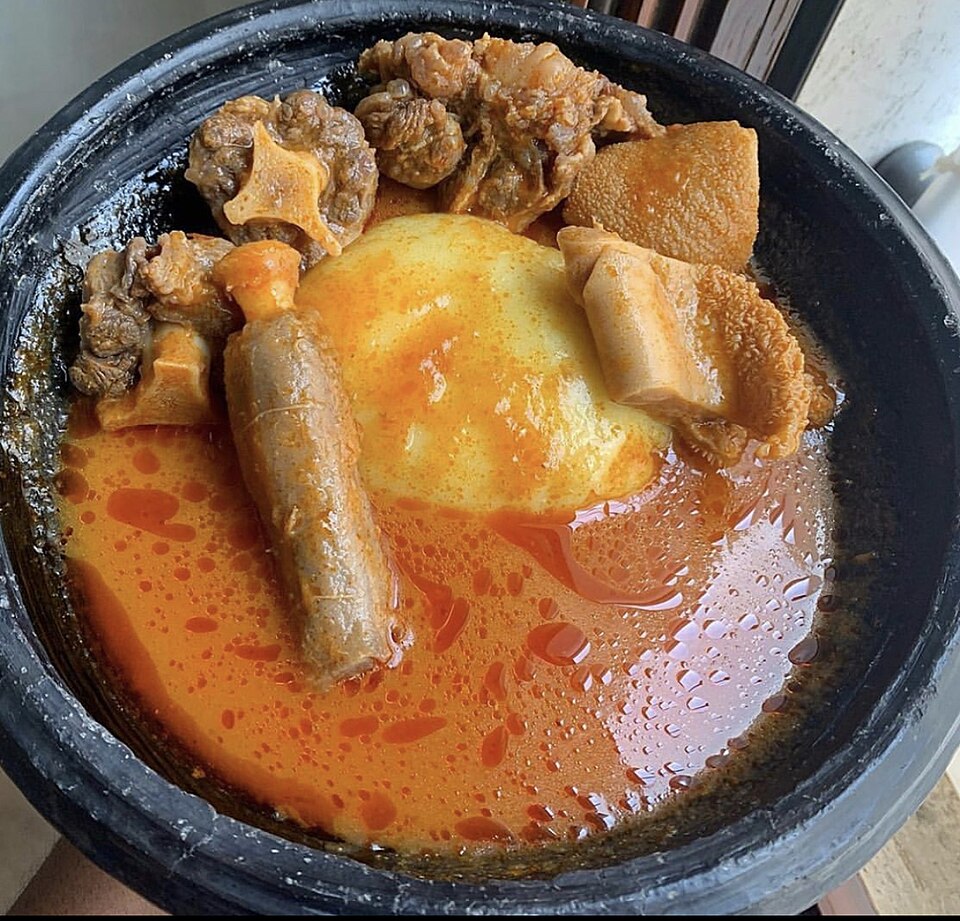
Light soup is a tomato-based soup made with pepper, onions and meat or fish, often goat meat or chicken. It is thin, spicy and fragrant, and pairs perfectly with fufu. Fufu is also served with groundnut soup, palm nut soup (abenkwan) and other soups. Each region and family has its favourites.
How and where it is eaten
Fufu is traditionally eaten with the right hand. A small piece is pinched off, dipped in soup and swallowed rather than chewed. First-timers are often surprised by this. Chop bars, Ghana’s traditional eateries, serve fufu daily, often to queues of workers at lunchtime. Some are famous for their soups. In many homes, fufu is the Sunday lunch after church, a meal for family gatherings and visitors.
Fufu has become famous online through videos of people trying it for the first time. Ghanaian restaurants abroad serve it, often using powdered versions.
Nutrition and fufu across Africa
Fufu is filling and rich in carbohydrates. Paired with protein-rich soups and vegetables, it forms a hearty meal. Other West and Central African countries have their own versions of fufu, made from cassava, yam, plantain or other staples. Ghanaians often insist that their pounded version, with its springy texture, is the original. Fufu takes effort to make and only minutes to eat. Most Ghanaians would say the pounding is part of what makes it taste like home.