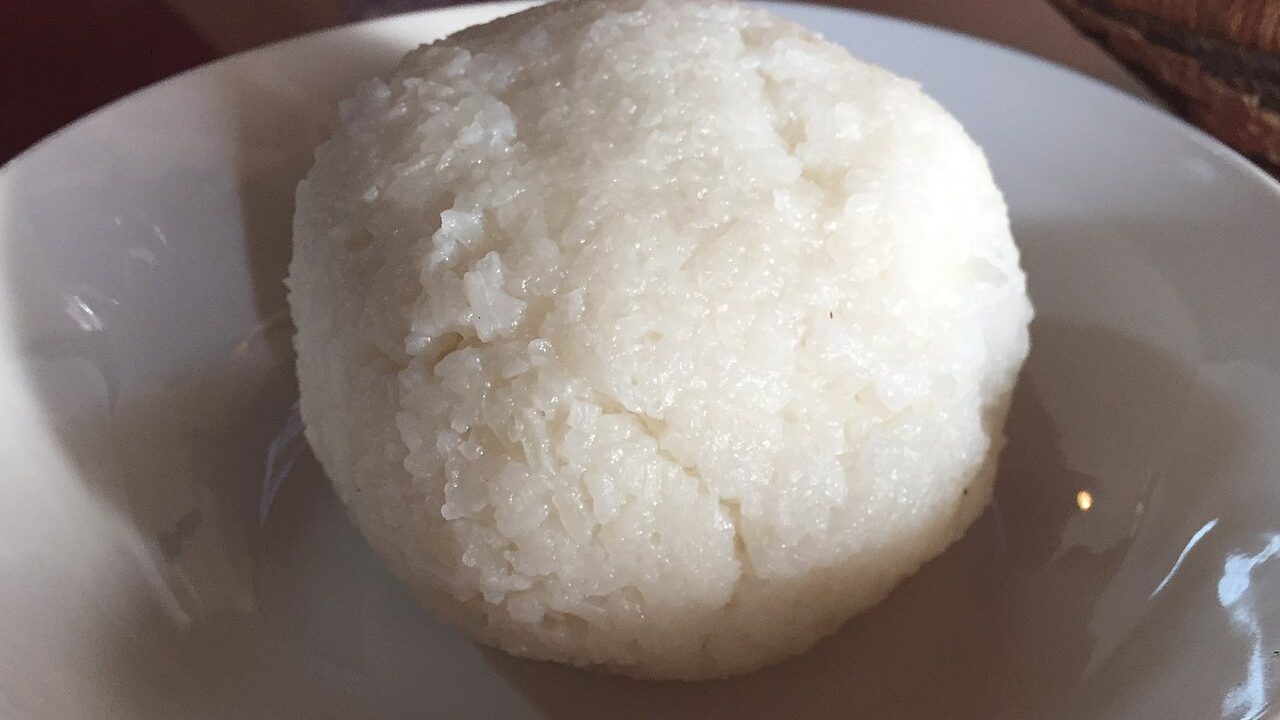
In many Ghanaian homes, Sunday lunch has its own rhythm. After church or a long morning, the family gathers around bowls of steaming soup, and in the centre are smooth, round balls of rice. Omo tuo, rice cooked soft and mashed into balls, is a weekend favourite, especially with rich groundnut soup and chicken or goat meat. It is simple to make and satisfying to eat, and for many Ghanaians it tastes like home.
What omo tuo is and its Sunday soups
Omo tuo is made by cooking rice with extra water until very soft, then mashing it and shaping it into balls. Some cooks use short-grain or broken rice. The name is often linked to Hausa words, reflecting the dish’s popularity in northern and Muslim communities in Ghana. The classic partner is groundnut soup, made from ground peanuts, tomatoes, onions, pepper and meat or fish.
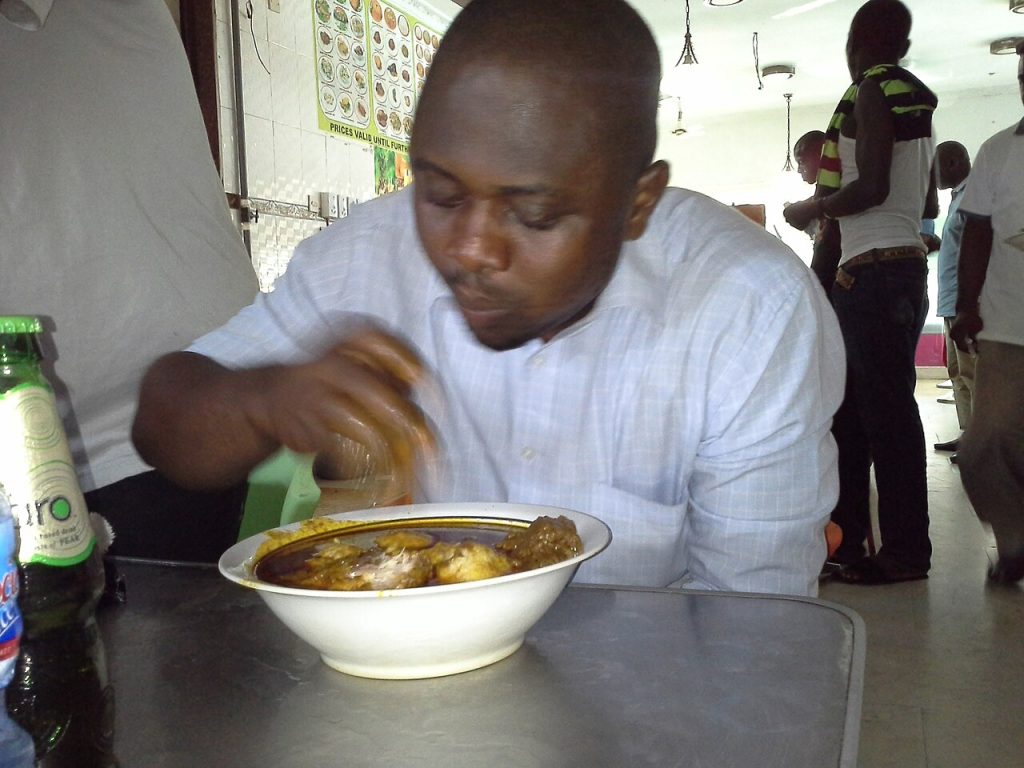
Palm nut soup, rich and red, is another favourite combination. Many families prepare omo tuo on Sundays, when there is more time to cook soups slowly.
Festive meals, making it and buying it
The dish is also served during Eid celebrations and family gatherings. Omo tuo is eaten with the right hand or a spoon, breaking off pieces and dipping them in soup. The rice must be cooked until soft enough to mash without being watery. A wooden spoon or mortar helps form smooth balls. Some cooks add a little corn flour or mix rice types for texture.
Chop bars and restaurants in Accra often serve omo tuo on certain days. Paired with groundnut soup and meat, it provides energy, protein and healthy fats.
A shared meal, leftovers and shito
Omo tuo is often served in large bowls shared among family members. Leftover omo tuo can be reheated by steaming, though many families say it tastes best fresh. The soup, on the other hand, often tastes better on the second day, so cooks sometimes make it a day ahead and prepare the rice balls just before serving.
Some people eat it with shito or pepper sauce. Omo tuo takes ordinary rice and turns it into a Sunday occasion. For many Ghanaian families, the smell of groundnut soup simmering means the week has paused for a few hours.