Few breakfasts bring back Ghanaian school memories like tom brown. The thick, light-brown porridge, made from roasted corn flour, was served in many boarding schools and homes, sweetened with sugar and sometimes milk. Students carried packets of the flour back to school in their chop boxes. Parents fed it to toddlers. Today it remains a common breakfast, valued because it is cheap, filling and easy to prepare.
What tom brown is and how it is cooked
Tom brown is made from maize that is roasted and then ground into flour. The roasting gives the porridge its brown colour and toasty taste, which sets it apart from koko, made from fermented corn. Some versions use only roasted corn. Others mix in roasted groundnuts, soybeans or beans to add protein. These blends are sometimes sold for children.
The flour is mixed with cold water to make a paste, then stirred into boiling water and cooked until thick. Sugar and milk are added to taste.

School, babies and making the flour
The origin of the name tom brown is uncertain. It is widely used across Ghana for roasted corn porridge. Many Ghanaians remember tom brown from boarding school, either served in the dining hall or made by students with hot water in their dormitories. Health workers have promoted roasted cereal and legume blends as weaning food for infants because they are nutritious and affordable.
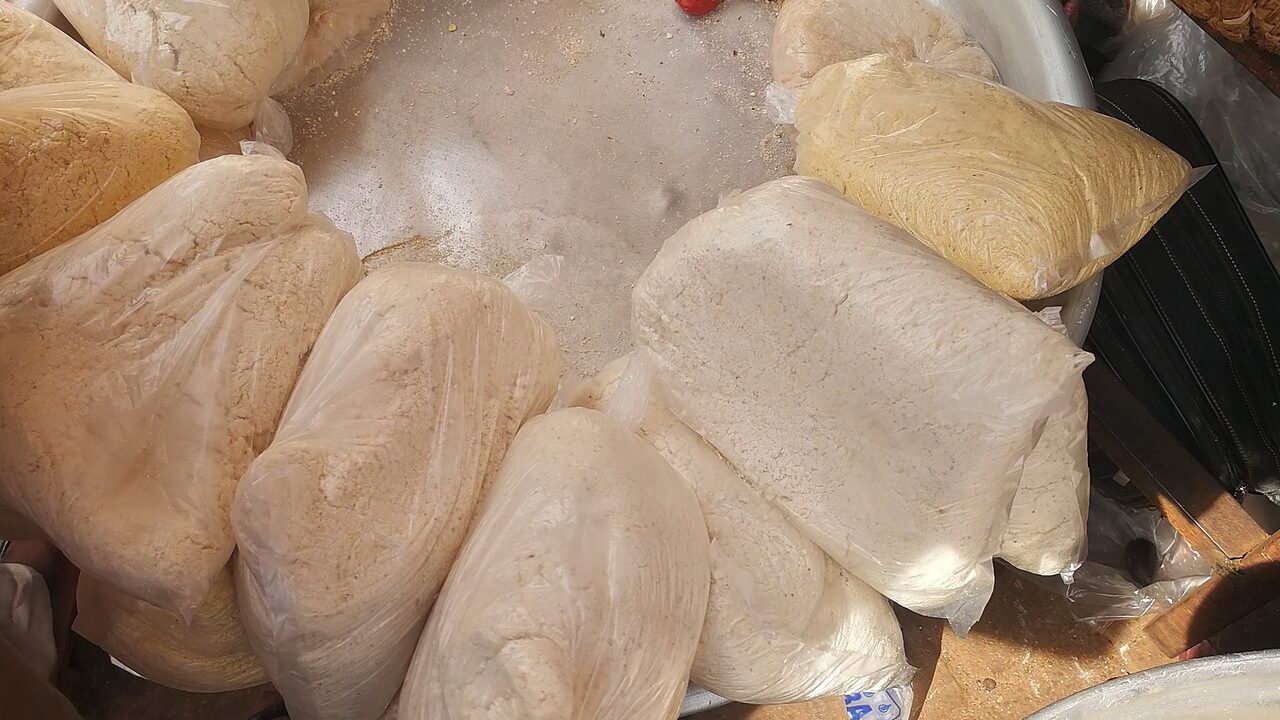
Tom brown flour is sold in markets, supermarkets and small shops across Accra, in packets or by measure. Some families roast their own corn and take it to a local mill for grinding, preferring to control the quality.
Variations, breakfast and bread
Some people add evaporated milk, groundnut paste or bread on the side. Others eat it plain. Because it is filling and inexpensive, tom brown is a popular choice for families on tight budgets. Tom brown cooks in a few minutes, which makes it a practical choice on busy school mornings. Many households keep the flour in an airtight container so it stays fresh for weeks.
Some people eat it with sugar bread or tea bread, dipping pieces into the warm porridge. Tom brown rarely appears on restaurant menus. Plenty of Ghanaians with successful careers still keep a packet of the flour in the kitchen cupboard.