Ghana has appointed artificial intelligence focal persons in every ministry as it prepares to introduce AI into government operations. The move follows AI training sessions already held for Cabinet ministers, according to Sam George, Minister for Communication, Digital Technology and Innovations.
“We’ve done the AI boot camp for cabinet ministers. We have AI-focal persons in every ministry now,” George said in an interview ahead of the Digital Economy Forum’s second episode on October 21, 2026.
The government is working with UNESCO to conduct an AI readiness assessment across ministries and agencies. This evaluation mapped the varying levels of preparedness among government bodies to deploy AI responsibly and effectively.
“Working with UNESCO, we’ve done an AI readiness assessment model that has mapped out all of the government ministries and agencies and determined the various states of readiness for our various agencies,” George explained. The findings will guide where the government should invest in building capacity and technical support before rolling out AI applications.
The assessment also informs budget discussions between George’s ministry and the Ministry of Finance. “It would also guide engagements on the resources needed to address gaps in institutional preparedness,” he added.
Ghana’s AI strategy is a ten-year plan with clear, measurable targets. It identifies agriculture, healthcare, education, and government services as priority sectors likely to benefit from AI-driven productivity gains and improved service delivery.
Beyond appointing AI focal points, the government is training senior civil servants—including chief directors and directors—with support from the United Nations Development Programme and UNESCO. George described this as necessary to ensure officials can understand and apply AI within their institutions.
“We’re beginning the training, working with the UNDP and UNESCO, for our civil servants, our chief director and director levels,” he said.
The minister also revealed plans for a national data exchange hub designed to link 48 government data registries. This infrastructure would enable integrated data analysis to inform policy and resource allocation based on evidence rather than political considerations.
“I think that where we should get to as a country is that our interventions in communities must be driven by hardcore empirical evidence,” George said. Data from hospitals, schools, and other public services could pinpoint where investments would have the most impact.
In addition, the government plans to establish a national AI compute centre to provide the processing power needed for large-scale data analysis and AI applications across sectors. The first phase of this project has secured US$250 million in funding. George said the centre is being designed with capacity exceeding Ghana’s immediate needs.
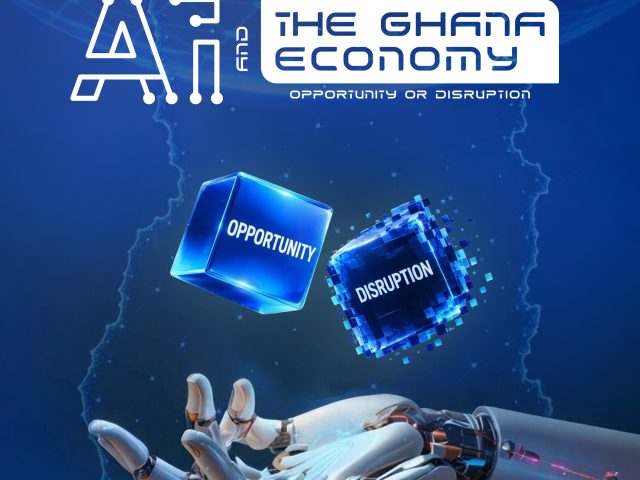
The Digital Economy Forum episode titled “AI and the Ghana Economy: Opportunity or Disruption?” will discuss the country’s AI readiness, its impact on jobs, and potential for economic growth. The panel includes George; Finance Ministry Technical Advisor Dr Theo Acheampong; AI for Ghana founder Adam Watkins; Hubtel’s Head of Engineering Augustine Adjei; and IMANI Africa Vice President Bright Simons. It will air live on JoyNews and Joy 99.7 FM at 8 p.m. on October 21.
George acknowledged challenges remain. The government is reviewing cybersecurity and data protection legislation to mitigate risks linked to AI and the handling of personal data. This legal framework aims to keep pace with the technology’s growth while protecting citizens.
The government’s approach reflects a strategic effort to build institutional capacity, infrastructure, and legal safeguards in parallel. The appointment of AI focal points across ministries is an early step in integrating the technology into public service delivery and economic planning.
According to Joy Online.