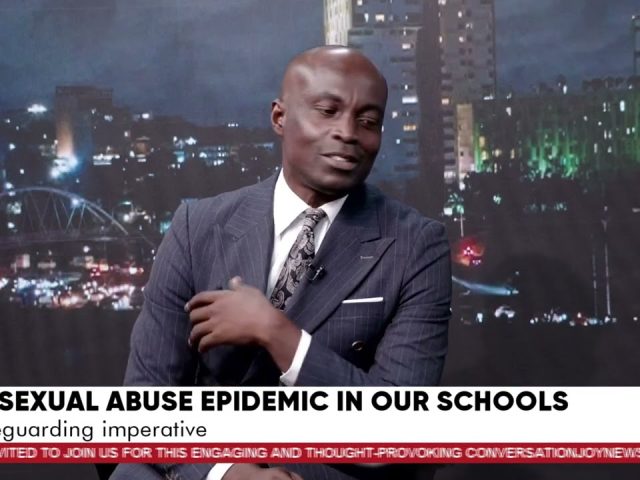
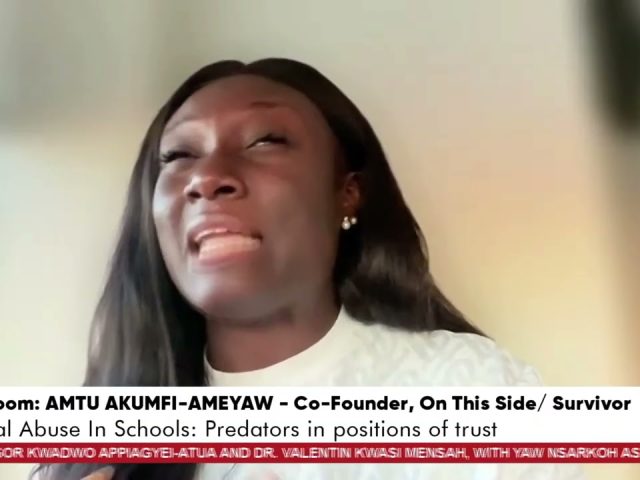
Ashesi University’s Safeguarding Lead, Dr Millicent Adjei, has sharply criticized Obuasi Senior High Technical School for its handling of abuse complaints against headmaster Zakaria Abdulai. Speaking on Joy News’ PM Express on Tuesday, she singled out two failures: inappropriate boundary crossings between staff and students, and a school environment that discouraged students from reporting abuse.
The concerns stem from Manasseh Azure Awuni’s investigation, Inside the Dreaded Headmaster’s Bungalow, which exposed allegations of sexual abuse by the Obuasi SHTS headmaster. The investigation revealed that complaints were made months before Abdulai was suspended. The Ghana Education Service has since interdicted the headmaster, and a police complaint has been filed.
Dr Adjei, who is also Ashesi University’s Director of International Programs and Campus Cohesion, said the first failure was allowing students to run personal errands for staff. “When you are given that duty of care, you are supposed to be the protector. You are supposed to create that environment where children will be able to come to you, right?” she said.
She described students going to the headmaster’s house as “the first level that shouldn’t have happened.” She also said asking students to collect and carry food was inappropriate on its own, regardless of where the food was delivered.
The second failure concerned the students’ confidence in the school’s reporting system. Dr Adjei pointed to an account on the programme where a girl did not report abuse herself but relied on her house prefect to speak up. “It took the girl’s house prefect to go and report, and the girl had several experiences,” she said.
Dr Adjei also mentioned the case of a girl who was hospitalised after being caned, with no action taken by the school. This, she said, raised serious questions about whether Obuasi SHTS had created conditions that allowed children to seek help.
“So the second layer, where an environment that doesn’t support speaking up when some of these things happen, was also broken,” she said. She added that the school’s responsibility included building students’ confidence to report concerns. “The school did not create that environment for the children, for the young children to be able to have that confidence to report to anyone.”
The investigation and Dr Adjei’s comments come amid growing scrutiny of abuse allegations in Ghana’s educational institutions, where safeguarding policies are often weak or poorly enforced. The case has revived debates about the protection of students and accountability mechanisms within schools.
As of now, the Ghana Education Service continues its investigation into the headmaster. The police complaint remains open, with no public updates on progress. The absence of swift action months after complaints emerged remains a source of concern for advocates like Dr Adjei, who emphasize the need for schools to be places where children feel safe to speak out.
According to Joy Online.