

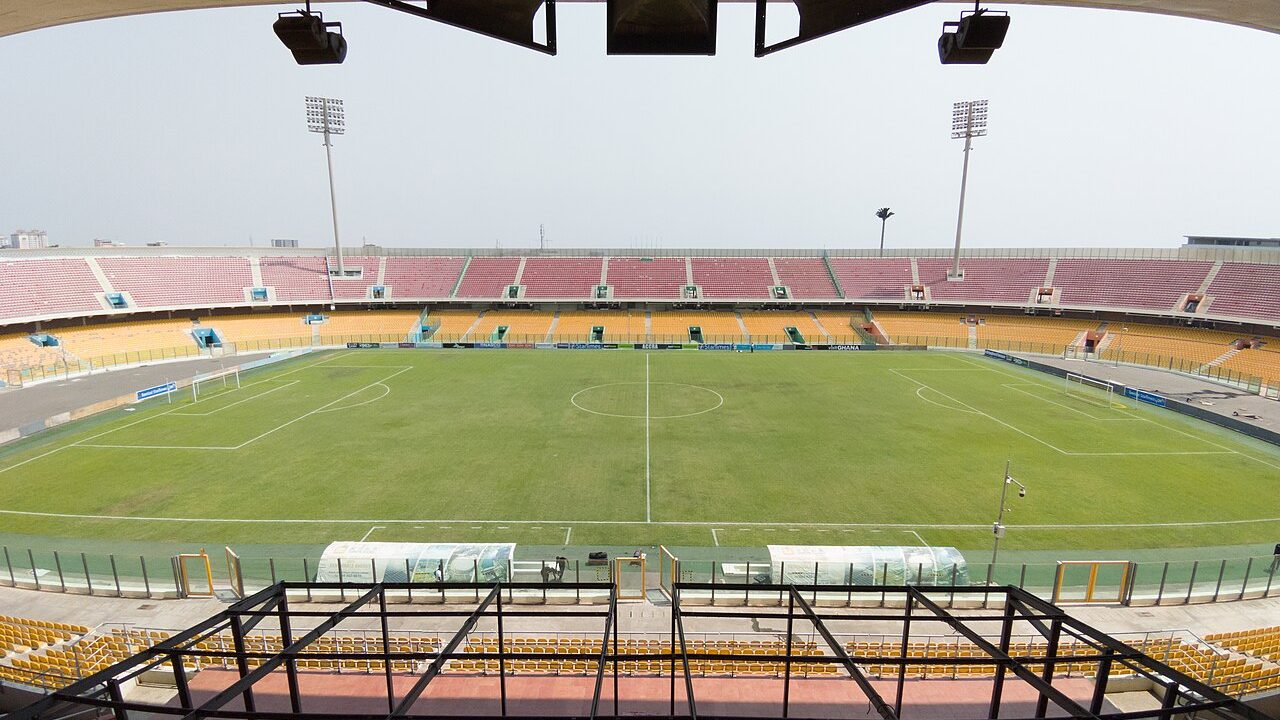
Older fans still call it by one name, younger ones by another. For a few years, the official signs said something else entirely.
The Accra Sports Stadium, near the old Ministries and the Independence Square area, has been the main football venue in the capital since the early years of independence. Hearts of Oak play their home games there, and the Black Stars have played many of their most important matches on its pitch.
Ohene Djan
Ohene Djan was Ghana’s first Director of Sports under Kwame Nkrumah. He was the organiser behind the early Black Stars, who won the Africa Cup of Nations in 1963 and 1965, and he was influential in African football administration.
In 2004, the stadium was renamed the Ohene Djan Sports Stadium in his honour.
The name returns
The new name never fully caught on. Some Ga groups, including the Ga Traditional Council, opposed it, arguing that a stadium in the heart of Accra should honour a prominent Ga figure. In June 2011, the Accra Metropolitan Assembly restored the name Accra Sports Stadium. Many fans had never stopped using it.
Triumph and tragedy
The stadium hosted the final of the 1978 Africa Cup of Nations, when Ghana beat Uganda to keep the trophy for good. It was renovated for the 2008 Africa Cup of Nations, which Ghana hosted, and it staged matches in that tournament.
It was also the scene of the worst stadium disaster in African history. On 9 May 2001, during a match between Hearts of Oak and Asante Kotoko, police fired tear gas into the stands and 126 people died in the crush that followed. A memorial stands outside the stadium.
Renovation and complaints
Over the years, the stadium has been closed for repairs to the pitch, the stands and the floodlights. Clubs and fans complain about the cost of hiring it and the condition of the facilities between renovations.
Beyond football
The stadium also hosts concerts, church conventions, political rallies and national events, making it one of the largest gathering places in the capital.
What’s in a name
The Ohene Djan name lasted seven years on the signs. The man himself built the teams that made Ghanaian football famous in the 1960s, which is more than most people who walk past the stadium today know about him.
.jpg)