
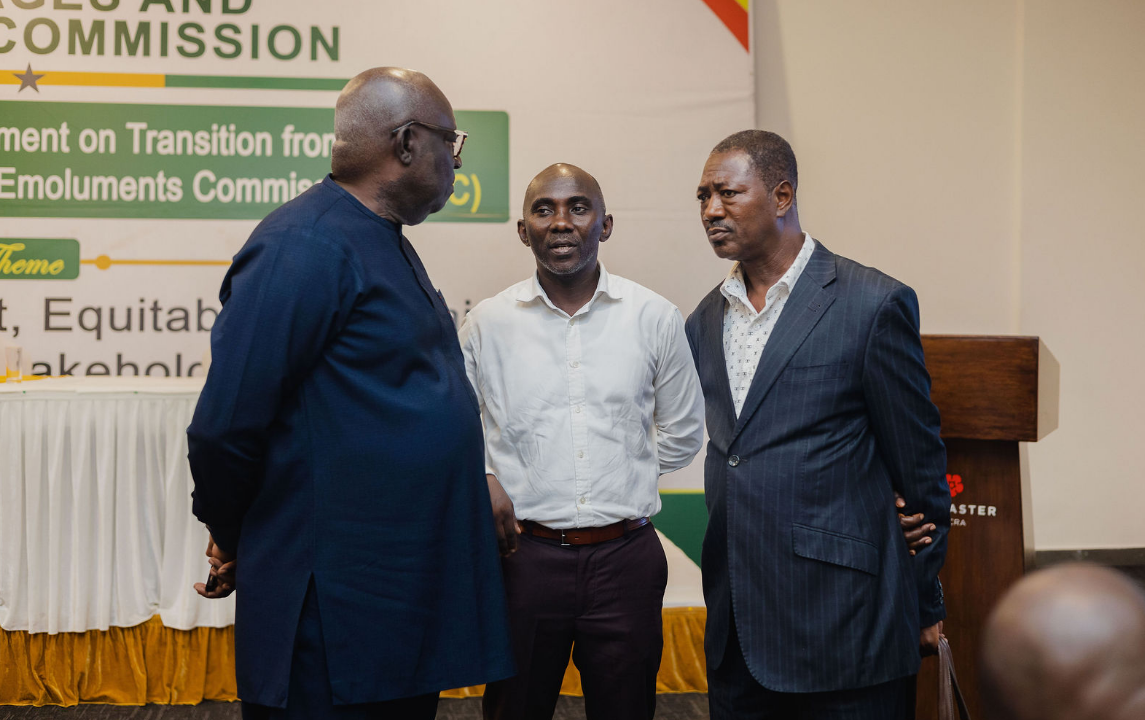
More than 100 chief executive officers, deputy CEOs, and directors from State-Owned Enterprises gathered on Friday for a meeting with the Fair Wages and Salaries Commission (FWSC) to discuss the transition to the Independent Public Emoluments Commission (IPEC). The event also involved representatives from the State Interests and Governance Authority (SIGA), development partners, and the media.
The meeting is part of a nationwide consultation process following President John Dramani Mahama’s declaration in March that the FWSC would become an institution in transition. FWSC Chief Executive Dr George Smith-Graham told attendees that SOEs make up a large part of the public sector wage bill and are central to the ongoing reforms in pay structures.
Dr Smith-Graham described Ghana’s current system for public sector pay as fragmented and inequitable, contributing to tensions in industrial relations, especially within SOEs. He said the new IPEC would create an independent and evidence-based framework for setting all public sector salaries, including those in SOEs, while focusing on fiscal sustainability, transparency, and fairness.
The CEOs and other leaders raised concerns during an open forum. They asked how the new system would affect their ability to attract and keep key talent. They also wanted to know what would happen to existing Collective Agreements and how much freedom boards would have to decide on market premiums and allowances.
Dr Smith-Graham responded by assuring the group that performance-based incentives would not be eliminated. Instead, these incentives would be streamlined and harmonized under a new National Emoluments Policy and a National Negotiation Framework. He also revealed plans for a nationwide job evaluation exercise to create a modern grading system and ensure equal pay for work of equal value. In addition, a National Productivity Framework will link pay to productivity and performance.
The FWSC said the feedback from the meeting would help shape the final draft of the IPEC Bill. The bill is scheduled to be presented to Parliament before the end of October 2026.
The meeting reflects ongoing tensions between efforts to standardize public sector pay and the autonomy of SOEs to manage their own workforce issues. How much independence boards will retain remains a point of debate. The government’s approach, as outlined by Dr Smith-Graham, suggests a move toward more central control balanced with performance incentives.
With SOEs accounting for a significant share of public wages, the transition to IPEC will affect thousands of employees. The outcome will depend on how the government balances fairness, fiscal discipline, and the operational needs of these enterprises. The coming months will reveal how these competing interests will play out in the final legislation.
According to Joy Online.