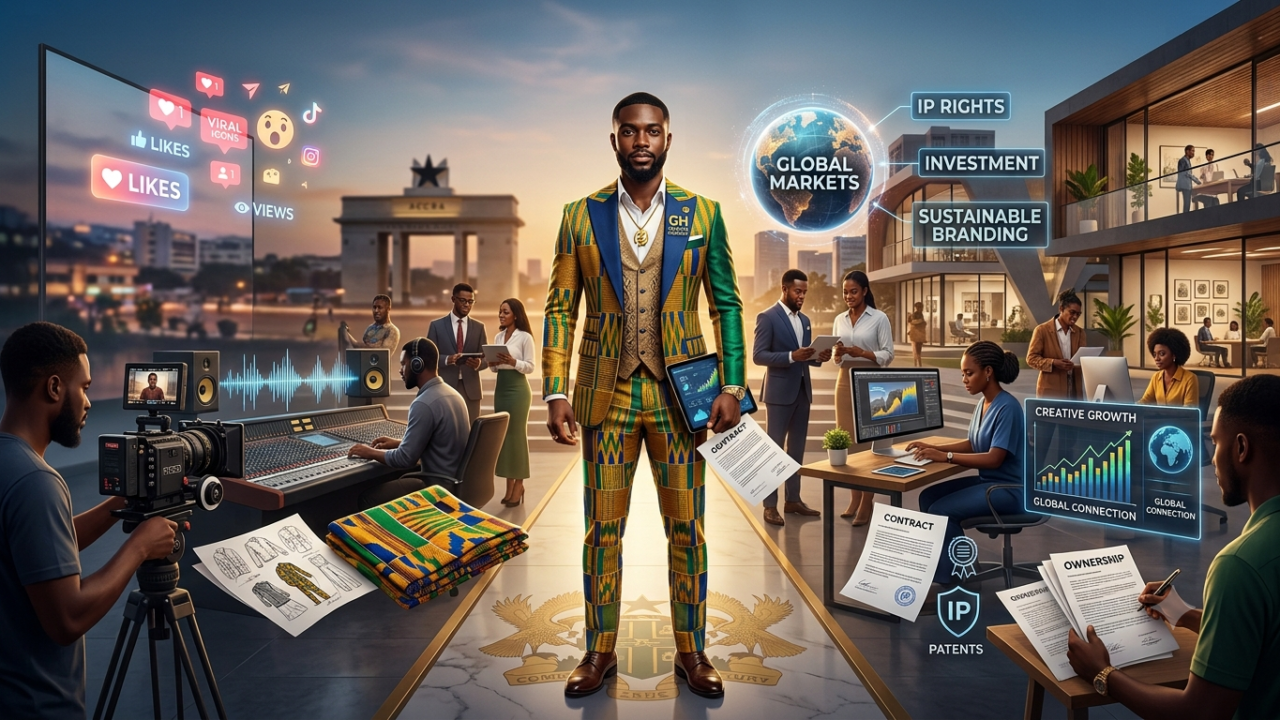
Ghana's creatives are making waves globally, with music, films, fashion, and digital content gaining international recognition. However, the challenge remains: translating creativity into sustainable wealth.
The Problem With Chasing Virality
Ghana has never lacked creative talent, but the challenge has been building the systems, structures, and business mindset needed to turn creativity into sustainable wealth. The digital economy has transformed creativity, making it possible for anyone with a smartphone and an idea to reach audiences worldwide. A song from a small studio can become a global hit, and a creator can build influence without traditional gatekeepers.
However, this has created the illusion that attention automatically equals success. A viral moment can fade quickly, and popularity can grow while ownership remains uncertain. The more important question is not how many people saw a piece of content, but who benefited from that attention. Creative works are assets, and it is essential to capture the economic value their talent produces.
Creatives Must Think Like Owners
For many years, creatives have been encouraged to focus on mastering their craft while paying less attention to business. Creating music, films, fashion, and content is essential, but modern success requires more than artistic ability. The creative of the future must also be a strategist, entrepreneur, and owner. An artiste should not only release songs but build a brand and manage a valuable catalogue of intellectual property.
Global creative leaders understand this approach, building ecosystems around their work through licensing, partnerships, investments, merchandise, and ownership structures. Ghanaian creatives must begin asking deeper questions: Who owns the work? Who controls the revenue? Can this creation continue generating income years from now?
Building Ghana's Creative Economy Machine
Ghana often celebrates the final creative product while overlooking the systems that make success possible. Audiences celebrate hit songs without discussing songwriters, publishers, and rights management. They celebrate films without always recognising producers, writers, and business teams. Every strong creative economy depends on infrastructure, including publishers protecting rights, lawyers negotiating agreements, managers developing careers, investors providing capital, analysts understanding audiences, and distributors connecting creators to global markets.
Talent begins the journey, but infrastructure determines the outcome. Without these systems, Ghana risks producing exceptional creatives who remain financially dependent because they lack the tools to control and monetise their work. The industry must build better publishing systems, stronger licensing frameworks, and fair royalty systems to ensure creators are compensated when their work creates value.
From Exporting Creativity to Building Wealth
The world values African creativity, but admiration is not the same as ownership. If Ghana provides the music, stories, designs, and ideas while others control distribution, platforms, and profits, then the country is not fully building a creative economy. It is exporting creative labour. The same way countries have historically struggled when they exported raw resources without controlling the value chain, Ghana must avoid allowing its creativity to be exploited in the same way.
Ghana must build a creative economy that creates owners, investors, and successful businesses. The challenge is not proving that its creatives are talented but ensuring that creators capture the economic value their talent produces. By building stronger structures and systems, Ghana can transform its creativity into sustainable wealth, creating lasting value for its people and the world.
Source: Joy Online