If you live in Accra and you still don’t have a Ghana Card, you can register at any National Identification Authority centre with your birth certificate, a guarantor who already has a card, and proof of where you live. First-time registration for citizens is free. The capture at the centre takes about half an hour once your turn comes, and the physical card follows later.
That is the short version. The rest of this guide covers everything around it: where to go in Accra, what to bring, what it costs, how long the wait runs, and what to do when your card is lost, expired, or carrying the wrong details. Read the section you need and skip the rest.
What the Ghana Card is, and why you keep being asked for it
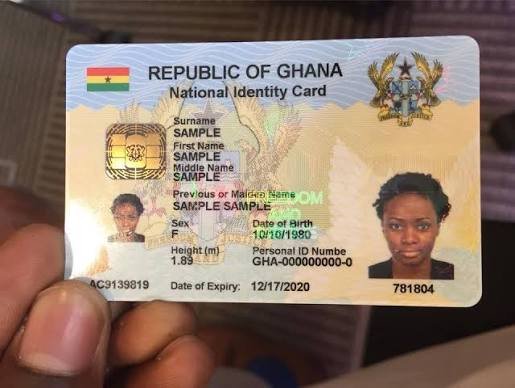
The Ghana Card is the national identity card issued by the National Identification Authority (NIA). One number, your Ghana Card PIN, now follows you across most of the systems you deal with as an adult.
You will be asked for it more often than you expect. Banks want it to open an account and to keep an existing one active. Telcos want it to register or re-register a SIM. It is tied to your SSNIT record, your tax file, and your health insurance. You need it to apply for a passport, to collect money at some offices, and increasingly to prove you are who you say you are at a counter that used to accept a voter’s ID or a driver’s licence.
So this is not paperwork you can keep putting off. If you are turning eighteen, if you have never registered, or if your old card has expired, the sections below are for you.
Who needs to register
Every Ghanaian citizen from birth qualifies for a Ghana Card, and adults are the priority because so many services now depend on it. If you are eighteen or older and have never been captured, you need to register.
Children can be registered too, and many parents do it early so the number is ready when a school, a bank, or a passport office asks for it later. The process for a minor is slightly different, and there is a section on it further down.
Non-citizens who live and work in Ghana have their own version of the card and their own fee schedule. If that is you, skip to the section on foreign residents.
What to bring before you leave the house
Turning up without the right documents is the single most common reason people get sent home. Bring these:
- Your birth certificate. The original, or a certified copy. If you were born abroad, bring the equivalent record and your proof of citizenship.
- A guarantor’s Ghana Card. This is an adult Ghanaian with a valid card who vouches for you, usually a parent, an older sibling, a spouse, or any relative or acquaintance who agrees to it.
- Proof of address. A recent utility bill, a tenancy agreement, an employer’s letter, or your digital address from the GhanaPostGPS app all tend to be accepted.
Take the originals, not only photocopies. Staff verify the original and may keep or scan a copy. If your name appears differently across your documents, for example a birth certificate that reads one way and a bank card that reads another, sort that out first, because a mismatch will hold up your registration.
Where to register in Accra
The NIA runs permanent district offices across Greater Accra, and it opens temporary centres during registration drives. The offices people use most often include the headquarters at Ridge, and district offices at Madina, Dansoman, Tema, and Kasoa.
Opening hours are usually 8am to 5pm on weekdays, with shorter Saturday hours at some centres. Go early. The queue outside a busy district office builds fast, and centres stop taking new people well before closing so they can finish everyone already inside.
If you are not sure which centre is open near you, check the NIA’s official channels before travelling rather than relying on a WhatsApp forward. Dates and locations for pop-up centres change often, and a wasted trip across town in Accra traffic is the thing this guide is trying to save you from.
Booking online before you go
For some services the NIA now asks you to book a slot on its official portal rather than just walking in. You create a profile, choose the service you need, and pick an appointment.
A booking does two things. It gives you a time so you are not standing in an open queue all morning, and it lets you fill in some of your details in advance, which shortens the capture at the centre. If the service you need still allows a walk-in, the portal will say so.
Be careful which site you use. There are copycat pages that charge a “processing fee” for something the NIA does for free. The only place to trust is the NIA’s own domain. If a site asks you to pay online to register, close it.
Step by step: first-time registration
Here is what actually happens on the day, from the queue to the receipt.
You arrive and join the line, or check in against your booking. A staff member checks your documents at the front. If anything is missing, you are turned back here, which is why the documents section above matters.
Once your papers pass, you wait for a capture station. At the station an officer enters your details, so read your birth certificate spelling out loud if you have to and confirm your date of birth, your names in the right order, and your place of birth. This is the moment to catch an error. A wrong letter here becomes a wrong letter on the card, and fixing it later is its own trip.
Then comes the biometric capture: a photograph, your fingerprints, and in most cases an iris scan. It is quick and painless. Hold still for the photo, because it is the one on your card for years.
At the end you sign, and you are given a slip or receipt with a reference. Keep it. That slip is how you check on and collect your card, and reprinting your life without it is a hassle.
You do not usually walk out with the card the same day. The data goes off for processing, and the card is printed and returned to a collection point later.
What it costs
First-time registration for a Ghanaian citizen is free. That is worth repeating because touts near some centres will try to charge you for a form or to speed things up. You do not need them.
The fees come in for the other services. Renewing an expired card, replacing a lost or damaged one, and updating your details each carry a charge, and there is sometimes a faster premium option at a higher price. Pay at the counter or through the official channel you are directed to, and take a receipt every time.
If anyone asks for cash on the side to move you up the line, that is not a fee, and paying it only feeds the problem.
How long it takes, and collecting your card
Two clocks matter here. The first is the wait on the day, which depends entirely on how busy your centre is; arriving at opening is the only reliable way to keep it short. The second is the wait for the printed card, which runs from a few weeks to a couple of months depending on the backlog.
You collect the card from the point named on your slip, usually the centre where you registered, and you bring that slip and a form of ID when you go. Some centres send an SMS when a batch is ready; do not count on it, and check back yourself if a reasonable time has passed.
While you wait, the printed slip or the digital record often stands in for the card at banks and telcos, but confirm that with the specific office, because policies differ.
Renewing a card that has expired
Ghana Cards carry an expiry date, and an expired card causes exactly the problems a valid one prevents: a bank flags your account, a SIM re-registration fails, an office turns you away.
Renewal is not the same as a first registration. You already have a number; you are extending the card tied to it. You book the renewal service, bring your old card and any documents the NIA asks for, pay the renewal fee, and go through a shorter capture.
Do not wait for the card to expire before you act. Start a few weeks ahead if you can, because the processing wait applies to renewals too, and you do not want a gap where your card is dead and the new one has not arrived.
Replacing a lost, stolen or damaged card
If your card is gone or badly damaged, you apply for a replacement. The number stays the same; you are paying for a new physical card.
The usual route is to report the loss, apply for the replacement, pay the fee, and wait for the reprint. A cracked or faded card that still works may not be urgent, but a card that a machine can no longer read is worth replacing before it fails you at a counter.
Keep a clear photo or a photocopy of your card somewhere safe now, before you ever lose it. Having your PIN and the card details to hand makes the replacement smoother.
Changing your name, address or phone number
Life changes, and the details on your card go stale. A marriage changes a name. A move changes an address. A new line changes the number the NIA has for you.
You update these through the NIA’s change-of-details service, with evidence for the change: a marriage certificate for a new surname, proof of the new address, and so on. There is usually a fee for an update, and it may need a centre visit rather than an online form.
Keep the phone number current if you do nothing else, because that is how you get told your card is ready and how some services reach you.
Registering a child
Parents register children so the Ghana Card number is ready when it is needed. The child’s birth certificate is central to this, and a parent or guardian with a valid Ghana Card stands in as the guarantor and gives consent.
The biometric step is lighter for a young child, and the parent handles the paperwork and the signature. If you are registering more than one child, bring each one’s birth certificate separately and expect to repeat the process per child.
Non-citizens and foreign residents
If you are a foreign national living in Ghana, you register for the non-citizen Ghana Card, and the terms differ from a citizen’s. You will need your passport, your residence or work permit, and the fee set for non-citizens, which is charged in a way that reflects your permit rather than being free.
The card matters for the same daily reasons it does for citizens, from banking to SIM registration, so if you are here for more than a short visit it is worth sorting early.
Checking your status and knowing when the card is ready
After you register, you will want to know where your card is without trekking back to the centre every week. Keep the reference on your slip and use the NIA’s official status check where one is offered, or call the centre.
If a long time passes with no card and no update, go back to the centre where you registered with your slip and ask directly. Backlogs happen, and a card can sit uncollected in a batch that never triggered an SMS.
Common mistakes, and how to avoid them
A few errors send people home or cost them a second trip. You can dodge all of them.
Going without originals. Photocopies alone are not enough at most centres; bring the original documents.
Letting a spelling error through. Check your names and date of birth on the screen at capture, out loud, before you sign. Fixing a typo later is a paid correction and another visit.
Turning up at midday to a busy centre. You may not be seen at all. Arrive at opening.
Trusting a middleman. Nobody needs to be paid to register you, and the agents outside some centres are selling you something that is free.
Using a fake portal. Register only on the NIA’s official site. If a page asks you to pay to register, it is not the NIA.
Letting the phone number go stale. If the NIA cannot reach you, you may not hear that your card is ready.
What to do if you are turned away or delayed
If you are sent home, ask the officer exactly what is missing and write it down, so your next trip fixes the specific problem rather than guessing. A missing guarantor, an address proof they would not accept, a name mismatch: each has a clear fix.
If your card has been delayed well beyond the normal wait, go back with your slip and ask for the status in person. If that leads nowhere, the NIA has official complaint channels, and using them in writing, with your reference number, tends to move things better than repeat visits.
Frequently asked questions
Is first-time registration really free?
Yes, for Ghanaian citizens. The fees apply to renewals, replacements, and updates, not to a citizen’s first card. Do not pay anyone to register you.
Can I do everything online?
Some steps, like booking a slot and entering details, are online. The biometric capture and card collection happen at a centre.
How long before I get the physical card?
Usually a few weeks to a couple of months, depending on the backlog. Keep your slip and check back if the wait runs long.
My name is spelled differently on my documents. Is that a problem?
It can be. Sort out a mismatch before you register, because the details on the card come from what is entered on the day, and a conflict can hold things up or land on your card.
I lost my slip. What now?
Go back to the centre where you registered and explain. Bring any ID and the details you remember, including your Ghana Card PIN if you have it noted.
Do I need a new number when I renew or replace the card?
No. Your Ghana Card PIN stays with you for life. Renewal and replacement give you a new physical card for the same number.