A leading think tank, CUTS International Accra, has urged the Ghanaian government to fix traffic lights and road markings before the TRAFFITECH-GH automated traffic enforcement system begins issuing fines on 1 October 2026.
CUTS supports using technology to improve road safety and enforce traffic laws. But it says enforcement must be fair. That means drivers need to see traffic lights clearly, know the speed limits, and follow visible road markings. Installing cameras alone does not fix faults in the road system.
“Government should hold drivers to the law. Government must also make the law clear and visible on the road,” CUTS said. “The purpose of TRAFFITECH-GH is safer roads, not tickets arising from traffic lights drivers could not see.”
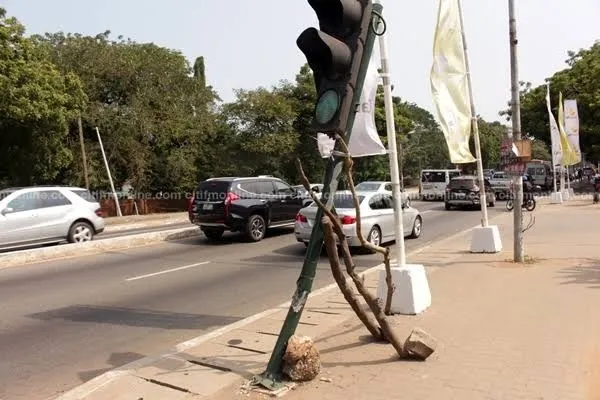
Across Accra, some traffic lights are hidden by overgrown trees. Others are damaged, displaced, or simply not working. At several junctions, only one of two signal heads functions. Faded lane markings and stop lines add to the confusion for drivers and pedestrians. These conditions create road safety risks even before cameras issue fines.
CUTS singled out the traffic lights on Nsawam-Accra Road just before the Apenkwa-Achimota overhead bridge and at the Police Training Academy junction in Tesano. At these spots, signals have reportedly shifted out of clear view for drivers, while the TRAFFITECH-GH cameras appear properly positioned. Authorities should inspect these locations from each approaching lane, says CUTS. A camera might catch a car running a red light even when the driver could not clearly see the red signal.
“A camera’s clear view of a vehicle does not mean the driver has a clear view of the relevant signal or sign,” CUTS said.
CUTS calls on the Ghana Police Service and the Department of Urban Road to inspect every enforcement location from the driver’s perspective. This inspection should cover each lane, including visibility at night and during rain. Authorities should document the condition of every signal, sign, lane marking, and stop line before allowing fines at that location.
After inspections, displaced lights should be repaired and realigned. Failed signal heads need replacement. Vegetation blocking views must be trimmed, and essential markings repainted. Automated fines should only begin after all road features needed to obey a traffic rule are working and visible.
Ghana’s Road Traffic Regulations, 2026, specifically Regulation 211, set general speed limits based on road type and location. Regulation 212 adds limits for particular vehicle classes, while Regulation 213(3) allows for speed cameras and safety signage. Even so, these rules do not remove the need to tell drivers which limits apply where cameras operate.
A driver unfamiliar with the area might not know where built-up zones start or where lower limits apply near schools or markets. CUTS therefore urges authorities to place clear speed limit signs before every TRAFFITECH-GH speed camera and wherever the limit changes.
Drivers should get fair warning on the road before an automated system issues a fine for speeding. Without clear signs, drivers risk penalties for limits they could not reasonably know.
CUTS’s call comes as Ghana prepares to roll out TRAFFITECH-GH, an automated system designed to reduce road crashes by enforcing traffic rules with cameras. The think tank wants to avoid punishing drivers unfairly while infrastructure problems remain.
The government has yet to respond publicly to the call for inspections and repairs before the 2026 deadline. Meanwhile, drivers and road users face a system where cameras might fine them for signals or signs they cannot see clearly.
According to 3News.