

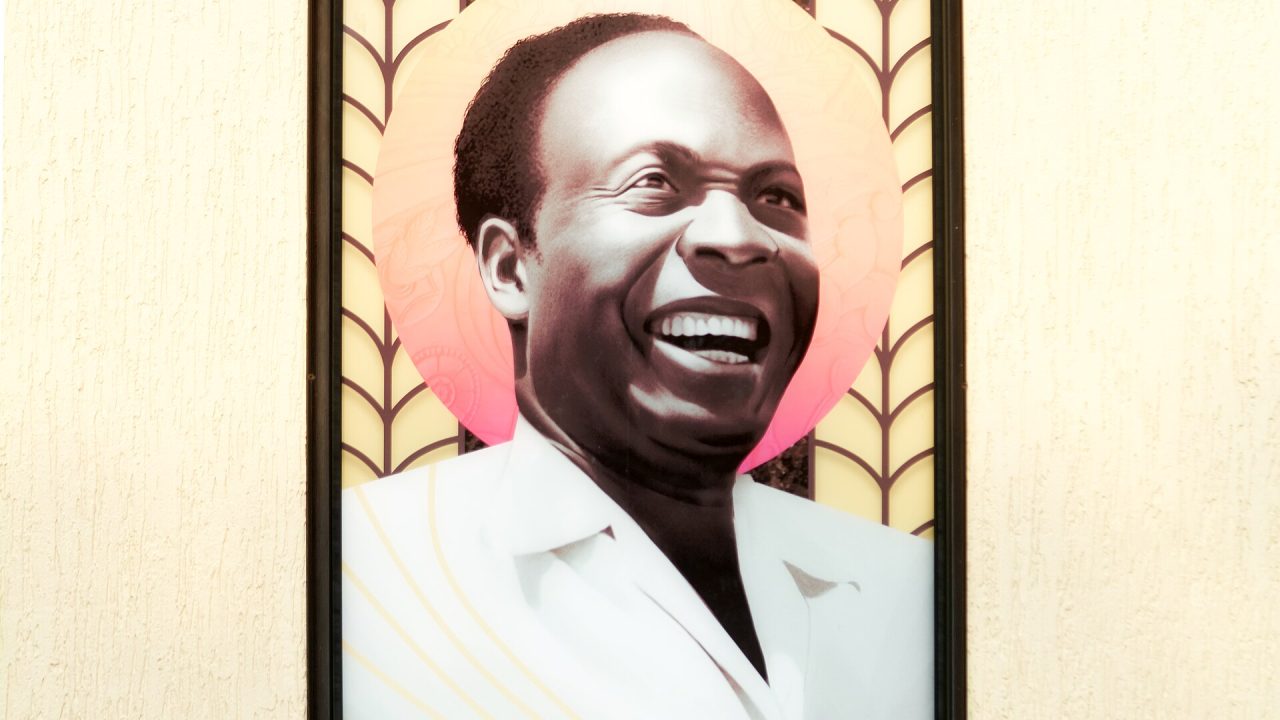
At four o’clock in the afternoon on 31 July 1965, Ghana Television went on air for the first time.
President Kwame Nkrumah launched the service himself. In his speech, he said television in Ghana should be used for “education in the broadest, purest sense”, not for commercial entertainment, and that it should project the African Personality to the world. The studios and transmitters had been built by the British company Marconi, and the launch followed months of test broadcasts.
Radio first
Broadcasting in the Gold Coast had begun in 1935 with a radio relay service in Accra, set up under Governor Arnold Hodson. Radio grew into the Gold Coast Broadcasting System and then, after independence, the Ghana Broadcasting Corporation. Television was added to GBC’s responsibilities in 1965.
Nkrumah’s vision
Nkrumah saw television as a tool of nation-building. He wanted programmes that would educate citizens, promote Ghanaian and African culture, and support the goals of his government. Advertising was initially kept out, and the content was meant to be Ghanaian and African rather than imported entertainment.
Within months of the launch, Nkrumah was overthrown in the coup of February 1966, and the new military government took control of the station. It was the first of many times that GTV’s newsroom would be used to announce a change of government.
The only station
For almost three decades, GTV was the only television station in Ghana. Families gathered around a single set, often shared with neighbours, to watch news, dramas, children’s programmes and football. Shows such as the drama series Osofo Dadzie and the comedy programmes of the 1970s and 1980s became part of national memory.
Coups were announced on GTV and radio, and at times soldiers took over the studios. For many Ghanaians, the broadcasting house was the place to seize in any attempt to take power.
Competition
After the return to constitutional rule in 1992 and the liberalisation of the airwaves, private stations were licensed. TV3, launched in 1997, was among the first, followed by Metro TV and many others. Today Ghana has dozens of television channels, and GTV competes for viewers with private stations and online platforms.
GTV today
GTV remains the state broadcaster’s flagship channel, known for its news bulletins, national events coverage and its role during elections and state functions. It broadcasts Independence Day parades, the State of the Nation address and state funerals.
The 1966 announcement
On the morning of 24 February 1966, Ghanaians learned of Nkrumah’s overthrow through the state broadcaster. Colonel Emmanuel Kotoka announced on radio that the army and police had taken power, and GBC’s facilities were among the first places the coup makers secured. The pattern repeated in later coups: control of Broadcasting House in Accra was treated as essential to taking the country.
Nkrumah wanted the station to educate the nation. Six months after he switched it on, it was used to tell the nation he had been removed.
.jpg)