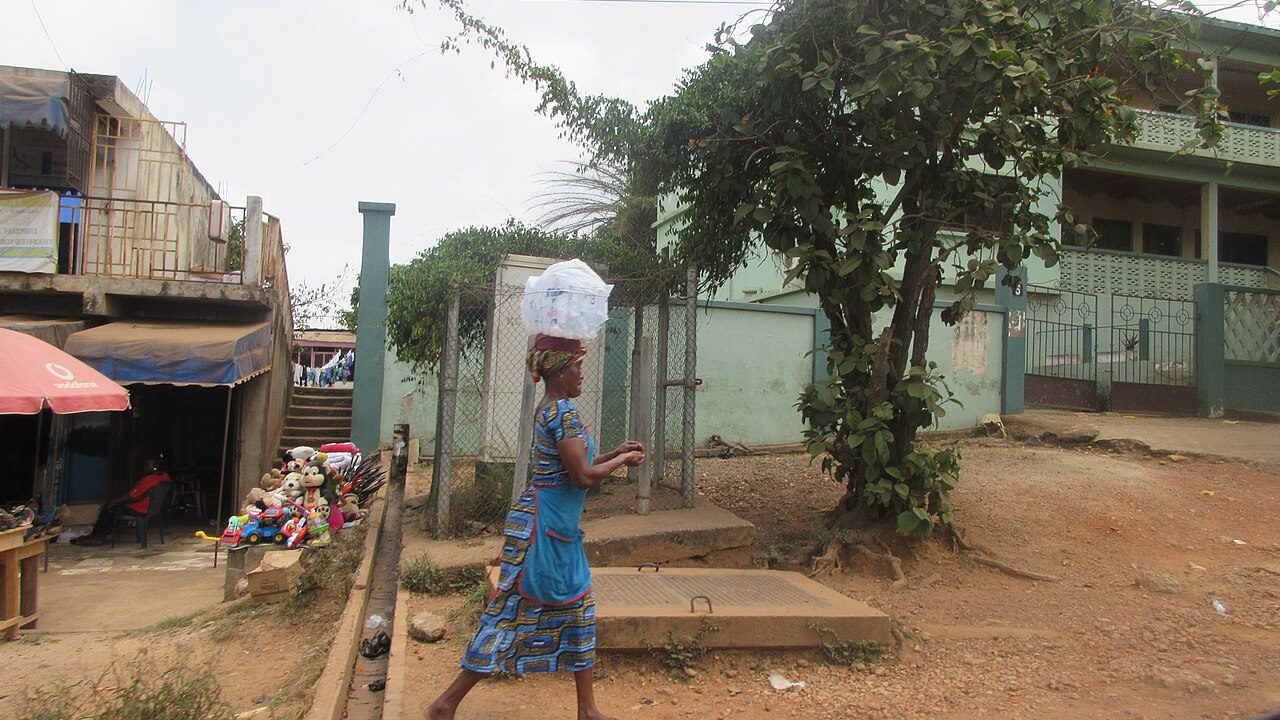
At traffic lights across Accra, hawkers weave between cars with bowls of small plastic bags of water on their heads. “Pure water! Pure water!” For many Ghanaians, this is the everyday way to drink water.
Sachet water, sold in heat-sealed plastic bags of about 500 millilitres, became popular in Ghana in the 1990s and 2000s. It offered a cheap, portable alternative to tap water, which many people did not trust, and to bottled water, which was more expensive.
How it is made
Sachet water is produced by thousands of companies, from large factories to small producers. Water is treated, typically by filtration and sometimes ultraviolet light or ozone, and sealed in plastic by machines. Producers are required to register with the Ghana Food and Drugs Authority and the Ghana Standards Authority.
Why people drink it
Sachet water is cheap, widely available and cold when sold from coolers. Many homes in Accra do not have reliable piped water, and people use sachets for drinking, while using other water for washing. Schools, offices, events and funerals serve sachet water by the bag.
Price
The price of a sachet has risen over the years with inflation and costs of plastic and electricity, and price increases are often debated in the news. A bag of thirty sachets is commonly bought for homes.
Quality
Most producers follow standards, but regulators have found some unlicensed or poorly run producers. The authorities periodically shut down operators that fail inspections. Consumers are advised to look for registration numbers and intact seals.
The plastic problem
The empty sachets are a major source of plastic waste. Discarded on streets, they end up in gutters and drains, blocking them and contributing to the floods that hit Accra in the rainy season. They wash into lagoons and the sea.
Governments have discussed banning plastic sachets or introducing levies, but the industry employs many people and supplies water that many depend on. Recycling efforts collect some sachets and turn them into products such as bags and pavement blocks, but much still goes uncollected.
Alternatives
Some companies have introduced larger refillable containers and water dispensers for offices and homes. Improving the reliability of piped water would reduce dependence on sachets.
Pure water solved one problem, safe drinking water on the move, and created another. Accra’s gutters show the cost of the solution.