A single person renting a room and cooking at home can get by in Accra on roughly GH₵2,500 to GH₵4,000 a month, and a small family needs a good deal more once rent, food, transport, and light bills are counted. Where you land inside that range depends on one thing more than any other: rent, and which part of the city you choose.
This is a plain look at what it actually costs to live in Accra, broken down by the things you pay for every month, so you can budget with real numbers instead of a guess.
Rent, the number that decides everything
Rent swings more than any other cost in Accra, and two things drive it: the area, and whether the landlord wants the rent in cedis or dollars. A single room or chamber-and-hall in a suburb like Kasoa, Ashaiman, or parts of Madina is far cheaper than a one-bedroom in East Legon, Cantonments, or Airport, where many landlords price in dollars.
Expect a chamber-and-hall on the edges of the city to run a few hundred cedis a month, a self-contained one-bedroom in a mid-range area to run more, and a serviced apartment in the prime zones to cost several times that.
The catch every tenant knows is the rent advance. Many Accra landlords ask for one to two years up front, sometimes more, even though the law limits how much advance can be demanded. Budget for the lump sum, not just the monthly figure, and read the section on your rights before you pay.
Food
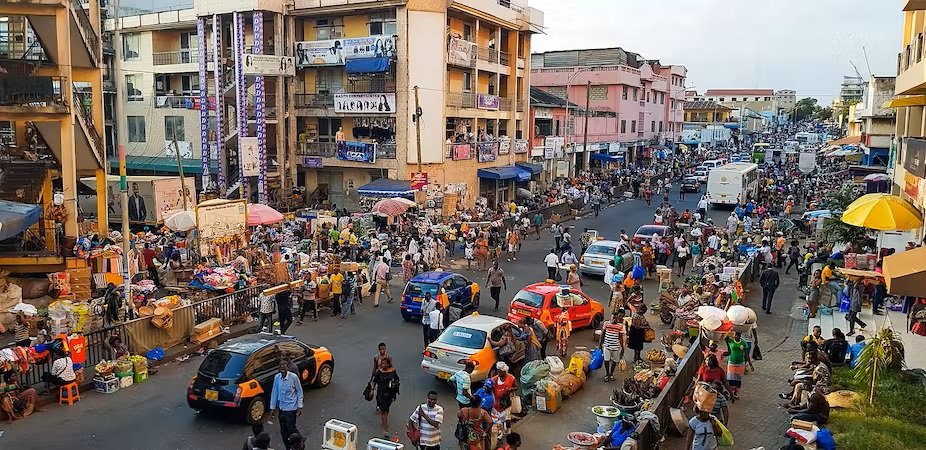
What you spend on food comes down to how often you cook. Buying raw foodstuff at Kaneshie, Madina, or Malata market and cooking at home is the cheapest way to eat, and a single person who cooks can keep food to a modest share of the monthly budget. Eating out changes the maths fast. A plate of waakye or jollof from a local joint is affordable; a sit-down restaurant in a mall is many times the price.
Staples like rice, oil, tomatoes, onions, and gari move with the season and the exchange rate, so a market run costs more in a lean month than a harvest one. Buying in bulk when prices are low, where you have the storage, is how many households smooth it out.
Transport
For most people in Accra, transport means the trotro, and that keeps the daily cost down. A commuter making two trotro journeys a day spends a manageable amount over a month, though fares rose across the country in 2026. A shared taxi costs more than a trotro, a dropping taxi or a Bolt or Uber ride much more, and running your own car adds fuel, which tracks global prices, plus insurance, servicing, and the odd police or toll cost.
If you are budgeting tight, where you live and where you work decide your transport bill as much as anything. A cheaper room far out can cost you the savings back in daily fares and hours in traffic.
Utilities: light, water, and data
Electricity from ECG is prepaid for most households now, so you buy credit and top up as you go, and heavy users of air conditioning and fridges feel it most. Water from the Ghana Water Company is billed, though many areas also buy from tankers or sachet and bottled sources when the taps run dry.
Then there is data, which for many Accra residents is a real monthly line, not a luxury. A bundle from MTN, Telecel, or AT for a month of normal use is worth putting in the budget rather than pretending it is not there.
A rough monthly budget
Put together, a single person living simply, cooking at home, renting a modest room, and moving by trotro can plan around a few thousand cedis a month once the rent is spread out. A couple or a small family with children in school should expect that figure to climb with food, fees, and transport for more people.
The honest takeaway is that Accra rewards planning. The people who struggle most are usually caught by the rent advance and by living far from work. Get those two right and the monthly numbers become manageable.